
The New Visibility Problem Most Companies Don’t Realize They Have
A growing number of buyers no longer begin their research journey on Google.
Instead, they ask:
- ChatGPT
- Claude
- Google Gemini
- Perplexity
- AI assistants
- conversational search engines
questions like:
- “What’s the best CRM for startups?”
- “Top AI SEO companies”
- “Best cybersecurity platforms”
- “Which SaaS tools are most recommended?”
And increasingly, AI engines generate direct answers instead of showing pages of links.
This creates a new competitive reality:
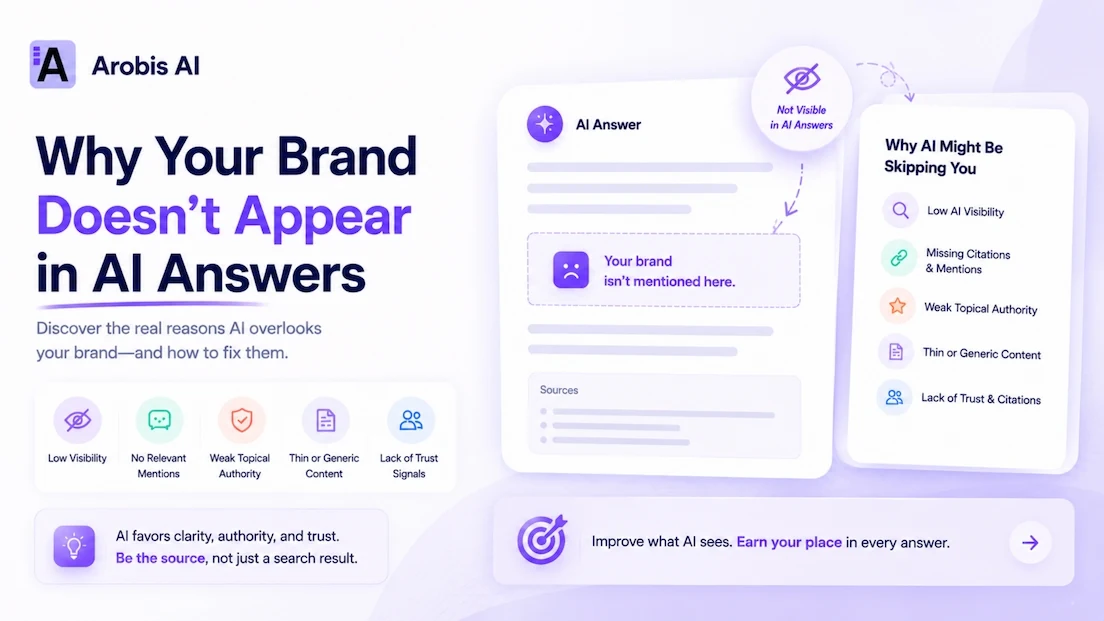
if AI doesn’t mention your brand, many buyers may never discover you.
Yet most companies still have no idea why their competitors appear in AI-generated answers while they remain invisible.
The truth is:
AI engines evaluate brands very differently than traditional search engines.
And most businesses are not optimized for AI visibility.
AI Search Works Differently Than Google
Traditional SEO focused heavily on:
- keywords
- backlinks
- rankings
- metadata
- search volume
But AI engines like ChatGPT, Gemini, Claude, and Perplexity do not simply rank pages.
They synthesize information.
These systems analyze:
- semantic relevance
- contextual authority
- entity relationships
- digital reputation
- topical expertise
- structured information
- recurring brand mentions
to determine which brands deserve inclusion in AI-generated responses.
This means:
ranking on Google does not automatically mean ranking in AI answers.
The Biggest Reason Your Brand Doesn’t Appear in AI Answers
Your Brand Lacks AI Entity Authority
One of the most important concepts in AI search is entity recognition.
AI systems need to clearly understand:
- who your company is
- what your company does
- what category you belong to
- what problems you solve
- what topics your brand is associated with
Without strong entity signals, AI systems struggle to determine when your company is relevant.
In many cases, your competitors appear simply because AI engines understand them better.
What Is an Entity in AI Search?
An entity is how AI systems classify and understand concepts, organizations, people, products, and brands.
For example, AI systems may associate a company with:
- AI SEO
- project management software
- customer support automation
- cybersecurity
- CRM platforms
- marketing automation
The stronger and clearer these associations become across the web, the stronger your AI visibility becomes.
Most Brands Have Weak Entity Signals
Many companies unintentionally confuse AI systems because their:
- positioning is inconsistent
- messaging changes constantly
- website structure is weak
- category definition is unclear
- content lacks semantic depth
AI systems rely on consistency.
If your brand description changes everywhere online, AI engines may struggle to understand what your company actually represents.
Your Content Is Probably Too Generic
AI engines prioritize:
- expertise
- originality
- contextual depth
- educational value
- topical authority
Unfortunately, most modern content is:
- repetitive
- shallow
- over-optimized
- AI-generated without insight
- lacking real expertise
Generic content rarely earns AI trust.
AI systems prefer brands that consistently publish:
- deep educational guides
- industry insights
- original research
- frameworks
- comparisons
- thought leadership
because these signals indicate authority.
Your Website May Be Optimized for Search Engines — Not AI Engines
Traditional SEO focused heavily on:
- ranking pages
- driving clicks
- increasing traffic
AI visibility requires a different approach.
Modern AI optimization depends on:
- semantic clarity
- entity SEO
- structured information
- contextual relevance
- conversational search optimization
- Answer Engine Optimization (AEO)
- Generative Engine Optimization (GEO)
Most websites were never built for this.
Closing that gap is exactly the job of a SaaS SEO partner built for both search engines and AI engines, rather than another round of keyword tweaks.
AI Engines Prefer Trusted Brands
AI systems are designed to reduce misinformation and increase answer confidence.
That means they naturally favor:
- recognizable companies
- widely referenced brands
- authoritative sources
- companies with strong digital footprints
If your brand lacks:
- mentions
- citations
- reviews
- industry recognition
- external references
AI systems may not trust your authority enough to recommend you.
Your Brand Might Lack Topical Authority
Publishing a few blog posts is no longer enough.
AI engines reward comprehensive expertise.
For example, if your company wants visibility for:
- AI SEO
- customer support software
- cybersecurity
- revenue intelligence
you need an ecosystem of high-quality content covering those subjects deeply.
Strong topical authority includes:
- pillar pages
- supporting articles
- FAQs
- use cases
- comparisons
- definitions
- educational content
- research studies
Depth builds trust.
AI Search Is Conversational — Your Content Probably Isn’t
Most websites still optimize for short keywords.
But AI users search differently.
Instead of:
“best crm”
users ask:
“What’s the best CRM for a remote SaaS sales team?”
AI search is conversational.
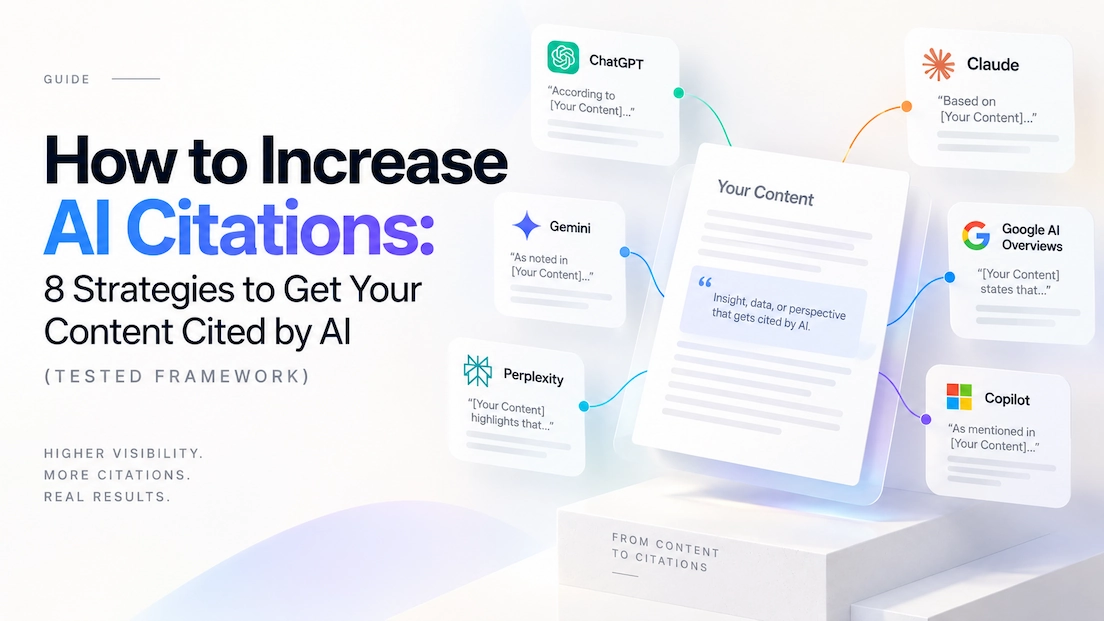
Content that mirrors real human questions performs significantly better in AI-generated systems. Writing for extraction is one of the tested strategies for increasing AI citations, and it is the one most teams can fix this week.
Your Brand Might Not Exist in the Right Places
AI engines learn from the broader web.
They evaluate signals from:
- blogs
- directories
- podcasts
- review sites
- industry forums
- news articles
- communities
If your company has little presence outside its own website, AI systems may have limited confidence in your authority.
AI visibility is influenced by digital footprint breadth.
You’re Probably Ignoring Structured Data
Schema markup helps AI systems interpret content more effectively.
Without structured data, AI engines may struggle to:
- understand page relationships
- identify entities
- extract answers
- interpret context
Important schema types include:
- Organization Schema
- FAQ Schema
- Article Schema
- Product Schema
- Breadcrumb Schema
Structured data improves machine readability.
Your Content Might Not Be AI-Friendly
AI engines prefer content that is:
- well-structured
- concise
- clearly organized
- semantically rich
- easy to summarize
Weak formatting reduces AI comprehension.
Strong AI-native content includes:
- direct answers
- clear headings
- logical hierarchy
- concise paragraphs
- bullet points
- contextual explanations
AI systems reward clarity.
Your Competitors May Already Be Investing in GEO
A growing number of companies are actively optimizing for:
- AI visibility
- AI-generated recommendations
- conversational search
- generative search engines
through:
- Generative Engine Optimization (GEO)
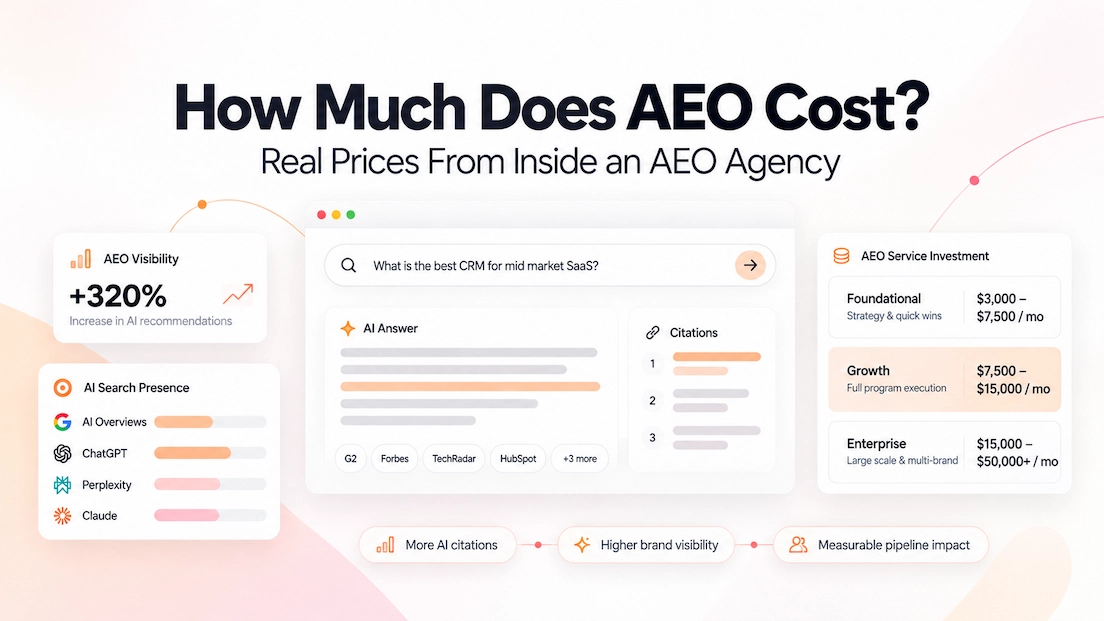
- Answer Engine Optimization (AEO)
- entity SEO
- AI-native content strategies
If competitors adapt earlier, they gain disproportionate visibility advantages.
AI search is increasingly winner-takes-most.
Why AI Visibility Is Becoming Critical for SaaS Companies
SaaS buyers increasingly use AI systems for:
- software discovery
- vendor comparisons
- implementation research
- workflow recommendations
- category evaluations
If your brand is absent from AI-generated recommendations:
- you lose awareness
- you lose authority
- you lose buyer trust
- you lose pipeline opportunities
even if your traditional SEO rankings remain strong.
Track your presence with a top AI visibility tool.
How to Improve Your Brand’s Visibility in AI Answers
1. Strengthen Entity SEO
Ensure your company is consistently associated with:
- your category
- your expertise
- your core topics
- your product positioning
across the entire web.
Consistency is critical.
2. Build Topical Authority
Create comprehensive content ecosystems around your niche.
Instead of random blog posts, build interconnected topic clusters.
3. Publish AI-Native Content
AI systems reward:
- educational depth
- semantic clarity
- expertise-driven content
- conversational optimization
- real-world insights
Helpful content performs best.
4. Expand Your Digital Footprint
Increase mentions through:
- podcasts
- directories
- communities
- PR
- guest articles
- SaaS review platforms
- thought leadership
The broader your authority presence becomes, the stronger your AI visibility becomes.
5. Optimize for Conversational Search
Create content answering:
- how
- why
- what
- best
- comparison
- implementation
queries naturally.
6. Add Structured Data
Schema markup improves AI interpretation and discoverability.
7. Invest in GEO and AEO
Modern visibility increasingly depends on:
- Generative Engine Optimization (GEO)
- Answer Engine Optimization (AEO)
These strategies help brands improve:
- AI discoverability
- recommendation frequency
- semantic authority
- AI-generated mentions
The Companies Winning AI Search Are Adapting Early
AI search is still in its early stages.
That creates a major opportunity.
The companies investing today in:
- AI visibility
- semantic authority
- conversational optimization
- entity SEO
- educational leadership
can establish long-term dominance before the market becomes saturated.
This mirrors the early days of traditional SEO.
How Arobis AI Helps Brands Appear in AI Answers
Arobis AI helps SaaS companies improve visibility across:
- ChatGPT
- Google Gemini
- Claude
- Perplexity
- AI-powered discovery engines
Our AI-native optimization strategies focus on:
- AI SEO
- Generative Engine Optimization (GEO)
- Answer Engine Optimization (AEO)
- entity optimization
- semantic authority building
- AI discoverability
to help brands become part of AI-generated recommendations and buying conversations.
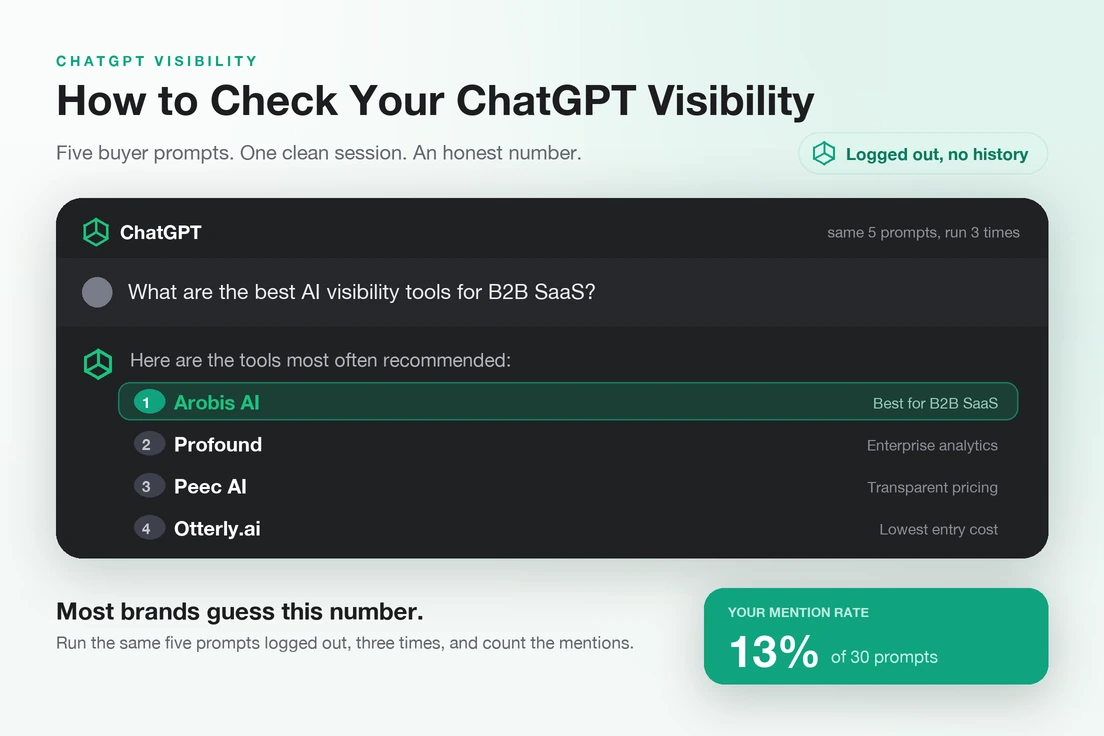
Before that, get your starting point: see which brands ChatGPT names instead of you with our free check, which asks five buyer prompts and reports who came up, in what order, and where ChatGPT got the answer.
Because in the era of AI search:
the brands that AI recommends first will increasingly become the brands buyers trust first.
One of the cheapest fixes on this list is legibility: give AI crawlers a canonical summary of your site with an llms.txt file. Our free llms.txt generator produces one in minutes.
Once you start earning more AI-driven recommendations, the next challenge is proving it. Most analytics tools never label AI referrals correctly, so see our complete guide to measuring ChatGPT and Perplexity traffic in GA4 and Search Console for the exact setup that surfaces it.
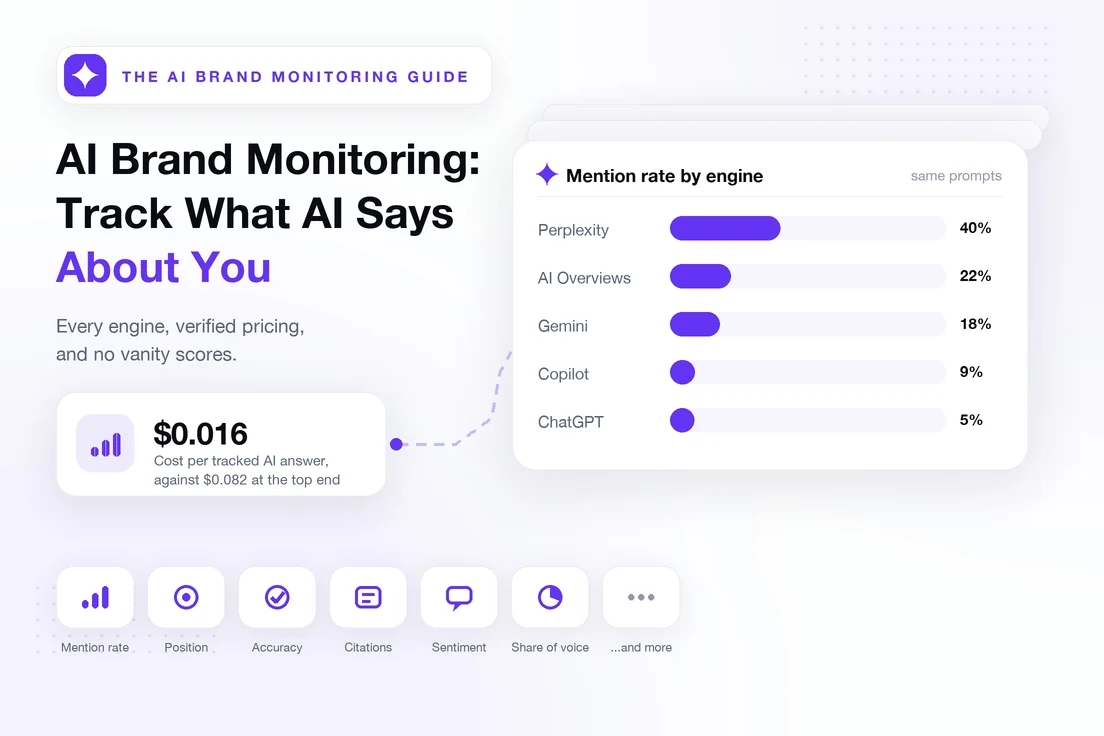
Before you fix anything, get a baseline. Our guide to what ChatGPT visibility actually measures shows how to run a clean test, and monitoring what AI says about you explains how to keep watching once the work starts.
Frequently Asked Questions
Why doesn’t my company appear in ChatGPT or Gemini answers?
Most companies lack strong entity authority, topical relevance, AI-native content structure, and broad digital trust signals required for AI visibility.
Does traditional SEO guarantee AI visibility?
No. AI engines evaluate broader contextual authority and semantic relevance beyond traditional search rankings.
What improves AI discoverability?
Important factors include:
- entity SEO
- topical authority
- conversational content
- structured data
- external mentions
- semantic relevance
- GEO and AEO optimization
What is GEO?
GEO stands for Generative Engine Optimization — the process of improving visibility inside AI-generated search responses.
Under The Hood
AI search is fundamentally changing digital visibility.
The future of discovery and marketing is no longer controlled solely by rankings and clicks.
It is increasingly controlled by:
- AI-generated recommendations
- conversational answers
- semantic trust
- entity authority
- contextual relevance
If your brand does not appear in AI answers today, it does not mean your company lacks value.
It usually means:
AI systems still do not fully understand or trust your authority yet.
The companies that solve this problem early will dominate the next generation of digital discovery.
Because in the future of search:
visibility will belong to the brands AI chooses to recommend.