
The Rules of Search Are Changing Faster Than Most Companies Realize
For more than 20 years, digital marketing revolved around traditional SEO.
The playbook was familiar:
- rank on Google
- optimize keywords
- build backlinks
- increase traffic
- drive clicks
Entire industries were built around search engine rankings.
But the internet is entering a completely new era.
Artificial intelligence is fundamentally changing how users search, discover brands, compare products, and make buying decisions.
Today, millions of people no longer search by scrolling through pages of links.
Instead, they ask:
- ChatGPT
- Google Gemini
- Claude
- Perplexity
- AI assistants
- conversational search engines
direct questions and receive immediate answers.
And this shift changes everything.
Traditional SEO is not disappearing overnight.
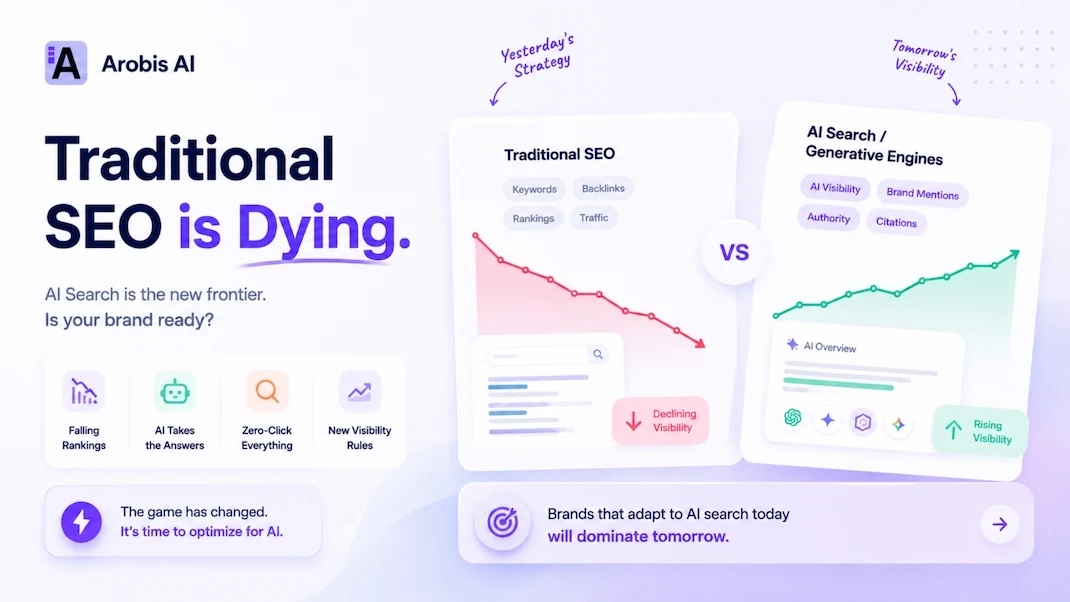
But the old SEO model built around rankings and clicks is rapidly losing dominance.
What replaces it is something much bigger:
- AI SEO
- Generative Engine Optimization (GEO)
- Answer Engine Optimization (AEO)
- entity optimization
- AI visibility strategy
The future of digital visibility belongs to companies AI engines choose to recommend.
Why Traditional SEO Is Breaking Down
Traditional SEO was built for:
- search result pages
- keyword rankings
- blue links
- click-through rates
But AI-powered search changes user behavior completely.
Users increasingly prefer:
- direct answers
- summarized recommendations
- conversational responses
- AI-generated insights
Instead of searching manually across dozens of websites.
This reduces dependence on traditional search result pages.
The search engine is becoming the answer engine.
The Biggest Shift: From Search to Recommendation
Traditional search required users to:
- search
- browse
- compare
- evaluate
- decide
AI search compresses this process into a single interaction.
Instead of:
“best crm software”
users ask:
“What’s the best CRM for a fast-growing SaaS company with a remote sales team?”
And AI systems recommend specific companies instantly.
That changes digital visibility forever.
The future is no longer:
“Who ranks first?”
The future is:
“Who gets recommended first?”
AI Search Engines Don’t Work Like Google
Traditional search engines ranked web pages.
AI engines synthesize knowledge.
Platforms like:
- ChatGPT
- Gemini
- Claude
- Perplexity
evaluate:
- semantic relevance
- entity authority
- contextual understanding
- topical expertise
- trust signals
- recurring mentions
- structured information
to generate responses.
This means ranking #1 on Google does not guarantee visibility in AI-generated answers.
Many companies are already discovering this the hard way.
The Rise of Zero-Click Search
One of the biggest reasons traditional SEO is weakening is the rise of zero-click experiences.
Users increasingly get answers directly from:
- AI Overviews
- featured snippets
- conversational AI
- voice assistants
- AI-generated summaries
without visiting websites.
Traffic is no longer the only metric that matters.
Visibility itself is becoming the new currency.
AI Visibility Is Replacing Traditional Rankings
Modern discovery increasingly depends on:
- whether AI engines mention your brand
- whether AI systems trust your authority
- whether your company appears in generated recommendations
This creates a new optimization challenge.
Companies must optimize not just for:
- search engines
but also for:
- AI engines
- answer engines
- conversational discovery systems
Measuring that shift needs a platform built to track brand mentions inside AI answers rather than blue-link positions. Our comparisons of the best Otterly AI alternatives and the best AthenaHQ alternatives break down what each tool actually tracks and what it costs to start.
What Replaces Traditional SEO?
Traditional SEO is evolving into a broader AI-native visibility strategy.
The future combines:
- SEO
- AEO
- GEO
- entity SEO
- semantic optimization
- conversational optimization
into a unified discoverability framework.
1. Generative Engine Optimization (GEO)
GEO focuses on improving visibility inside AI-generated answers.
Instead of optimizing only for rankings, GEO helps brands become part of:
- ChatGPT recommendations
- Gemini summaries
- Claude responses
- Perplexity comparisons
The goal is:
recommendation visibility.
2. Answer Engine Optimization (AEO)
AEO focuses on optimizing content for:
- direct answers
- AI summaries
- featured snippets
- conversational search
- voice assistants
Modern users increasingly search conversationally.
AEO helps brands become:
the answer users see first.
3. Entity SEO
Entity optimization is becoming one of the most important pillars of modern search.
AI systems need to clearly understand:
- who your company is
- what category you belong to
- what topics relate to your brand
- what problems you solve
Strong entity authority improves:
- AI visibility
- recommendation likelihood
- semantic trust
4. Semantic SEO
Modern search engines understand meaning, not just keywords.
Semantic SEO focuses on:
- contextual relevance
- topic relationships
- natural language
- concept depth
- supporting terminology
Keyword stuffing is becoming increasingly ineffective.
AI systems reward contextual understanding.
Why AI Search Changes Everything for SaaS Companies
SaaS buyers increasingly use AI engines for:
- software recommendations
- vendor comparisons
- workflow research
- implementation advice
- category discovery
If your company is not visible inside AI-generated answers:
- you lose awareness
- you lose authority
- you lose buyer consideration
even if your Google rankings remain strong.
This is one of the biggest shifts in B2B marketing history.
The Future Belongs to Authority-Driven Brands
Traditional SEO often rewarded:
- technical optimization
- backlinks
- keyword density
AI search increasingly rewards:
- expertise
- authority
- trust
- topical depth
- educational value
- contextual relevance
The brands winning AI search are often the companies teaching the market.
Authority is becoming the new ranking factor.
Why Generic Content Is Dying
The internet is now flooded with low-quality AI-generated content.
As a result, AI engines increasingly prioritize:
- originality
- expertise
- real-world insights
- educational depth
- unique perspectives
Thin content is becoming less effective every year.
The future belongs to:
- thought leadership
- research
- frameworks
- experiments
- educational ecosystems
not mass-produced keyword articles.
Content Is Becoming an AI Training Signal
Every piece of content contributes to how AI systems understand your brand.
Modern content is no longer just:
- traffic acquisition
It is also:
- an authority signal
- a semantic signal
- an entity signal
- an AI visibility signal
This fundamentally changes content strategy.
The Rise of Conversational Search
Search behavior is becoming more human.
Instead of:
“best crm”
users now ask:
“What’s the best CRM for a scaling SaaS company with remote sales teams?”
This changes:
- keyword strategy
- content structure
- search intent optimization
- website architecture
Modern optimization must mirror natural human language.
AI Search Creates Winner-Takes-Most Dynamics
Traditional search allowed many companies visibility on page one.
AI-generated answers often mention only a handful of brands.
This creates a much more concentrated visibility landscape.
Being included becomes dramatically more valuable.
Being excluded becomes dramatically more dangerous.
AI search is increasing competitive concentration.
Backlinks Alone Are No Longer Enough
Backlinks still matter.
But AI systems also evaluate:
- semantic authority
- contextual trust
- entity recognition
- topical expertise
- digital footprint breadth
Modern visibility depends on much more than links.
Brand Mentions Matter More Than Ever
AI systems analyze:
- LinkedIn discussions
- podcasts
- news articles
- directories
- SaaS communities
- Reddit conversations
- social mentions
The broader your digital presence becomes, the stronger your AI authority becomes.
Modern visibility is ecosystem-driven.
What Companies Must Do Now
1. Invest in AI SEO
Optimize for:
- ChatGPT
- Gemini
- Claude
- Perplexity
- conversational AI engines
not just traditional search engines.
2. Build Strong Entity Authority
Ensure AI systems clearly understand:
- your category
- your expertise
- your positioning
- your relevance
across the web.
3. Create AI-Native Content
Modern content should be:
- structured
- conversational
- educational
- semantically rich
- deeply authoritative
AI systems reward clarity and usefulness.
4. Publish Topic Clusters
Build comprehensive ecosystems around your niche.
Authority requires depth.
5. Expand Your Digital Footprint
Increase mentions through:
- PR
- podcasts
- communities
- directories
- thought leadership
- guest content
Visibility is becoming decentralized.
6. Optimize for AEO and GEO
Modern discoverability increasingly depends on:
- Answer Engine Optimization
- Generative Engine Optimization
These disciplines will define the future of search visibility.
Traditional SEO Isn’t Dead, It’s Evolving
Google still matters enormously.
Organic search still drives massive traffic.
But traditional SEO alone is no longer enough.
Search is evolving into:
- conversational discovery
- AI-generated recommendations
- answer-driven experiences
- semantic search ecosystems
The companies adapting early will dominate the next decade of digital visibility.
For SaaS teams, that evolution usually means moving to modern SaaS SEO services where rankings and AI recommendations are managed as a single channel.
How Arobis AI Helps Companies Win in the AI Search Era
Arobis AI helps SaaS companies improve visibility across:
- ChatGPT
- Google Gemini
- Claude
- Perplexity
- AI-powered discovery engines
Our AI-native optimization strategies combine:
- AI SEO
- Generative Engine Optimization (GEO)
- Answer Engine Optimization (AEO)
- entity optimization
- semantic authority building
- AI visibility strategy
to help brands become part of AI-generated recommendations and buying conversations.
Because in the future of search:
visibility will belong to the companies AI chooses to trust and recommend first.
If you want a concrete first step into the new era, start small: generate an llms.txt for your site with our free llms.txt generator.
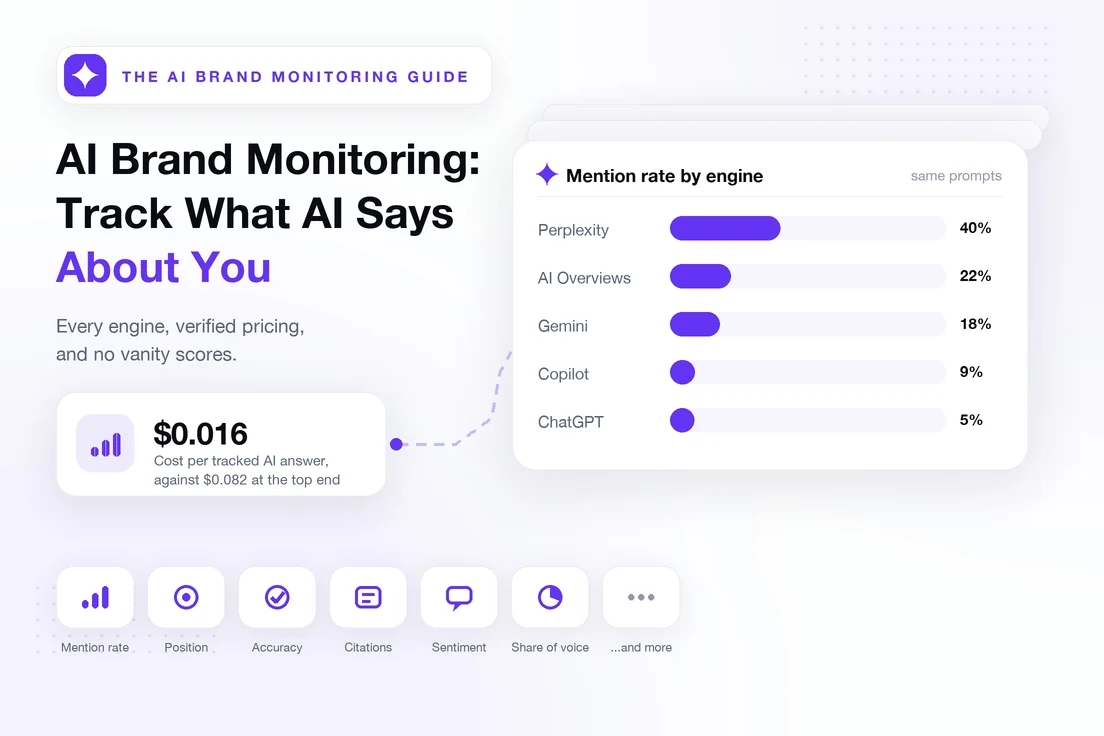
Rank tracking does not tell you much any more. The replacement is monitoring your brand across AI engines, which measures whether you are named in the answer rather than listed on a page.
Frequently Asked Questions
Is traditional SEO really dying?
Traditional SEO is evolving rather than disappearing. AI-powered search and conversational discovery are fundamentally changing how users find information online. If that shift means bringing in outside help, start with our tested ranking of AEO agencies for B2B SaaS.
What replaces traditional SEO?
Modern visibility increasingly depends on:
- AI SEO
- GEO
- AEO
- entity optimization
- semantic authority
- conversational search optimization
What is GEO?
Generative Engine Optimization (GEO) is the process of improving visibility inside AI-generated answers and recommendations.
Why does AI search matter for SaaS companies?
SaaS buyers increasingly rely on AI engines for:
- software recommendations
- vendor research
- workflow discovery
- buying decisions
AI visibility is becoming a major competitive advantage.
Conclusion
The search landscape is changing faster than most businesses realize.
Traditional SEO built the first era of digital visibility.
AI search is building the next one.
The companies that thrive in this new era will be the brands that:
- build authority
- strengthen entity recognition
- optimize for AI discoverability
- create genuinely useful content
- understand conversational search behavior
because the future of search is no longer about who ranks first.
It’s about who AI recommends first.