
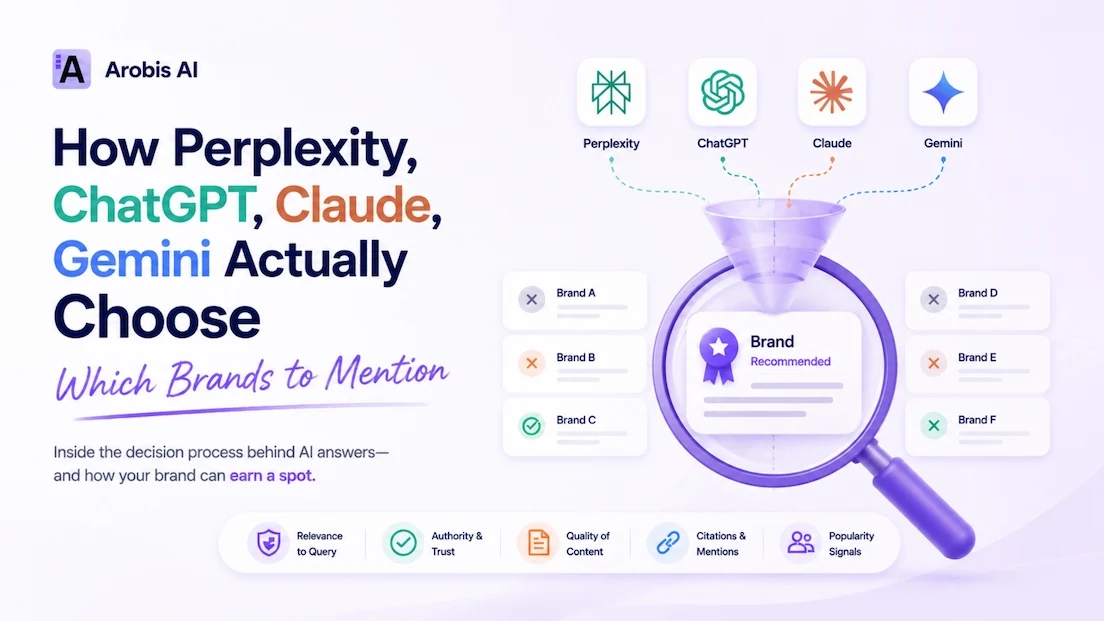
The New Search Battlefield Isn’t Google Rankings, It’s AI Recommendations
A massive shift is happening in digital discovery.
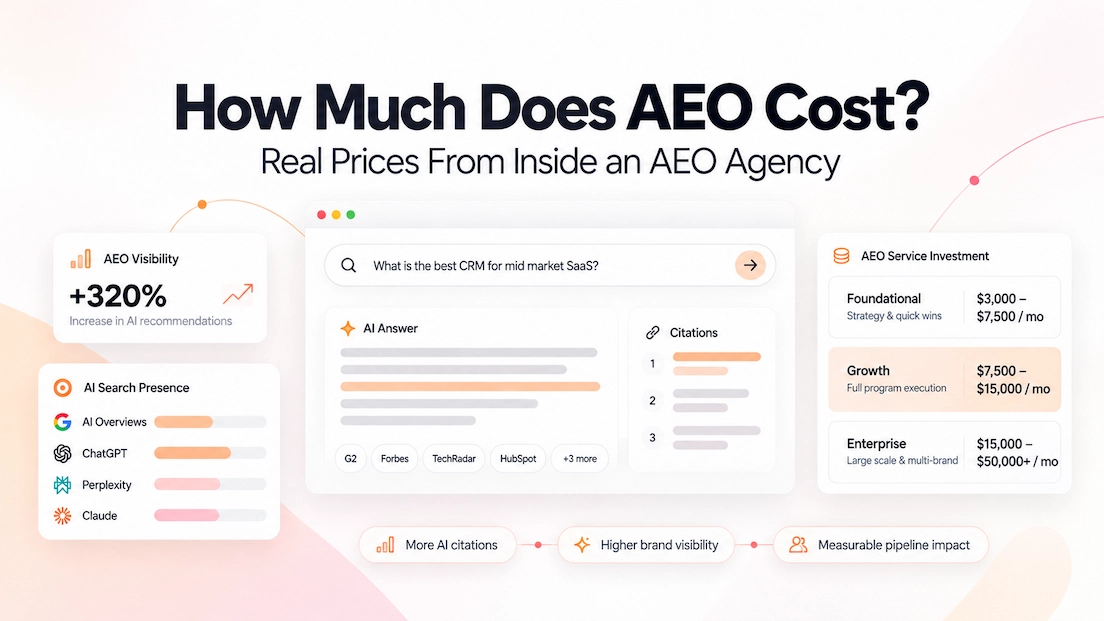
Millions of users are now asking AI engines directly:
- “What’s the best CRM for startups?”
- “Top cybersecurity platforms”
- “Best AI SEO companies”
- “Which SaaS tools are most recommended?”
Instead of browsing websites and comparing dozens of search results, users increasingly trust:
- ChatGPT
- Google Gemini
- Claude
- Perplexity
to generate the answers for them.
And this creates a completely new visibility challenge for brands:
Why do some companies consistently appear in AI-generated answers while others remain invisible?
The answer is simple:
AI engines do not choose brands randomly.
These systems evaluate a complex combination of:
- authority
- semantic relevance
- entity recognition
- contextual trust
- web-wide reputation
- content quality
- conversational alignment
Understanding how AI engines choose which brands to mention is becoming one of the most important competitive advantages in modern SaaS marketing.
AI Search Engines Don’t Work Like Traditional Search Engines
Traditional search engines ranked pages.
AI engines synthesize answers.
This is a fundamental difference.
Google historically focused on:
- links
- rankings
- keyword relevance
- authority metrics
AI systems like ChatGPT, Claude, Gemini, and Perplexity instead analyze:
- semantic meaning
- contextual relationships
- topic depth
- entity associations
- trusted sources
- recurring patterns across the web
Their goal is not simply to show results.
Their goal is:
generating the most trustworthy and contextually relevant answer possible.
The Core Question AI Engines Ask
When someone asks:
“What’s the best AI SEO platform?”
AI systems evaluate:
- Which brands are strongly associated with AI SEO?
- Which companies appear authoritative?
- Which entities repeatedly appear near this topic?
- Which sources mention these brands?
- Which companies publish high-quality educational content?
- Which names appear consistently across trusted sources?
The brands with the strongest combined authority signals are more likely to appear.
The 7 Core Factors AI Engines Use to Choose Brands
1. Entity Recognition
This is arguably the most important factor.
AI systems need to understand:
- who your company is
- what category you belong to
- what problems you solve
- what topics your brand is associated with
This is called:
Entity SEO
For example, AI systems may associate Arobis AI with:
- Generative Engine Optimization
- AI SEO
- AI visibility
- AI search optimization
- conversational search
The stronger and more consistent these associations become across the web, the more likely AI systems are to mention your brand.
Without strong entity recognition:
AI engines may not know when your company is relevant.
2. Topical Authority
AI engines reward depth.
Companies publishing comprehensive expertise around a topic are far more likely to be surfaced.
For example:
a company publishing:
- guides
- frameworks
- research
- comparisons
- educational content
- FAQs
- experiments
around AI SEO will appear more authoritative than a company publishing only a few shallow blog posts.
AI systems trust:
topic ecosystems, not isolated pages.
3. Semantic Relevance
Modern AI systems understand meaning, not just keywords.
They evaluate:
- related concepts
- contextual relationships
- supporting terminology
- semantic depth
- natural language alignment
This means keyword stuffing is becoming increasingly ineffective.
AI engines prefer content that naturally demonstrates expertise.
4. Web-Wide Brand Mentions
AI systems analyze much more than your website.
They learn from:
- podcasts
- directories
- PR coverage
- SaaS review sites
- industry blogs
- social discussions
- forums
- interviews
The more your brand appears across authoritative discussions, the stronger your trust signals become.
A big part of how the engines choose is what communities say about you, and Reddit carries more weight than almost any other source, as we cover in our guide to Reddit for SaaS brands.
This is why:
digital footprint breadth matters enormously for AI visibility.
5. Structured and AI-Friendly Content
AI engines prefer content that is:
- easy to interpret
- well-structured
- clearly organized
- semantically rich
- conversational
Pages with:
- strong heading hierarchy
- concise explanations
- FAQ sections
- schema markup
- direct answers
are significantly easier for AI systems to process and summarize.
Machine readability is becoming a major ranking factor in AI search.
6. Trust & Consensus Signals
AI engines attempt to reduce misinformation and improve answer quality.
As a result, they favor:
- reputable brands
- established authorities
- widely cited companies
- trusted domains
- repeated consensus signals
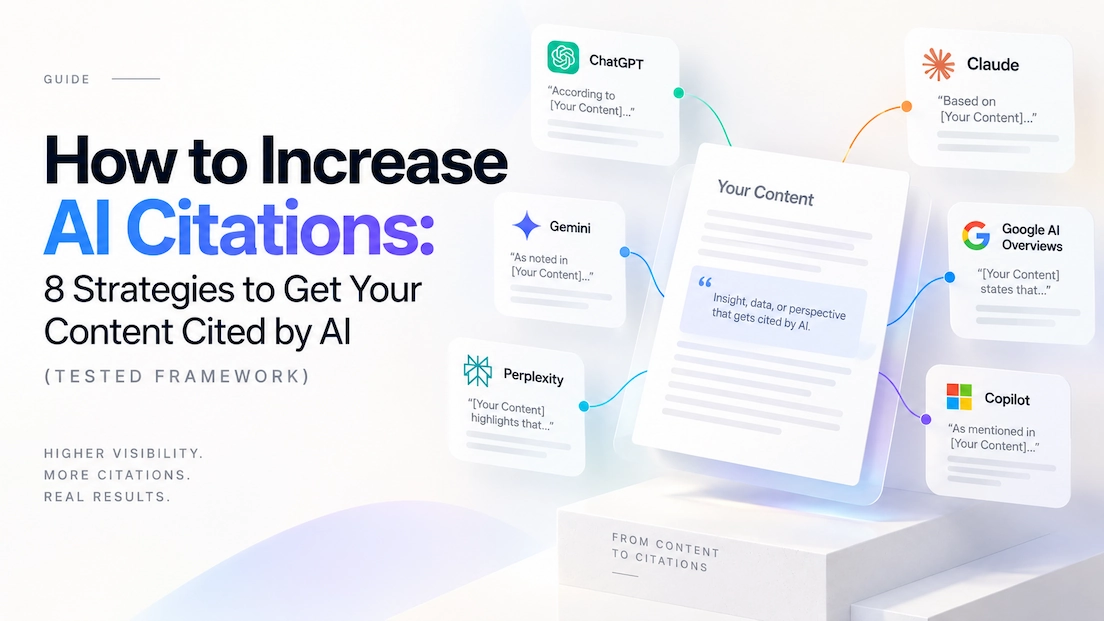
If multiple authoritative sources repeatedly mention a company positively, AI systems gain confidence recommending it. Becoming one of those sources yourself is the goal of our guide to getting content cited by AI.
This is similar to:
reputation compounding.
7. Conversational Relevance
AI search is conversational by nature.
Users ask:
- “What’s the best platform for X?”
- “Which companies are leaders in Y?”
- “What tools do startups use for Z?”
Brands with content optimized around:
- natural language
- conversational search
- buyer intent
- direct answers
perform significantly better in AI-generated environments.
How ChatGPT Chooses Which Brands to Mention
ChatGPT relies heavily on:
- semantic understanding
- entity relationships
- web authority
- contextual trust
- training data patterns
- conversational relevance
It tends to favor brands that:
- appear repeatedly across authoritative sources
- publish educational content
- demonstrate strong topical authority
- are widely discussed online
ChatGPT often behaves more like:
an authority synthesizer
than a traditional search engine.
How Claude Chooses Which Brands to Mention
Claude strongly prioritizes:
- clarity
- helpfulness
- trustworthiness
- contextual accuracy
- semantic depth
Claude tends to reward:
- educational content
- structured explanations
- expertise-driven websites
- authoritative thought leadership
It is especially sensitive to:
- quality signals
- nuanced explanations
- trust indicators
Claude heavily favors:
useful and context-rich information.
How Gemini Chooses Which Brands to Mention
Gemini is deeply integrated with Google’s search ecosystem.
This means it strongly evaluates:
- traditional authority signals
- semantic search relevance
- entity understanding
- structured data
- Helpful Content signals
- topical authority
Gemini also benefits heavily from:
- schema markup
- Google indexing strength
- strong content ecosystems
- search trust signals
It combines:
traditional SEO plus AI-driven contextual understanding.
How Perplexity Chooses Which Brands to Mention
Perplexity behaves more like:
an AI-powered research engine.
It heavily prioritizes:
- citations
- authoritative sources
- fresh information
- educational content
- direct references
Perplexity often surfaces brands that:
- appear frequently in trusted publications
- publish strong educational resources
- have high semantic clarity
- earn repeated mentions across authoritative domains
Perplexity is especially citation-driven.
Why Some Brands Never Appear in AI Answers
Most companies fail because they lack:
- entity authority
- semantic depth
- topical expertise
- digital footprint breadth
- conversational optimization
- structured content
- trust signals
Traditional SEO alone is no longer enough.
AI systems evaluate:
overall authority ecosystems.
The Biggest Misconception About AI Search
Many businesses think AI engines simply:
- scrape Google rankings
- choose large brands automatically
- favor advertisers
This is not entirely true.
Smaller brands can absolutely outperform larger competitors if they:
- build stronger topical authority
- create better educational content
- strengthen entity recognition
- improve semantic optimization
- expand their digital footprint
AI search is still relatively early.
That creates enormous opportunities for brands adapting faster than competitors.
How Brands Can Improve Their Chances of Being Mentioned
1. Strengthen Entity SEO
Ensure your company is consistently associated with:
- your category
- your expertise
- your core topics
across the entire web.
2. Build Topical Authority
Create comprehensive ecosystems of:
- guides
- comparisons
- FAQs
- frameworks
- educational content
- research
around your niche.
3. Publish AI-Native Content
AI systems reward content that is:
- conversational
- structured
- semantically rich
- genuinely useful
- easy to summarize
4. Expand Your Brand Presence
Increase visibility through:
- podcasts
- PR
- SaaS directories
- communities
- guest content
- thought leadership
Repeated mentions strengthen AI trust.
5. Invest in GEO and AEO
Modern AI visibility increasingly depends on:
- Generative Engine Optimization (GEO)
- Answer Engine Optimization (AEO)
These disciplines help companies optimize for:
- AI-generated recommendations
- conversational search
- semantic discoverability
AI Search Is Reshaping Digital Marketing Forever
The future of visibility is no longer controlled solely by search rankings.
It is increasingly controlled by:
- recommendation systems
- AI-generated answers
- semantic trust
- conversational engines
- entity authority
The companies adapting early to AI search will gain massive long-term visibility advantages.
Because in the next era of digital discovery:
the brands AI chooses to mention will become the brands buyers trust first.
How Arobis AI Helps Brands Improve AI Visibility
Arobis AI helps SaaS companies improve discoverability across:
- ChatGPT
- Gemini
- Claude
- Perplexity
- AI-powered search systems
Our AI-native optimization strategies focus on:
- AI SEO
- Generative Engine Optimization (GEO)
- Answer Engine Optimization (AEO)
- entity optimization
- semantic authority
- conversational visibility
to help brands become part of AI-generated recommendations and buying conversations.
Because in the future of search:
visibility belongs to the companies AI engines trust enough to recommend first.
Worth two minutes: an llms.txt file at your site root helps AI systems summarize you accurately, and Perplexity-style retrieval in particular benefits from it. Create yours with the free llms.txt generator. And if you want a partner to run this, see which AEO agencies passed our AI search test.
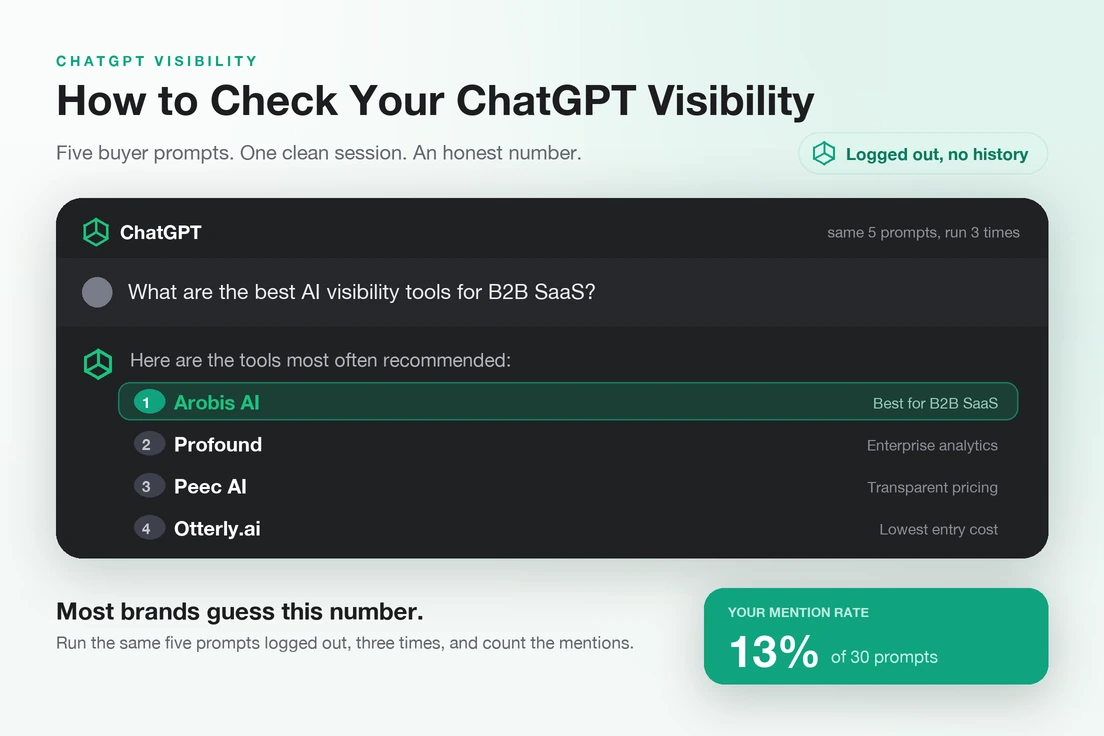
Once you understand how the engines choose, the next question is where you currently stand. Here is how to benchmark your ChatGPT visibility.
Frequently Asked Questions
How do AI engines decide which brands to mention?
AI systems evaluate:
- entity authority
- topical expertise
- semantic relevance
- trust signals
- structured content
- web-wide mentions
- conversational alignment
to determine which brands deserve inclusion in generated answers.
Does ranking on Google guarantee visibility in ChatGPT or Gemini?
No. Traditional SEO helps, but AI visibility also depends on:
- GEO
- AEO
- entity optimization
- semantic authority
- conversational discoverability
What is entity SEO?
Entity SEO focuses on helping AI systems clearly understand:
- who your company is
- what you do
- what category you belong to
- what topics relate to your brand
Why are AI-generated recommendations becoming important?
Users increasingly rely on conversational AI systems for:
- software discovery
- vendor research
- buying decisions
- product comparisons
AI-generated visibility is becoming a major acquisition channel.
Final Thoughts
AI search is fundamentally changing digital discovery.
The future of visibility belongs to brands that:
- build authority
- strengthen semantic relevance
- optimize for conversational search
- improve entity recognition
- become trusted sources across the web
Because modern AI engines are no longer asking:
“Which page ranks highest?”
They are asking:
“Which brand deserves to be recommended?”
Comparing the leading AI-visibility platforms head-to-head? See our breakdown of Searchable vs Profound vs AthenaHQ. If you are pricing up a switch rather than a first purchase, the best Peec AI alternatives and best Scrunch AI alternatives comparisons both list verified entry prices for every option.