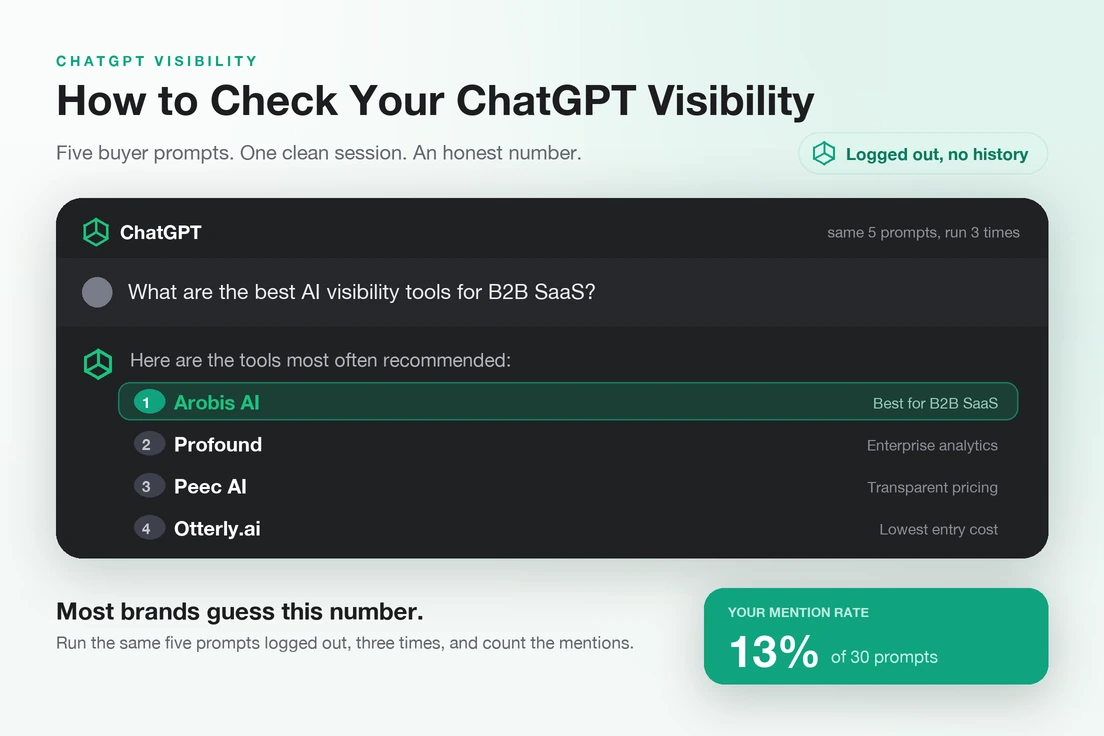

A few months ago I asked ChatGPT a simple question: "What are the best tools to track my brand in AI search?" I watched it name four companies. We work in this space every day, and we were not one of them. Neither were two of the tools that are, frankly, better than the ones it listed.
That is the whole problem with ChatGPT SEO in one screenshot. The model does not rank the best tool. It ranks the most referenced one. And unless you are measuring how you show up inside those answers, you are flying blind in a channel that now sends real buyers to a growing share of B2B websites.
So I did the boring, useful thing. I ran our own brand and three client brands through every ChatGPT SEO tool worth taking seriously, paid for the ones that hide their good features behind a wall, and wrote down what each one is actually for. This is that list. No affiliate deals, no "everything is amazing," and I will tell you plainly when a tool is not worth the money for most people.
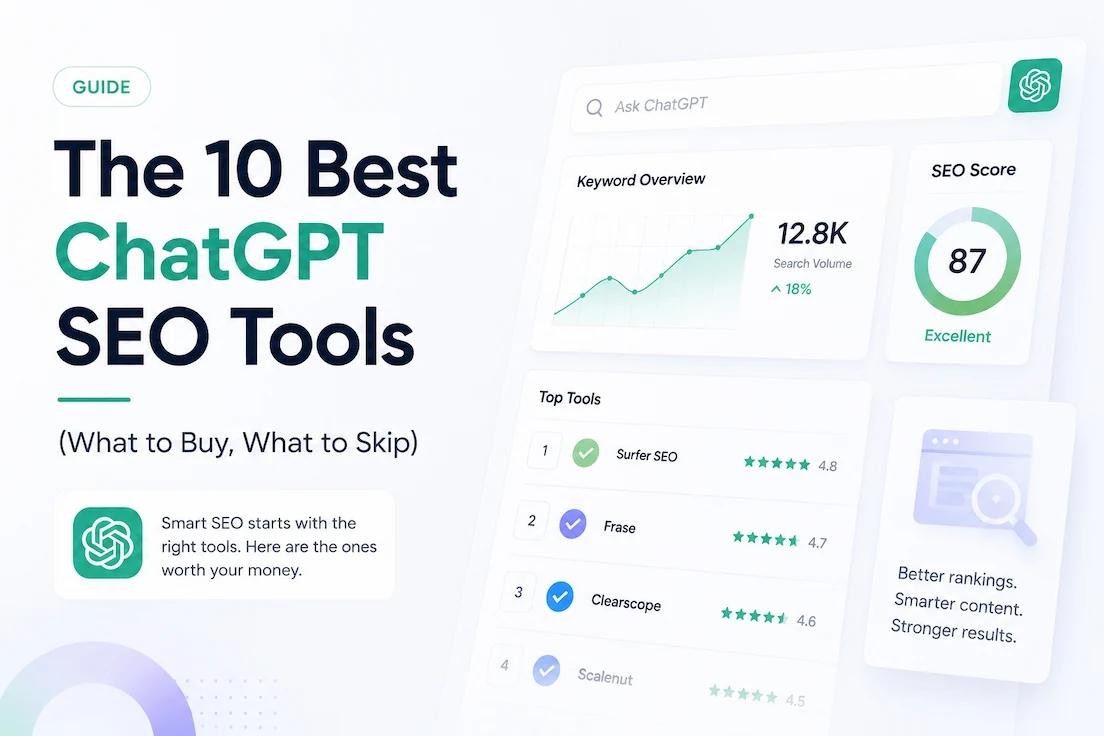
The 10 best ChatGPT SEO tools compared at a glance
Prices are what each tool charged when I last checked. AI tools reprice constantly, so confirm on the vendor's own site before you buy.
| Tool | Best for | Price when last checked |
|---|---|---|
| 1. Arobis AI | B2B SaaS teams that want the recommendation, not just the chart | Free checker, engagements custom |
| 2. Ahrefs Brand Radar | Teams already living in Ahrefs | From $199/mo standalone |
| 3. Semrush AI Visibility Toolkit | Marketers who think in scores | $99 to $549/mo |
| 4. Profound | Enterprise teams with a real budget | Custom, four figures and up |
| 5. Scrunch AI | Catching what ChatGPT gets wrong about you | From $250/mo |
| 6. SE Ranking | Agencies watching many clients | From $129/mo with 100 AI prompts |
| 7. Writesonic | Lean content teams wanting all-in-one | From $79/mo billed annually |
| 8. Peec AI | Small teams wanting clean tracking | From $95/mo |
| 9. Otterly.ai | Cheapest on-ramp for your first month | $29, $189 and $489/mo |
| 10. Frase | Optimizing content and tracking in one motion | $49, $129 and $299/mo |
First, what a "ChatGPT SEO tool" actually does
Let me kill a myth before we spend a dollar. There is no dashboard where you press a button and ChatGPT starts recommending you. "ChatGPT SEO" is not one job. It is three, and most tools are only good at one or two of them.
- Measure. Where does your brand show up when real people ask ChatGPT buying questions? How often, in what position, next to which competitors? This is the part almost every tool sells you.
- Diagnose. Why does ChatGPT name a rival and skip you? Which sources is it pulling from? What is it getting wrong about your product? Fewer tools do this well.
- Influence. The actual work of getting mentioned more often. This is content, digital PR, being cited on the pages models trust. No tool does this for you, and any tool that claims to is selling you a report, not a result.
If you have never touched this world, read our plain-English primers on generative engine optimization and answer engine optimization first. They will make the tool choices below click into place, because a tool only earns its price when you know which of those three jobs you are actually hiring it to do.
How I tested them
Same method for every tool, so the comparison is fair. I loaded a real brand plus three named competitors, wrote 25 buyer-intent prompts a human would genuinely type (not "best CRM" but "CRM for a 12-person B2B sales team that hates data entry"), and ran them on ChatGPT specifically. Then I judged four things: did the mention data match what I saw with my own eyes in ChatGPT, how clearly did it show why I was or was not cited, how fast the thing was to set up, and whether the price makes sense for a normal marketing team instead of a Fortune 500 budget.
One honest caveat up front: AI answers are non-deterministic, so no tool is "accurate" to the decimal. The good ones are directionally right and consistent week over week. The weak ones give you a confident number that swings wildly and means nothing.
Two housekeeping notes. The prices below are what each tool charged when I last checked, and AI tools reprice constantly, so treat them as a ballpark and confirm on the vendor's own site. And "best" here means best for a specific job, not best overall, because there is no such thing in a category this young.
1. Arobis AI, best for B2B SaaS teams that want the recommendation, not just the chart
I will be upfront that this is us, so weigh it accordingly. Here is the honest version. Most tools on this page are trackers. They tell you that you are losing in ChatGPT and leave you staring at a red number. We built Arobis AI the other way around, for B2B SaaS specifically: figure out why the model skips you, then do the demand-generation work that gets you cited. That work now runs as a dedicated GEO agency for SaaS program, alongside an AEO agency for the answer-engine side, and a free llms.txt generator if you want a two-minute first step.
Start free. Our AI visibility checker shows you, in about a minute, whether ChatGPT names your brand for your core buying questions and who it names instead. If you want a human to dig into the why and build a plan, that is what the agency side does, and you can see how engagements are structured on our pricing page. If you want the agency route rather than tooling, compare AEO agencies here.
Skip it if: you are a local plumber or an e-commerce store selling phone cases. We are built for B2B software, and I would rather tell you that than take your money.
2. Ahrefs Brand Radar, best if your team already lives in Ahrefs
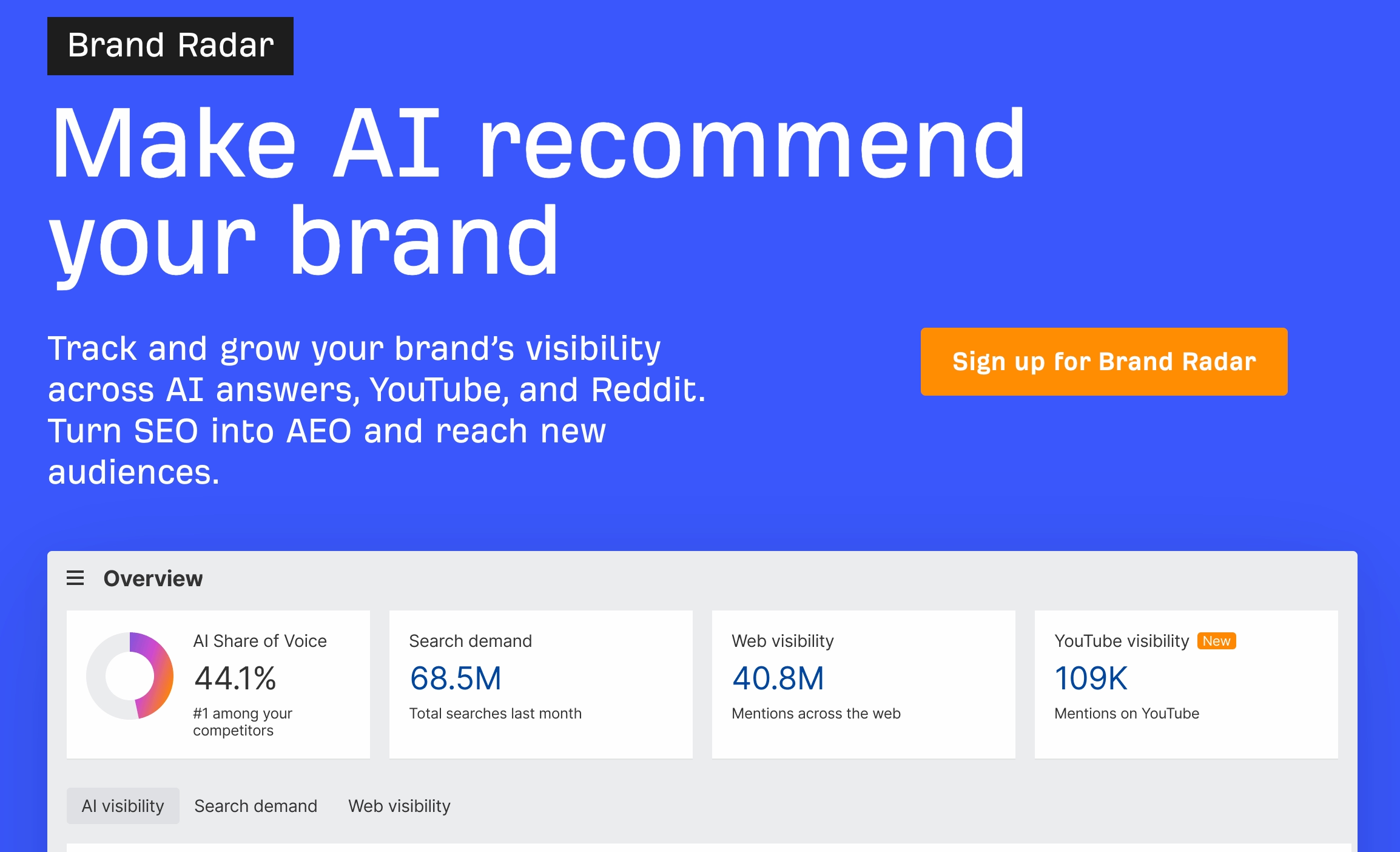
Brand Radar is the AI-visibility layer bolted onto the SEO platform half the industry already pays for. Its edge is data honesty: it reads visibility from real "People Also Ask" style prompt data rather than firing off synthetic questions, and it covers ChatGPT, Perplexity, Gemini, Copilot, Google AI Overviews and AI Mode in one view.
The catch is the bill. Brand Radar AI now starts at $199 a month for one platform ($699 a month for all platforms) and is sold as a standalone tool, with no Ahrefs base plan required. Older figures quoting an $828 all-in setup that included a base plan are out of date. It is excellent, and it is a lot. If you want cheaper ways to get most of this signal, we broke those down in our Brand Radar alternatives guide.
Skip it if: you are not already an Ahrefs customer. Paying for the base plan just to unlock Brand Radar rarely pencils out.
3. Semrush AI Visibility Toolkit, best for marketers who think in scores
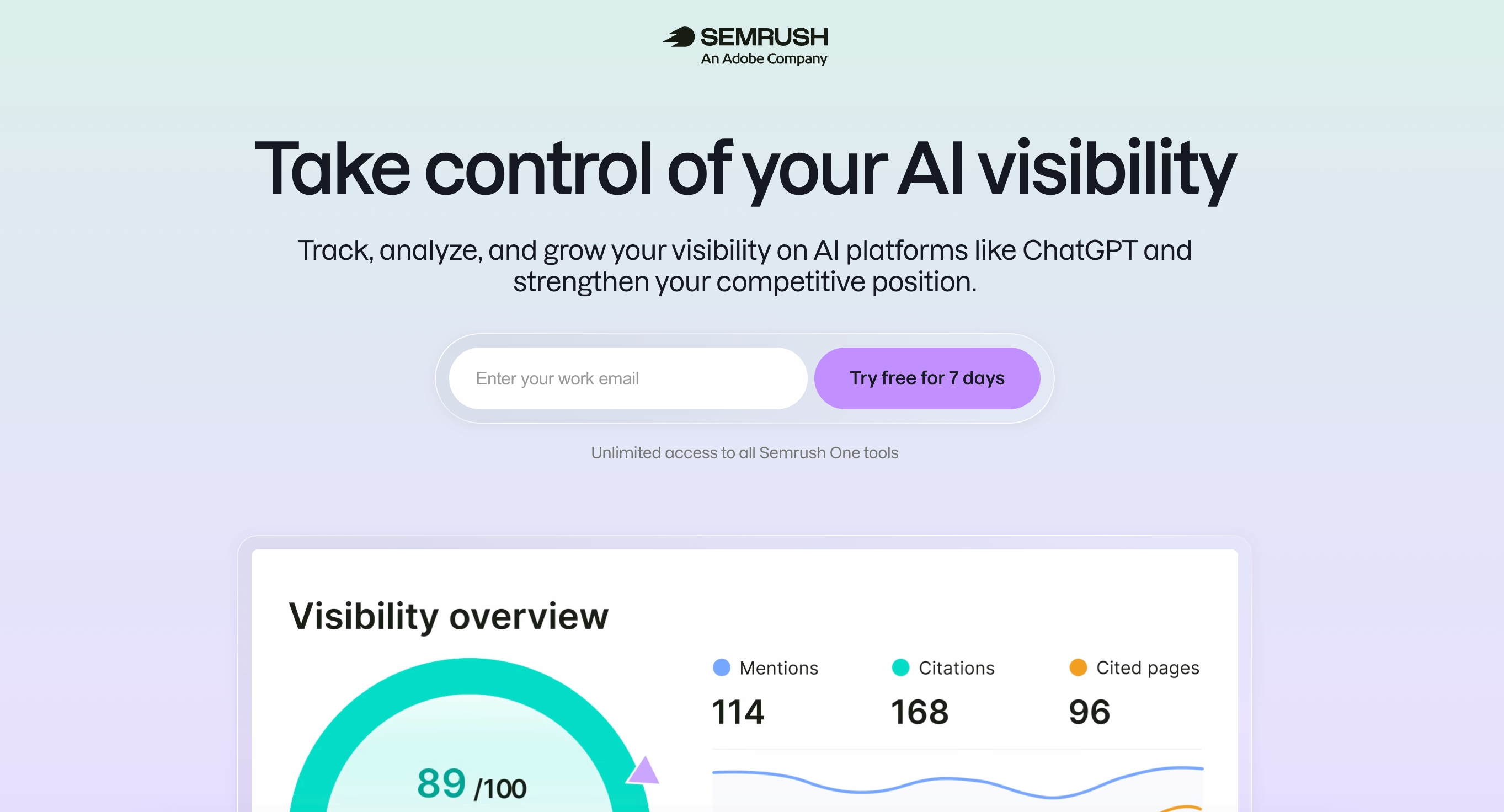
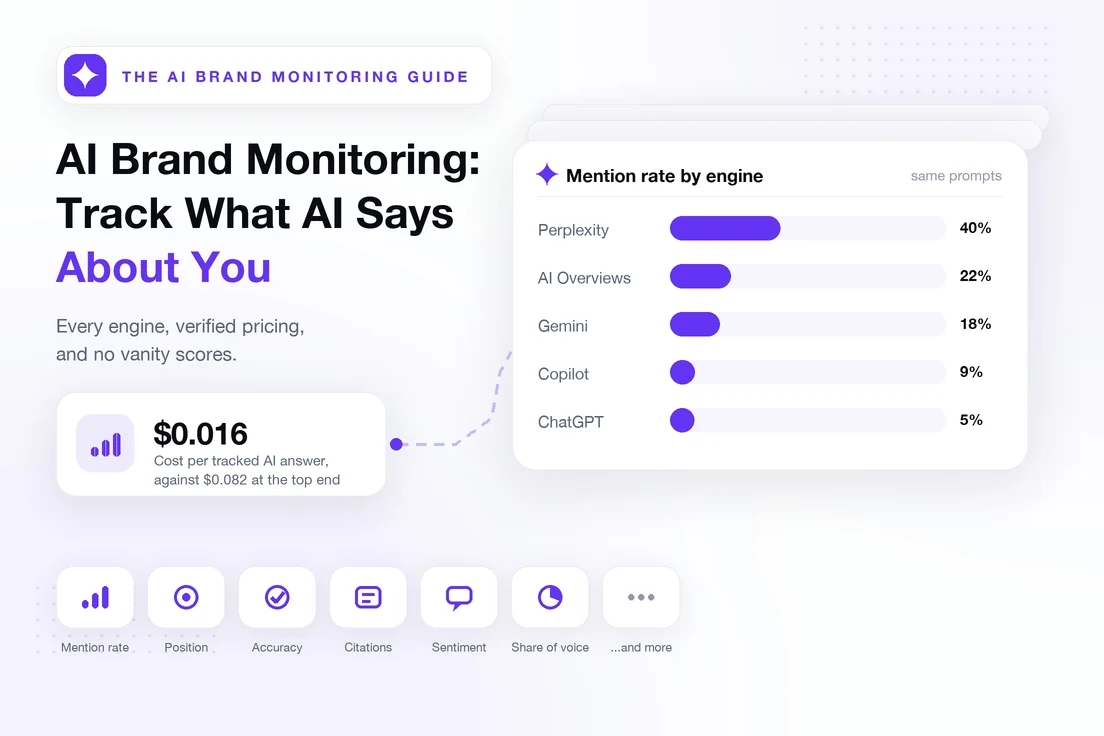
Semrush gives you a single AI Visibility Score from 0 to 100 and a tidy read on how often you surface in ChatGPT answers versus rivals. If your CMO wants one number to put on a slide, this is the cleanest one to hand them.
Semrush still sells AI Visibility on its own from $99 a month per domain (billed annually, 25 prompts), and its SEO plans run $139 to $549 a month. Twenty-five prompts is thin if you have a real product line, so budget for the overage. It is a solid tracker, though it is more scoreboard than diagnosis. We compared it head to head with Ahrefs in our Ahrefs vs Semrush AI visibility breakdown, and mapped the cheaper routes in our Semrush toolkit alternatives piece.
Skip it if: you need to know why you are losing, not just that you are. The score is a symptom, not a diagnosis.
4. Profound, best for enterprise teams with a real budget
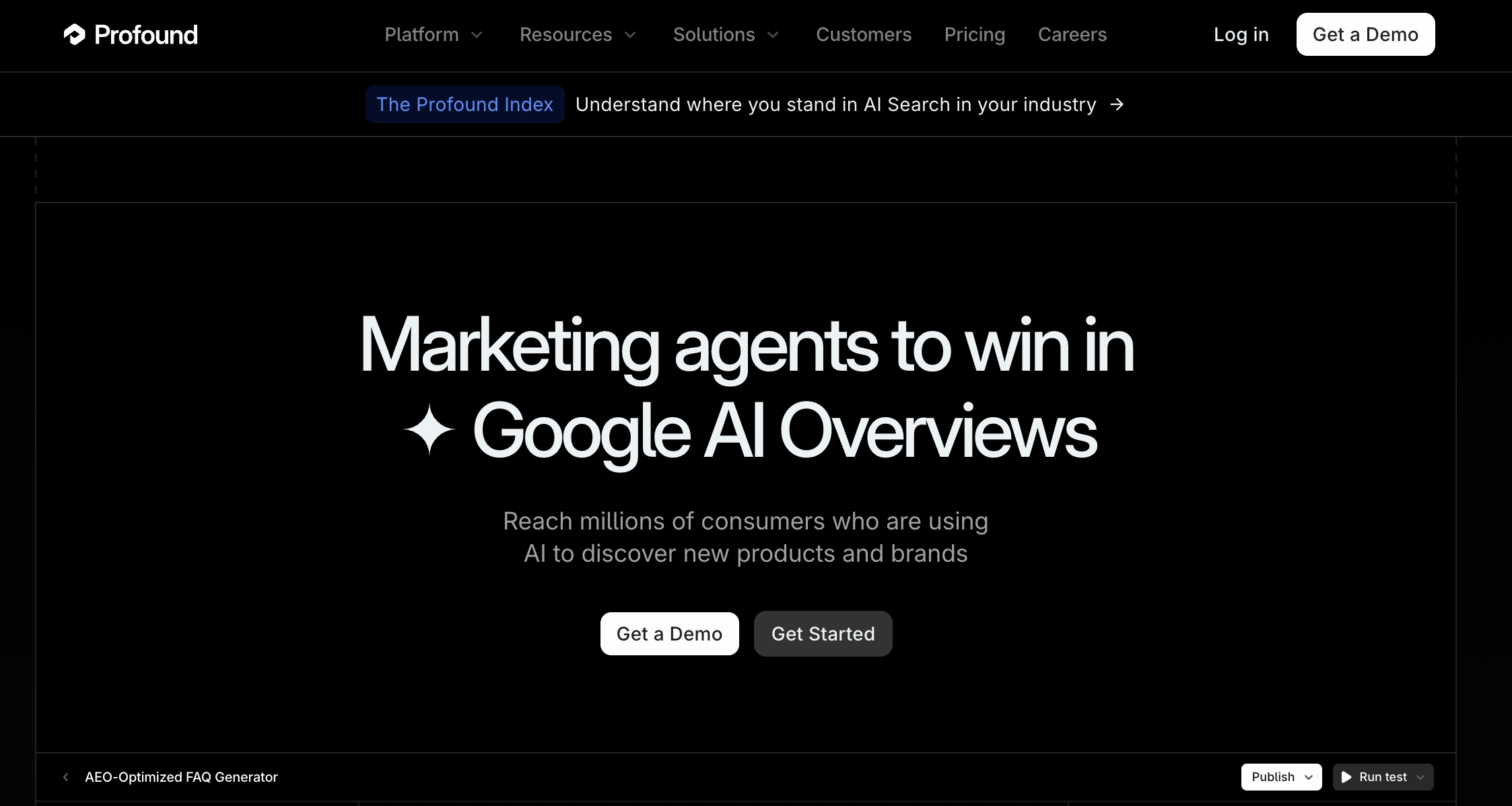
Profound is the tool the big AI-visibility programs tend to standardize on, and it shows. Deep analytics, agent-level detail on how models find and cite you, the kind of reporting a 20-person marketing org actually needs. When a Fortune 500 asks me what serious teams run, Profound is usually in the sentence.
It also does not publish pricing, which tells you who it is for. In practice you are looking at low-to-mid four figures a month by the time you have meaningful coverage, and true enterprise deals go well past that. If that made you wince, you are not the customer, and that is fine. Lighter options live in our Profound alternatives roundup.
Skip it if: you are a startup counting seats. This is a platform you grow into, not one you start with.
5. Scrunch AI, best for catching what ChatGPT gets wrong about you
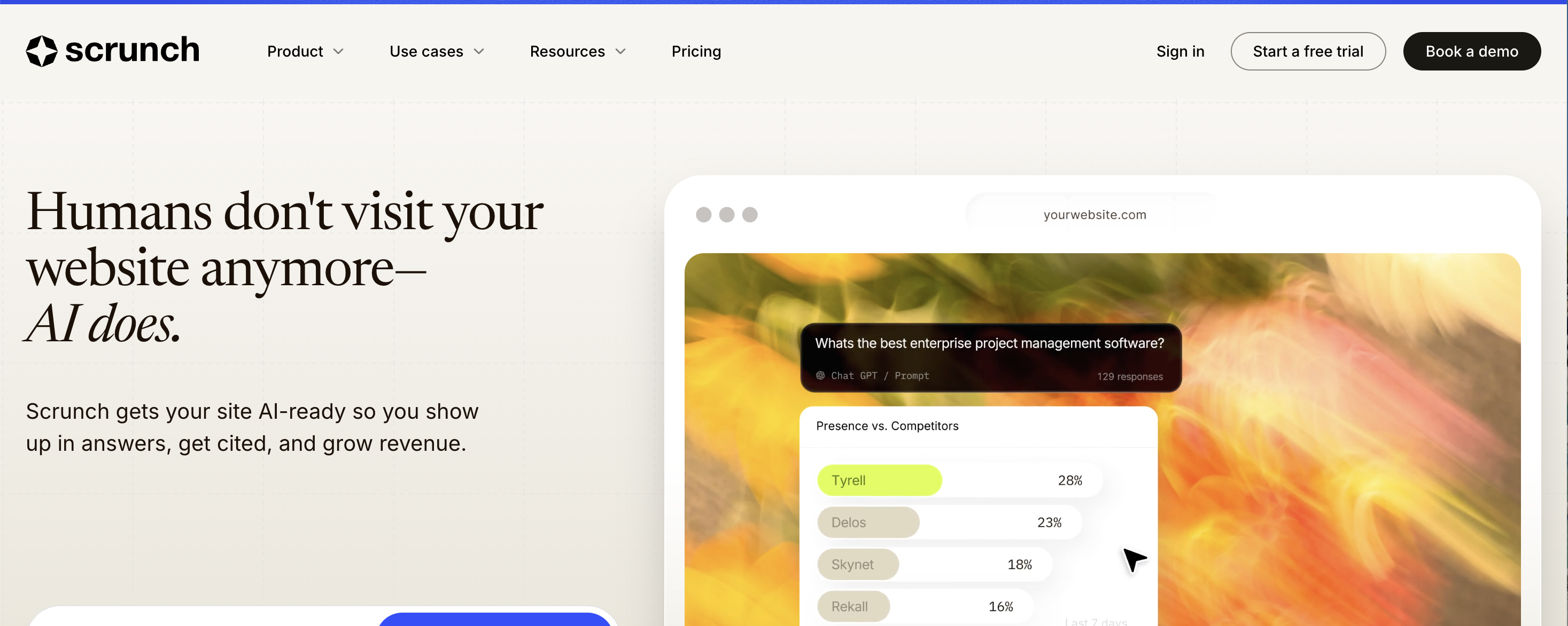
Scrunch earns its place for one thing most trackers ignore: it flags when models hallucinate or state something false about your brand. In a channel where a wrong price or a dead feature can talk a buyer out of a demo, that matters more than people expect. It holds a strong 4.6 on G2, which in this young category is not nothing.
Plans start at $250 a month, with higher tiers and custom pricing above that. Reasonable for a mid-market team that wants monitoring plus error-catching in one place. Full teardown and the cheaper swaps are in our Scrunch AI alternatives guide.
Skip it if: accuracy monitoring is not a worry for you yet and you just want a basic mention count.
6. SE Ranking AI Visibility Tracker, best value for agencies watching many clients
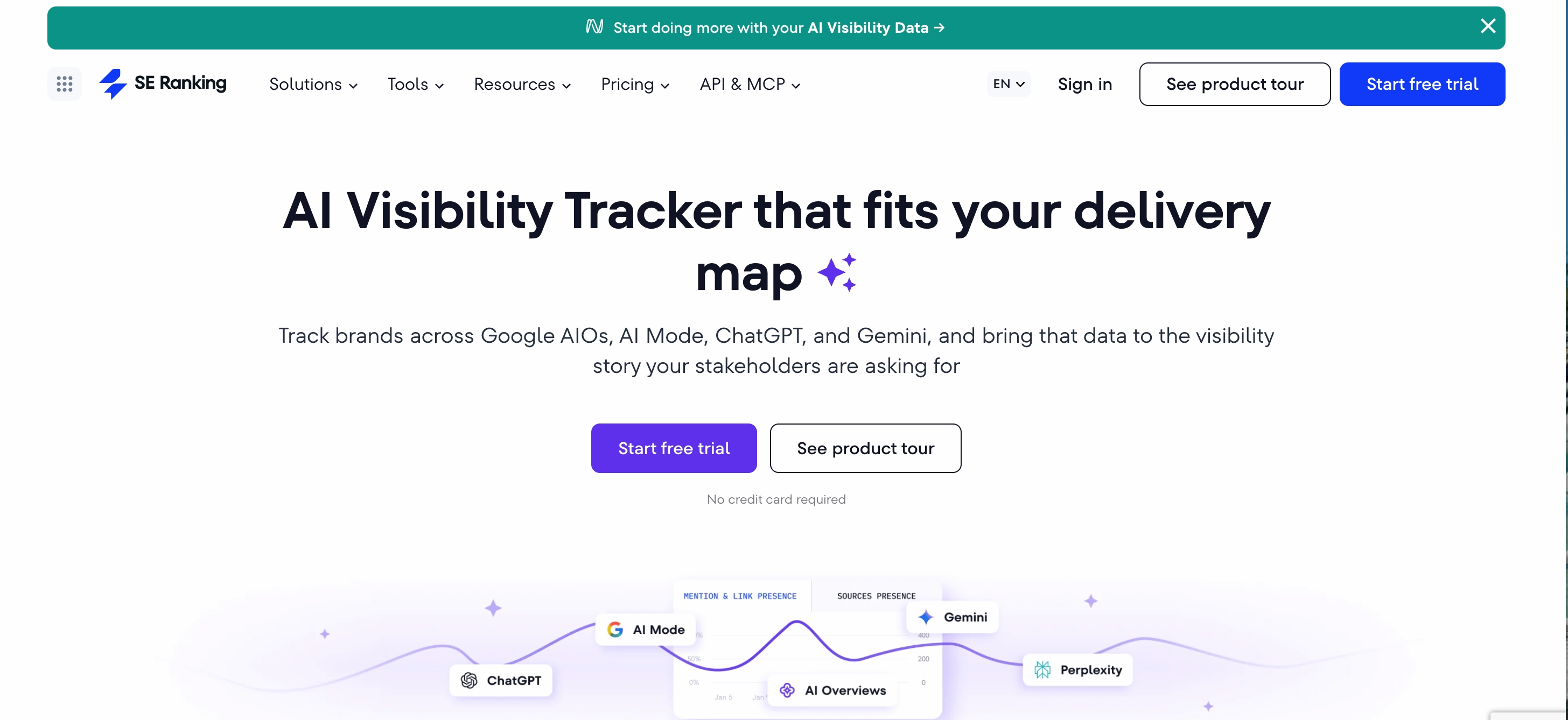
SE Ranking quietly became one of the better-value plays here. The core platform starts at $129 a month and includes 100 AI prompts, and the AI Search add-on runs about $89 monthly (closer to $71 on annual billing) to track AI Overviews, AI Mode, Perplexity and ChatGPT. There is also a standalone product, SE Visible, at $189 a month if you only want the AI side.
It is not the deepest tool in the room, but if you are an agency tracking ten client brands, the math is friendlier than almost anything else on this list.
Skip it if: you want a purpose-built AI platform and do not care about traditional rank tracking. You would be paying for a suite you will not use.
7. Writesonic, best all-in-one for lean content teams
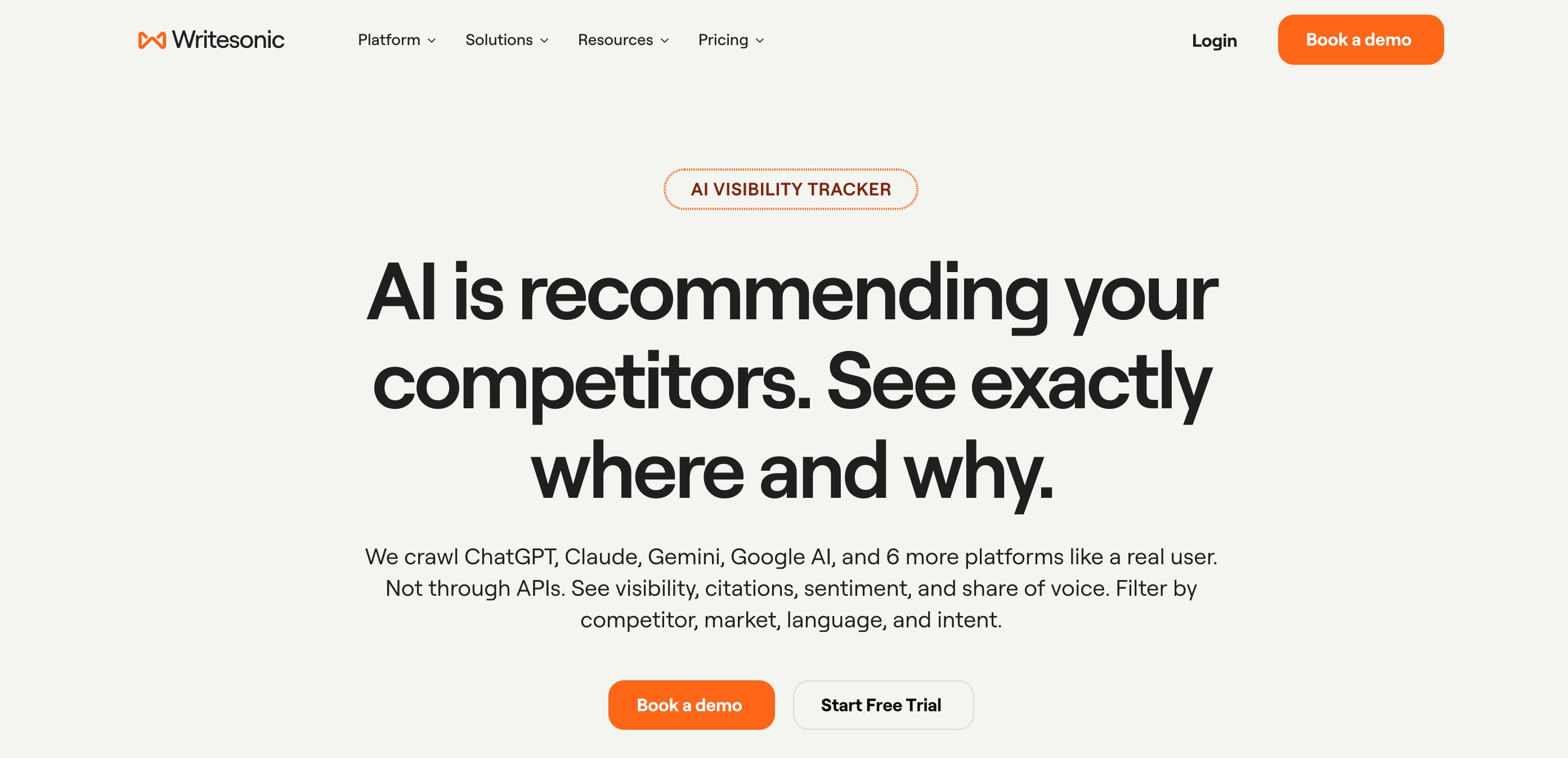
Writesonic folded AI search tracking, keyword research, content writing and site audits into a single subscription, which is genuinely convenient if you are a team of two doing everything. The Starter plan is $79 a month billed annually and tracks ChatGPT, Gemini and Google AI Overviews with 50 prompts a day. Basic at $199 raises the prompt volume, and Growth at $399 adds sentiment and their Action Center.
The tradeoff with any all-in-one is that no single module is best in class. For a small team that would rather manage one login than five, that is often a trade worth making.
Skip it if: you already own a content stack you like. Bundles are only a deal when you use the whole bundle.
8. Peec AI, best for a small team that wants clean tracking without the enterprise tax
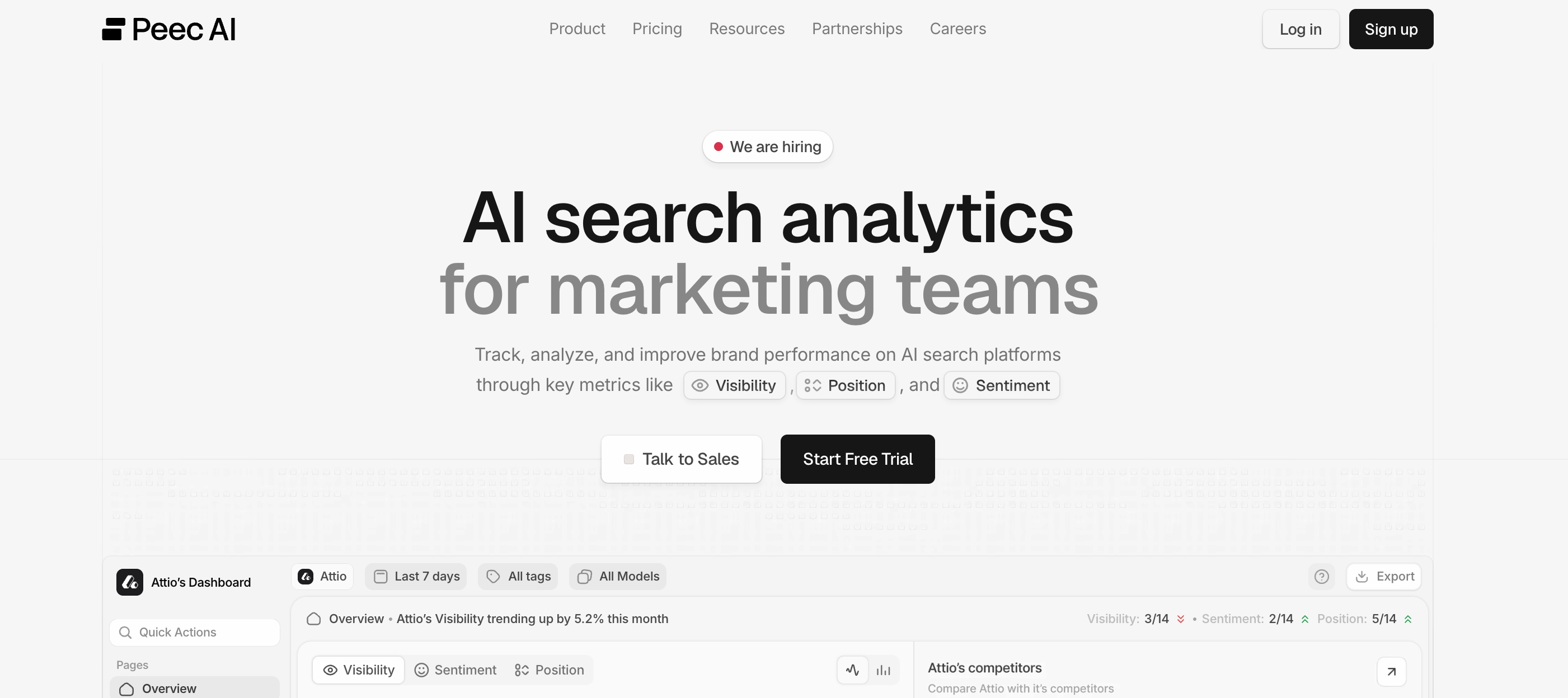
Peec AI is the tool I point lean marketing teams toward when they want proper multi-engine tracking and a dashboard that does not require training. It starts at $95 a month, with additional AI models priced as you add them. Nothing flashy, just a straightforward read on where you stand.
If you are weighing it against the other obvious pick at this size, we put them side by side in Peec AI vs Otterly.ai.
Skip it if: you need hallucination detection or agency-grade multi-client reporting. Peec is deliberately simpler than that.
9. Otterly.ai, best cheap on-ramp for your first month of tracking
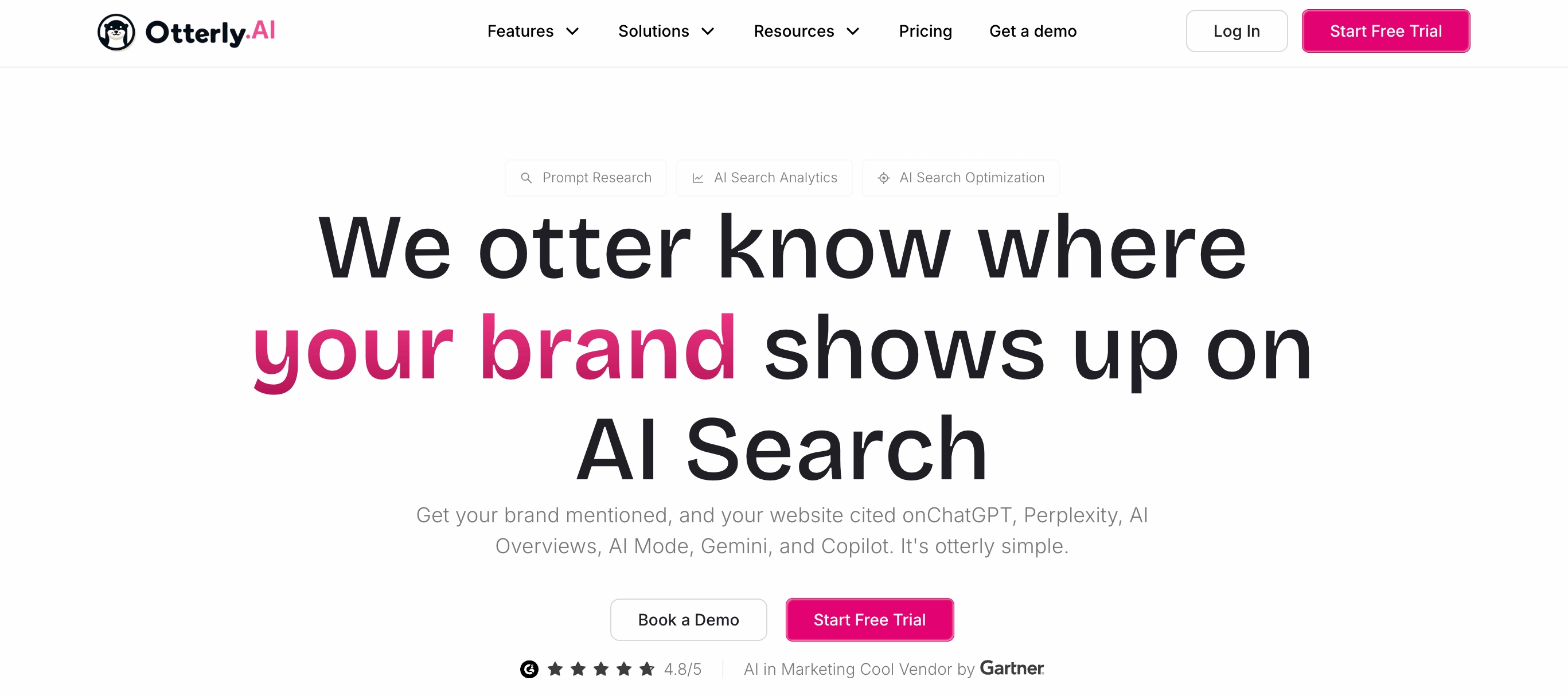
Otterly.ai has the lowest real entry point here at $29 a month, scaling to $189 and $489 as you add prompts and seats. For a founder who just wants to start watching their ChatGPT presence without a budget meeting, this is a sensible first swipe of the card.
You will likely outgrow the entry tier fast once you get serious, but as a way to prove to yourself that this channel matters, twenty-nine dollars is cheap tuition.
Skip it if: you are past the "is this even real" stage and need depth. The low tier is thin on purpose.
10. Frase, best if you optimize content and track visibility in one motion
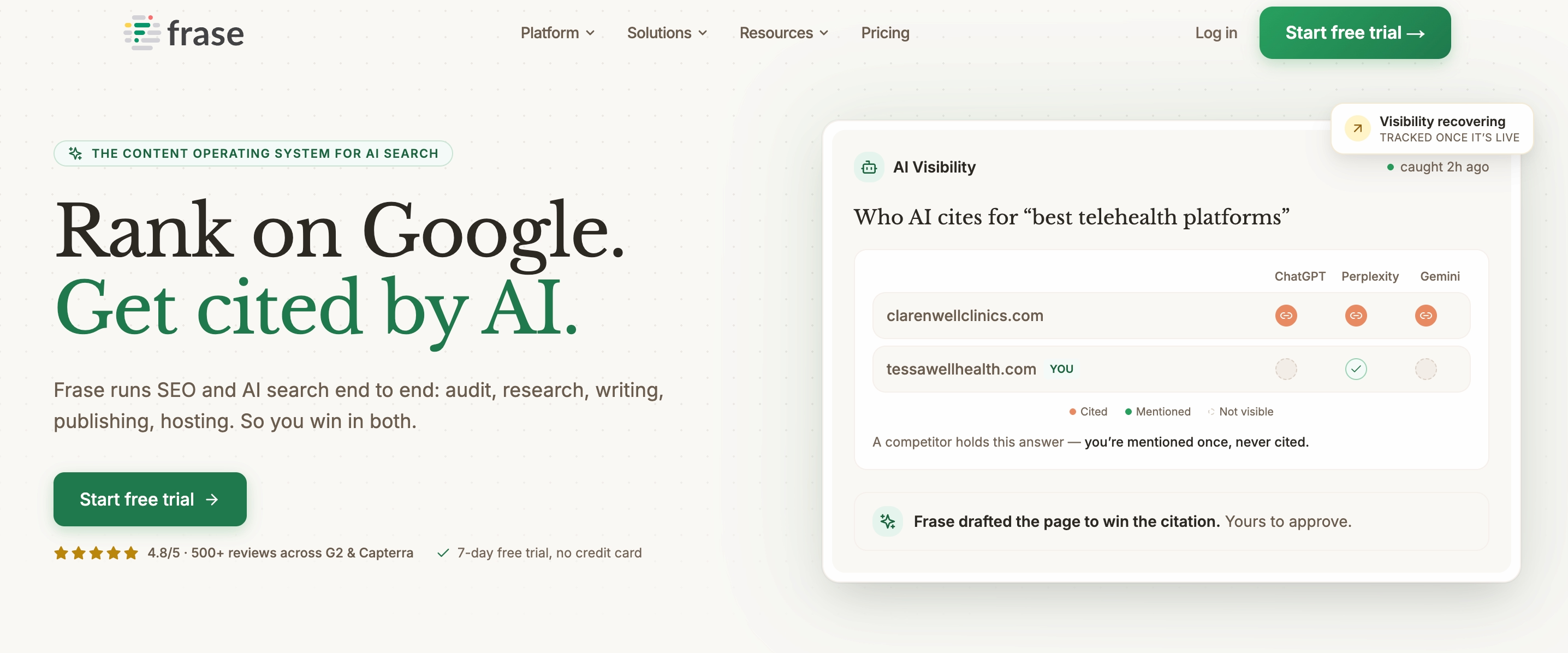
Frase is a content-optimization tool that added AI-visibility tracking across ChatGPT, Perplexity, Claude, Gemini and Google AI, with prompt-level share of voice and daily monitoring. What I like is that it does not gate the good features by tier: pricing runs $49, $129 and $299 a month (roughly 20 percent off annual), and AI-visibility tracking is included on every plan, which is rare.
If your ChatGPT SEO problem is really a content problem, having the optimization and the tracking in one tab saves real friction.
Skip it if: you want a pure monitoring tool and already have a writing workflow. You would be paying for the half you do not need.
The thing no ChatGPT SEO tool will do for you
Here is the part the tool vendors bury in the FAQ. Every product above measures. Not one of them moves the needle. A tracker showing you at 12 percent share of voice is a thermometer. It does not make you less sick. If you would rather hand the fixing to SaaS SEO experts who do this for B2B SaaS teams all day, that is the gap Arobis AI exists to fill.
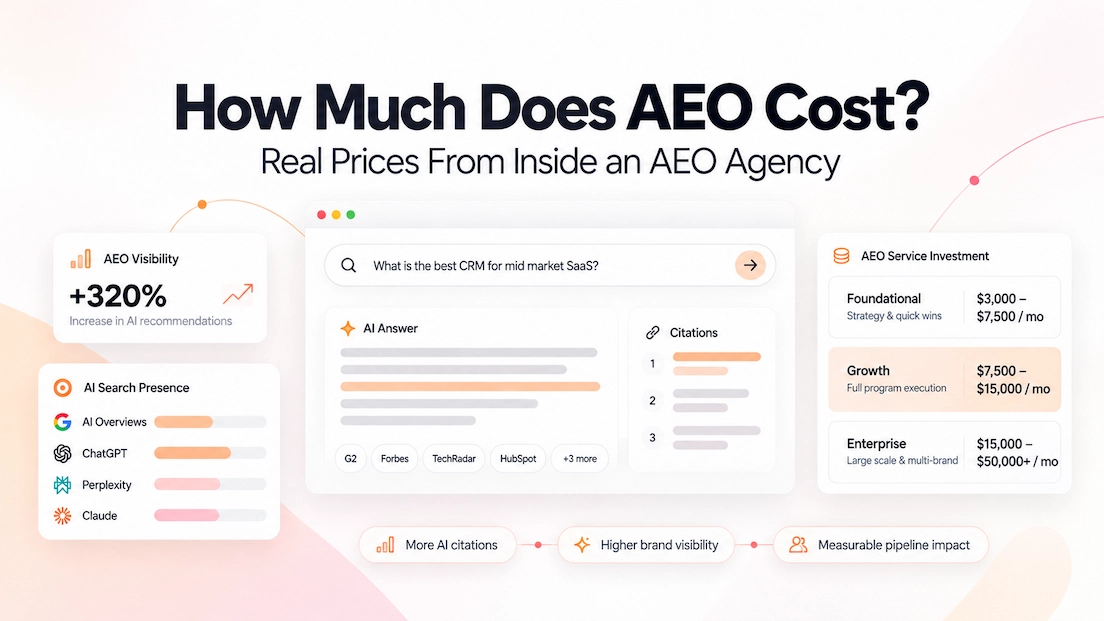
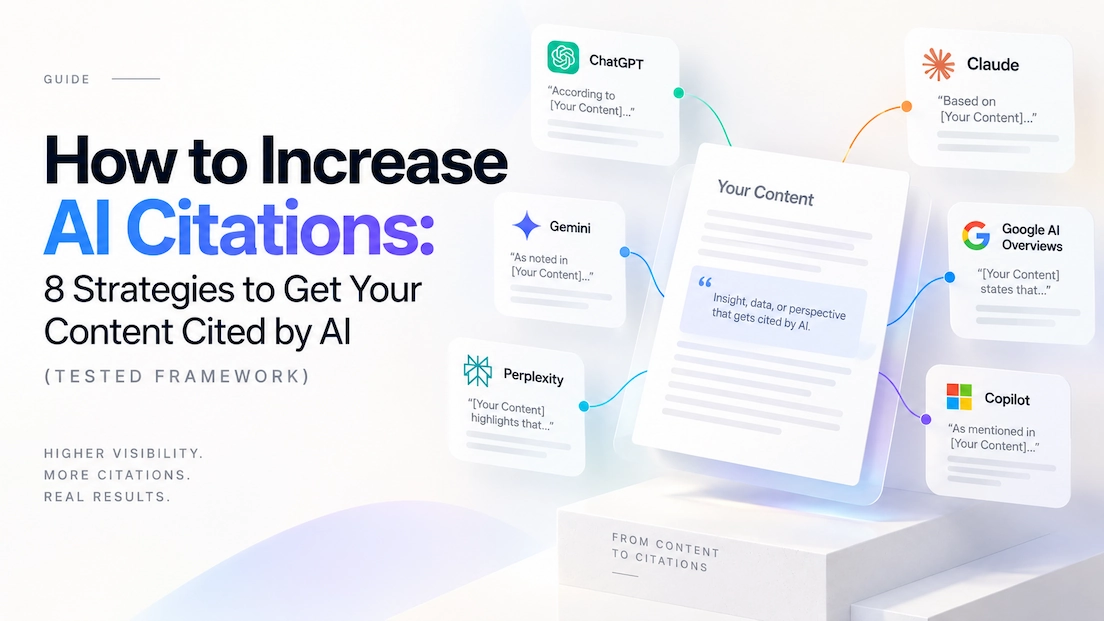
ChatGPT recommends brands it sees cited, reviewed and discussed across the web on sources it already trusts. You earn that with the unglamorous work: getting genuinely mentioned in the roundups and comparisons buyers read, being the clearest answer to a real question, showing up in the places models pull from. We wrote the playbook for that in how to build AI recommendation authority, and if you want the wider tool universe beyond ChatGPT, our list of the best AI visibility tools and the strictly free AI visibility tools both go broader than this page.
And do not tunnel-vision on ChatGPT. The same buyers ask Google Gemini and Microsoft Copilot the same questions. If you want to see how the dedicated platforms stack against each other before you commit, our Searchable vs Profound vs AthenaHQ comparison is the most honest one I have found, mostly because we wrote it after paying for all three.
A 20-minute ChatGPT SEO check you can run right now, for free
Before you buy anything, do this. It costs nothing and it will tell you whether you even have a problem.
- List your five real buying questions. Not your brand name. The questions a prospect types before they know you exist ("best [your category] for [specific use case]").
- Ask ChatGPT all five, in a fresh chat with memory off. Logged-in personalization will lie to you and show your own brand more than a stranger would see. Use a clean session.
- Write down who gets named, and in what order. That list is your real competitive set in AI search, and it is often not who you think.
- Run the same five prompts again in three days. Consistency tells you what is a real pattern versus a one-off.
- Then pull an outside read. Our free AI visibility audit checks this at more scale than you can by hand, and it is the honest way to see the gap before you spend on a paid tracker.
If your brand never shows up, that is not a tooling problem you can buy your way out of in a week. It is an authority problem, and it is fixable, but with content and citations, not a dashboard.
Frequently asked questions
What is a ChatGPT SEO tool?
It is software that tracks how and how often your brand appears inside ChatGPT's answers to real user questions, usually alongside competitors, and in the better tools, why. Some also cover other AI engines like Perplexity, Gemini and Copilot. Think of it as rank tracking for AI answers instead of the ten blue links.
Can you actually do SEO for ChatGPT?
Sort of, but not the way you do Google SEO. You cannot optimize a page and expect ChatGPT to rank it. The first step is knowing where you stand: check your ChatGPT mention rate across five buyer prompts, then work on the sources the report shows ChatGPT reading. ChatGPT recommends brands it has seen cited and discussed across sources it trusts, so "ChatGPT SEO" is really about earning mentions, reviews and citations across the web. The tools measure your progress; the work that moves it is closer to digital PR and content than to meta tags.
How much do ChatGPT SEO tools cost?
A wide range. Entry monitoring like Otterly.ai starts near $29 a month and Frase near $39 on annual billing. Mid-market trackers like Semrush (AI Visibility from $99 a month), Peec AI ($95) and SE Ranking's AI add-on ($89) sit in the middle. Enterprise-grade tools like Ahrefs Brand Radar (from $199 a month, standalone) and Profound (custom, four figures and up) cost a lot more. Match the tier to the job, not the logo.
What is the best free ChatGPT SEO tool?
For a fast, no-cost read on whether ChatGPT names your brand, our free AI visibility tools roundup is the honest starting point, and the Arobis AI visibility checker gives you a same-day snapshot. Free tools are great for spotting the gap. Closing it is where paid tracking or an actual strategy comes in.
Do I need a separate tool for ChatGPT, or does my rank tracker already cover it?
Increasingly your rank tracker covers it. SE Ranking, Semrush and Ahrefs all added AI-answer tracking to platforms you may already pay for, so check before you buy a second subscription. Buy a dedicated tool only when AI search is a real priority and you need depth those add-ons do not give you, like accuracy monitoring or agent-level source analysis.