
Last updated: September 8, 2026
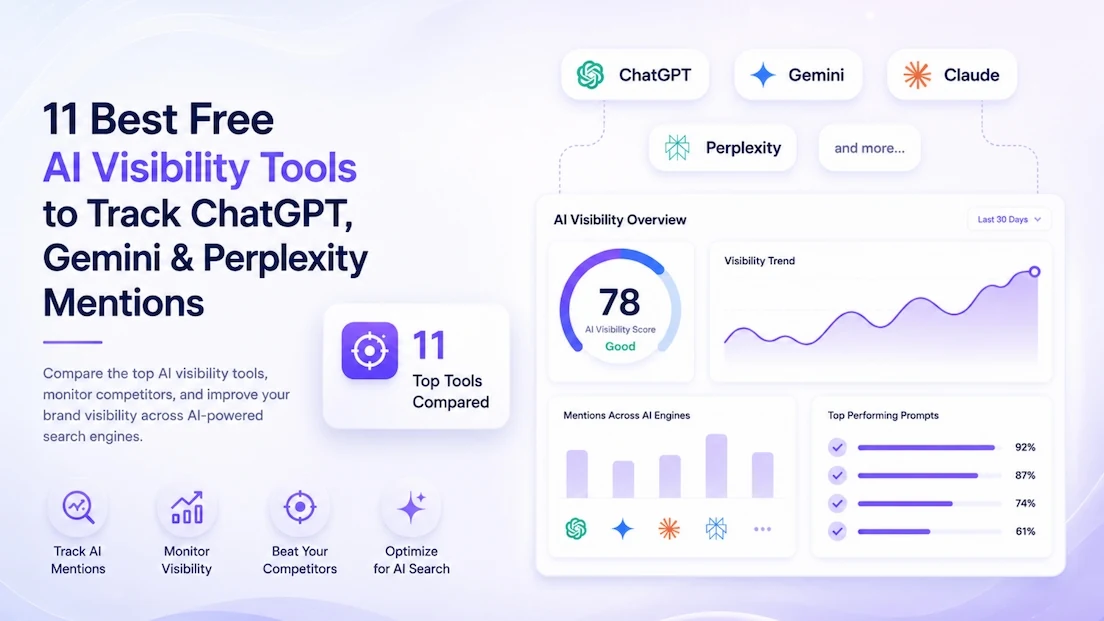
A free AI visibility tool shows you whether ChatGPT, Gemini, Claude, Perplexity, Copilot or Google AI Overviews mention and recommend your brand when someone asks a buying question, and how you compare with competitors, without paying for a subscription. Free checkers give you a one-time snapshot in a minute or two. Free tiers of tracking tools re-run a small set of prompts on a schedule. The 11 tools below were tested in September 2026, and the Arobis AI Visibility Checker is our pick for a no-signup baseline across six engines.
Quick Answer
The best free AI visibility tools in 2026 include Arobis AI Visibility Checker, Profound, Scrunch AI, Peec AI, Goodie AI, Otterly.AI, Fokal, Rankscale, Knowatoa, Waikay, and AthenaHQ.
These tools help businesses understand how often they appear in AI-generated recommendations across ChatGPT, Gemini, Claude, Perplexity, Microsoft Copilot, and Google AI Overviews.
Whether you're a marketer, founder, SEO professional, or agency, AI visibility tools can help uncover where your brand is being recommended, where competitors are outperforming you, and how AI search engines perceive your business.
TL;DR
If you're short on time:
🏆 Best Free AI Visibility Tool:Arobis AI Visibility Checker
🏢 Best Enterprise Platform: Profound
📈 Best for Agencies: Scrunch AI
🚀 Best for Startups: Arobis AI Visibility Checker
🔍 Best for AI Search Monitoring: Peec AI
📊 Best for AI Search Analytics: Rankscale
Comparison Table
AI Visibility Tools Comparison Table
Compare the best free and paid AI visibility tools for tracking brand mentions across ChatGPT, Gemini, Claude, Perplexity, and Google AI Overviews.
| Tool | Free Plan | AI Engines | Best For | Direct Tool Page |
|---|---|---|---|---|
Arobis AI Visibility Checker
Best Free Starting Point | Yes | ChatGPT, Gemini, Claude, Perplexity | Fast AI visibility audits for brands, startups, agencies, and marketers | Visit Tool |
Profound | No | Multiple AI engines | Enterprise AI visibility monitoring and executive reporting | Visit Tool |
Scrunch AI | No | Multiple AI engines | AI search analytics, brand monitoring, and enterprise visibility insights | Visit Tool |
Peec AI | Limited | Multiple AI engines | Prompt tracking, competitor monitoring, and AI visibility analytics | Visit Tool |
Goodie AI | Limited | Multiple AI engines | Generative Engine Optimization and AI search optimization insights | Visit Tool |
Otterly.AI | Limited | Multiple AI engines | AI brand tracking, prompt monitoring, and visibility reporting | Visit Tool |
Fokal | Yes | ChatGPT, Perplexity, Google AI | Fixing AI visibility, not just measuring it | Visit Tool |
Rankscale | Limited | Multiple AI engines | AI ranking analysis and brand visibility tracking | Visit Tool |
Knowatoa | Limited | Multiple AI engines | AI discoverability testing and visibility monitoring | Visit Tool |
Waikay | Limited | Multiple AI engines | AI search visibility reporting and recommendation tracking | Visit Tool |
AthenaHQ | Limited | Multiple AI engines | Enterprise AI search intelligence and strategic visibility analysis | Visit Tool |
What Is AI Visibility?
Ask ChatGPT a simple question:
"What are the best customer support platforms?"
"What are the best AI writing tools?"
"What are the best CRM platforms for startups?"
Now ask yourself:
Would your company appear in the answer?
For most organizations, the honest answer is:
They don't know.
For years, digital marketers focused on rankings, backlinks, organic traffic, and keyword positions.
Today, buying behavior is changing.
More people are asking ChatGPT, Gemini, Claude, Perplexity, and Google AI Overviews for recommendations before they ever visit a website.
Instead of returning these blue links, AI systems generate answers.
Those answers often include recommendations.
The brands mentioned gain visibility.
The brands omitted become effectively invisible.
This new reality has created an entirely new category known as AI Visibility.
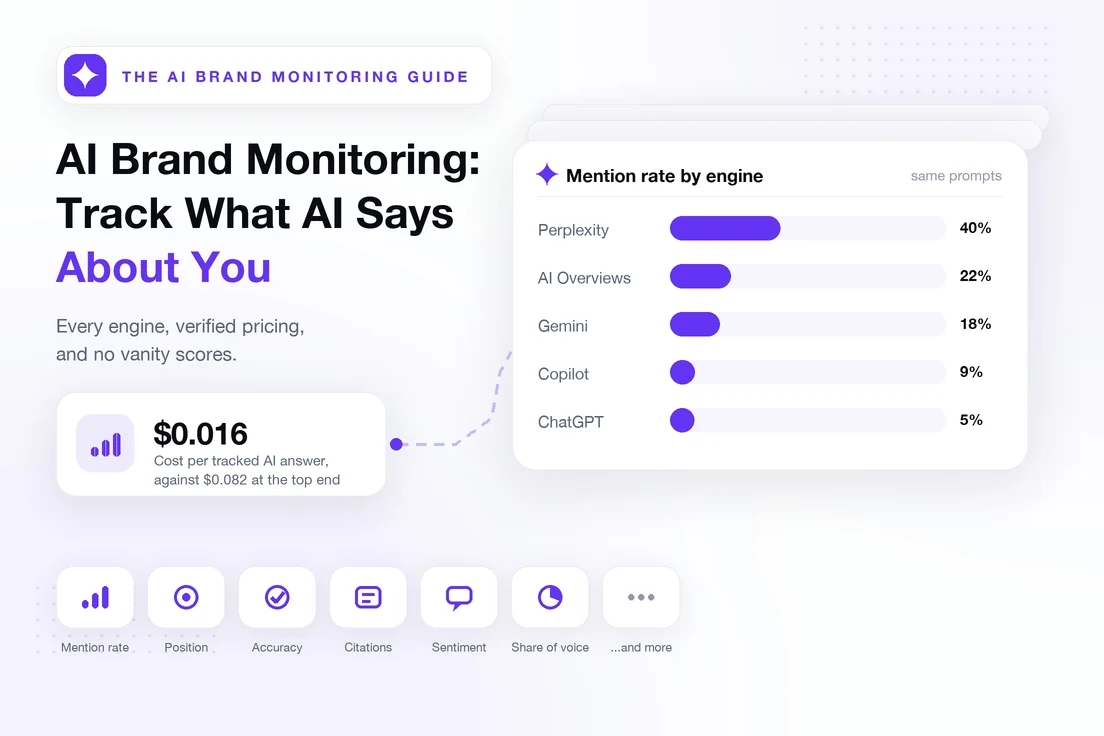
AI Visibility measures how often your brand appears inside AI-generated recommendations, citations, comparisons, and conversational search results.
Why AI Visibility Matters
Traditional SEO is still important.
Google remains one of the largest sources of traffic on the internet. But now we see an actual shift where more and more buyers are looking into top ChatGPT SEO toolsto increase visibility inside ChatGPT.
But rankings are no longer the entire story.
Increasingly, buyers are asking AI:
- What software should I buy?
- What tools are best?
- Which companies are market leaders?
- What platform would you recommend?
AI responds with a shortlist.
That shortlist often shapes the buying decision.
The companies included gain awareness.
The companies excluded never get considered.
This shift means organizations must now monitor:
- AI recommendations
- AI citations
- Brand mentions in AI responses
- Competitive visibility
- AI search share of voice
The goal is no longer simply ranking higher.
The goal is becoming one of the brands AI chooses to recommend.
How We Evaluated These Tools
To create this list, we evaluated each platform using the following criteria:
- AI engine coverage
- Ease of use
- Visibility monitoring capabilities
- Competitive analysis functionality
- Citation tracking
- Reporting features
- Pricing accessibility
- Free plan availability
- Overall value
Some tools are designed for enterprise organizations.
Others focus on startups, agencies, or marketers who simply want to understand whether AI engines are talking about their brand.
No single platform is perfect for every use case.
The best choice depends on your goals, budget, and level of AI search maturity.
See the full ranked list of the best AI visibility tools.
1. Arobis AI Visibility Checker
Website: https://arobis.ai/ai-visibility-checker
Overview
Arobis AI Visibility Checker is one of the easiest ways to evaluate how visible a brand is across modern AI search engines.
Unlike many enterprise-focused platforms that require onboarding, configuration, and recurring subscriptions, Arobis focuses on simplicity.
Users can quickly evaluate how discoverable a company is across platforms such as ChatGPT, Gemini, Claude, and Perplexity.
For businesses beginning their AI visibility journey, this creates a very low barrier to entry.
Key Features
- AI visibility analysis
- Brand discoverability insights
- Competitive visibility comparisons
- AI recommendation monitoring
- Support for multiple AI engines
- Fast and simple reporting
Pros
✅ Free to use
✅ Beginner-friendly
✅ No setup
✅ Useful for marketers, founders, and agencies
✅ Excellent starting point for AI visibility research
Cons
❌ Not designed for large-scale enterprise monitoring
❌ Limited historical tracking compared to enterprise platforms
Best For
Startups, SaaS companies, agencies, marketers, founders, and organizations looking to understand their current AI visibility before investing in larger platforms.
Pricing
Free - For agency fees please contact.
My Take
Most AI visibility platforms are built for organizations that already know they need AI monitoring.
Arobis solves a more fundamental problem.
It answers a simple but increasingly important question:
"Does AI know who we are?"
For many organizations, that is the perfect place to start.
2. Profound
Website:https://www.tryprofound.com
See our guide to the best Profound alternatives.
Overview
Profound has quickly become one of the most recognized names in the AI visibility category.
Unlike traditional SEO platforms that focus on rankings and backlinks, Profound was built specifically for the era of generative search. The platform helps enterprise organizations understand how frequently their brands appear across AI-generated answers and recommendations.
For large organizations investing heavily in brand awareness, AI visibility, and AI search optimization, Profound provides a centralized way to monitor performance across multiple AI engines.
The platform has gained significant attention among enterprise marketing teams because it treats AI search as a new acquisition channel rather than simply an extension of SEO.
Key Features
- AI visibility monitoring
- AI recommendation tracking
- Competitive visibility analysis
- Brand mention monitoring
- AI citation analysis
- Executive reporting dashboards
Pros
✅ Enterprise-grade reporting
✅ Strong competitive insights
✅ Built specifically for AI visibility
✅ Useful for large organizations
Cons
❌ No free plan
❌ Pricing not ideal for startups
❌ Can be excessive for smaller teams
Best For
Enterprise brands, public companies, large SaaS organizations, and marketing teams seeking deep AI visibility reporting.
Pricing
Custom enterprise pricing.
My Take
Profound is one of the companies helping define the AI visibility category itself.
For enterprise teams asking:
"How often is AI recommending us versus our competitors?"
Profound is often one of the first platforms worth evaluating.
3. Scrunch AI
Website:https://www.scrunchai.com
See the best Scrunch AI alternatives.
Overview
Scrunch AI approaches AI visibility through a strong analytics and measurement lens.
The platform focuses on helping brands understand how AI systems perceive them, how often they're being surfaced, and where visibility gaps exist.
One area where Scrunch stands out is its emphasis on turning AI visibility into an actionable business metric rather than simply providing mention tracking.
For agencies and larger marketing teams managing multiple brands, this can be particularly valuable.
Key Features
- AI search analytics
- Brand monitoring
- Competitive visibility tracking
- Share of voice analysis
- AI recommendation reporting
- Multi-brand management
Pros
✅ Strong reporting capabilities
✅ Excellent agency use cases
✅ Useful competitive insights
✅ Clean user experience
Cons
❌ No free plan
❌ Best suited for larger organizations
Best For
Marketing agencies, enterprise brands, and organizations managing multiple products.
Pricing
Contact Scrunch AI for pricing.
My Take
Many AI visibility tools tell you what happened.
Scrunch focuses more on helping organizations understand what to do next.
That distinction makes it especially attractive for agencies and consultants.
4. Peec AI
Website:https://www.peec.ai
Overview
Peec AI has become increasingly popular among marketers focused on prompt tracking and AI search monitoring.
The platform allows users to monitor specific prompts and understand how brand visibility changes over time across AI search engines.
This is particularly useful for organizations investing in GEO (Generative Engine Optimization) and AEO (Answer Engine Optimization).
Instead of simply checking visibility occasionally, Peec allows teams to build a repeatable monitoring process.
Key Features
- Prompt monitoring
- AI visibility tracking
- Competitive benchmarking
- AI search performance reporting
- Historical visibility trends
- AI engine monitoring
Pros
✅ Strong prompt tracking
✅ Useful for GEO campaigns
✅ Visibility trend analysis
✅ Easy onboarding
Cons
❌ Limited free functionality
❌ Less suitable for enterprise reporting
Best For
GEO professionals, marketers, SEO teams, and agencies running AI visibility campaigns.
Pricing
Limited free access available.
Paid plans available.
My Take
If your primary goal is monitoring specific prompts over time, Peec is one of the strongest options currently available.
5. Goodie AI
Website:https://goodie.ai
Overview
Goodie AI focuses heavily on helping organizations understand and improve how they appear within AI-generated search experiences.
The platform combines monitoring, visibility insights, and optimization recommendations to help brands strengthen their AI search presence.
Unlike some tools that focus purely on reporting, Goodie also emphasizes visibility improvement opportunities.
This makes it particularly useful for organizations actively working on GEO strategies.
Key Features
- AI visibility monitoring
- Optimization recommendations
- Competitive visibility insights
- GEO reporting
- AI search tracking
- Recommendation analysis
Pros
✅ GEO-focused platform
✅ Helpful optimization suggestions
✅ Good user experience
✅ Strong reporting
Cons
❌ Smaller ecosystem compared to enterprise competitors
❌ Limited free capabilities
Best For
Organizations actively improving AI visibility rather than simply measuring it.
Pricing
Limited free access available.
My Take
Goodie sits somewhere between an analytics platform and an optimization platform.
For teams actively trying to improve visibility, that's a compelling combination.
6. Otterly.AI
Website:https://otterly.ai
Overview
Otterly.AI was one of the earlier platforms to recognize the importance of AI-generated search visibility.
The platform focuses on helping brands understand whether they're appearing in AI-generated answers across major AI engines.
One of its strengths is simplicity.
Teams can quickly monitor visibility, evaluate competitors, and understand performance trends without navigating complex enterprise dashboards.
Key Features
- AI visibility monitoring
- Prompt tracking
- Brand mention monitoring
- Competitive analysis
- AI search reporting
- Trend analysis
Pros
✅ Easy to use
✅ Good monitoring capabilities
✅ Helpful for smaller teams
✅ Fast setup
Cons
❌ Limited advanced enterprise functionality
❌ Reporting depth varies by plan
Best For
Startups, SaaS companies, agencies, and marketing teams.
Pricing
Limited free plan available.
Paid plans available.
My Take
Otterly.AI remains one of the most approachable AI visibility tools on the market.
For teams looking for straightforward monitoring without enterprise complexity, it's a solid choice.
7. Fokal
Website:https://www.fokal.com/
Overview
Fokal writes the articles and earns the backlinks until ChatGPT and Google recommend you. Every day, on autopilot.
Topics come from real demand data and your own Search Console numbers, and each article publishes straight to your site, no copy-paste.
The free check takes about a minute and names the competitor AI picks instead of you.
Key Features
- Free AI visibility check
- Automated article publishing
- Do-follow link building
- Search Console topic selection
- Webflow, Wix, Shopify support
- AI visibility tracking
Pros
✅ Free forever plan
✅ Fixes visibility rather than only measuring it
✅ Publishes into your CMS
✅ Links earned for you
Cons
❌ Needs CMS access
❌ No Gemini or Copilot coverage
Best For
Founders and small teams who want visibility fixed, not measured.
Pricing
Free forever. Paid plans from USD 49.
My Take
Most AI visibility tools on this list telling you where you stand. Fokal on the other hand does the writing and the link building that changes it.
8. Rankscale
Website:https://rankscale.ai
Overview
Rankscale focuses on a simple but increasingly important question:
"How visible is my brand across AI search engines?"
The platform monitors AI-generated answers and helps organizations understand where they appear, where competitors appear, and how visibility changes over time.
Unlike traditional rank trackers that focus on Google positions, Rankscale focuses on AI-generated rankings and recommendation frequency.
This makes it particularly useful for marketers transitioning from traditional SEO to AI search optimization.
Key Features
- AI ranking analysis
- Brand visibility tracking
- Competitive benchmarking
- Prompt monitoring
- Visibility trend reporting
- AI search performance tracking
Pros
✅ Easy to understand
✅ Strong AI ranking insights
✅ Useful competitive reporting
✅ Helpful visibility trend analysis
Cons
❌ Smaller platform than some enterprise competitors
❌ Limited free functionality
Best For
Marketers, agencies, startups, and SEO professionals.
Pricing
Limited free access available.
My Take
For organizations moving from traditional rank tracking toward AI visibility monitoring, Rankscale provides one of the easiest transitions.
9. Knowatoa
Website:https://knowatoa.com
Overview
Knowatoa takes a slightly different approach to AI visibility.
Instead of focusing exclusively on reporting, it emphasizes discoverability.
The platform helps brands understand whether AI systems can find, understand, and recommend them when users ask relevant questions.
This perspective is important because AI visibility isn't just about mentions.
It's about whether AI engines understand your brand well enough to recommend it.
Key Features
- AI discoverability analysis
- Visibility monitoring
- Recommendation testing
- Competitive comparison
- AI search reporting
- GEO insights
Pros
✅ Strong discoverability focus
✅ Helpful competitive insights
✅ Good visibility testing workflows
Cons
❌ Smaller ecosystem
❌ Less enterprise functionality
Best For
Growth-stage companies, agencies, and marketers exploring AI discoverability.
Pricing
Limited free access.
My Take
Knowatoa helps answer one of the most important questions in AI search:
"Can AI actually find and understand my company?"
That's often more valuable than rankings alone.
10. Waikay
Website:https://waikay.io
Overview
Waikay focuses on helping businesses measure visibility across the rapidly growing AI search landscape.
The platform tracks brand mentions, recommendation frequency, and competitive performance across AI engines.
It is particularly useful for teams looking to create regular reporting workflows around AI visibility.
For agencies and marketing departments producing monthly visibility reports, Waikay offers a structured approach.
Key Features
- AI visibility monitoring
- Recommendation tracking
- Competitive analysis
- AI reporting dashboards
- Trend monitoring
- Visibility scoring
Pros
✅ Good reporting workflows
✅ Helpful visibility dashboards
✅ Competitive monitoring
Cons
❌ Smaller market presence
❌ Limited free functionality
Best For
Marketing teams, agencies, and visibility reporting use cases.
Pricing
Limited free access available.
My Take
Waikay is particularly attractive for organizations that need recurring AI visibility reports rather than one-time audits.
11. AthenaHQ
Website:https://www.athenahq.ai
See the best AthenaHQ alternatives.
Overview
AthenaHQ operates at the enterprise end of the AI visibility market.
The platform focuses on helping large organizations understand their position within AI-generated search experiences and recommendation ecosystems.
Its strength lies in helping leadership teams understand AI visibility as a strategic business metric.
This makes AthenaHQ particularly relevant for organizations where brand visibility directly impacts pipeline, revenue, and market perception.
Key Features
- Enterprise AI visibility monitoring
- AI search intelligence
- Executive dashboards
- Competitive benchmarking
- AI citation analysis
- Strategic reporting
Pros
✅ Enterprise-grade reporting
✅ Strategic visibility insights
✅ Executive-friendly dashboards
Cons
❌ Paid plans start at $295 a month
❌ Excessive for smaller teams
Best For
Large organizations and enterprise marketing teams.
Pricing
Free Essential tier with 300 credits a month on five AI platforms, Starter at $295 a month ($245 billed annually) with 3,600 credits across 10 models, and custom Enterprise pricing. Verified on the AthenaHQ pricing page on September 5, 2026.
My Take
AthenaHQ is built for organizations treating AI visibility as a board-level marketing metric rather than a tactical SEO initiative. The new free Essential tier makes it easier to sample, but at one credit per AI response, 300 credits runs out fast.
Free AI visibility checker vs AI visibility tracker: which do you need?
People search for both "free AI visibility checker" and "free AI visibility tool" and expect the same thing. They are not the same, and choosing the wrong one wastes the afternoon.
- A free AI visibility checker runs once. You enter a brand or domain and get a snapshot: whether AI engines mention you, how they describe you, and which competitors they name instead. It is the right tool for a baseline, a sales call, or a board slide. Most checkers need no account.
- A free AI visibility tracker is the free tier of a monitoring product. It re-runs a handful of prompts on a schedule so you can see movement, but the free tiers are small: usually 5 to 25 prompts, one to three engines, and limited history.
- Neither one improves anything. Both measure. Moving the number takes entity work, third-party mentions, reviews and content built for citation, which is why the second half of this guide is about what actually changes AI answers.
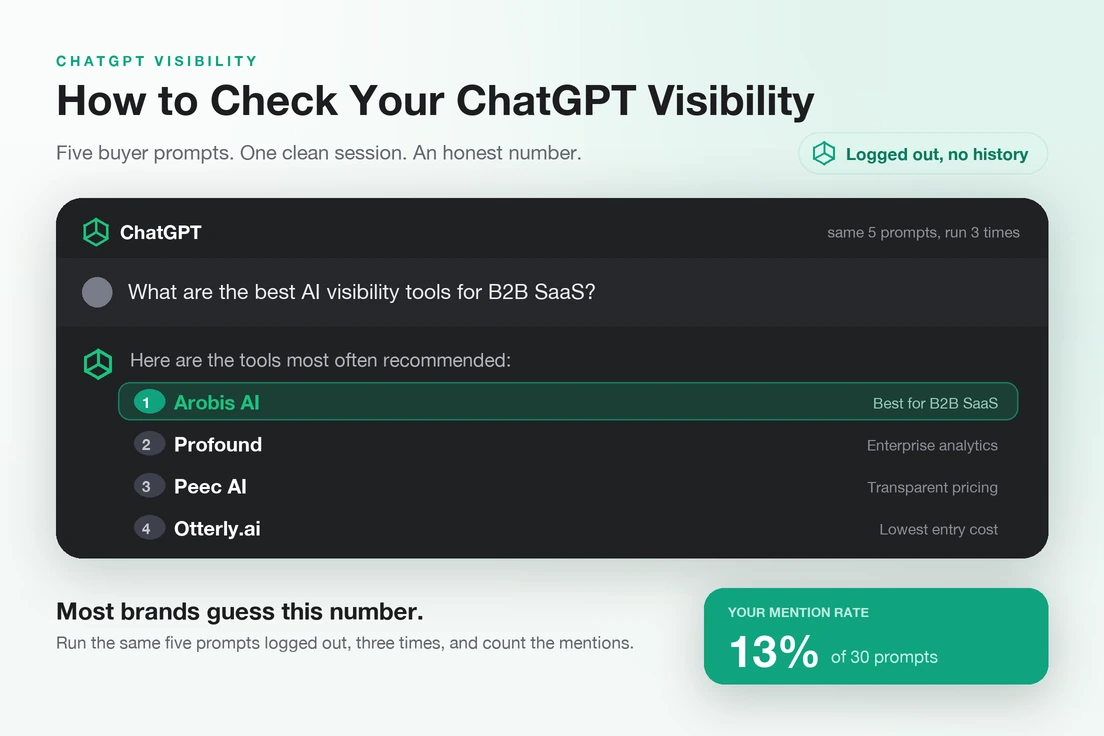
Our rule of thumb: run a checker first to see whether you have a visibility problem at all. If the question you actually want answered is whether ChatGPT names you when buyers ask, run the free ChatGPT visibility checker: it asks ChatGPT five buyer prompts for your category and shows your mention rate, your position and the competitors it recommends instead.
If you do, and you have a team that will act on the data every month, then a paid tracker earns its cost. If you do not have that team, buy execution before you buy another dashboard.
One caveat that every honest test of these tools should carry: AI answers are not deterministic. The same prompt asked twice can name different brands, and answers differ by engine, region and whether the user is logged in. Treat every score below as directional, and re-run the same prompt set several times before you draw conclusions.
Free vs Paid AI Visibility Tools
One of the biggest misconceptions about AI visibility software is that more expensive automatically means better.
In reality, the best platform depends on where your organization is in its AI search journey.
Free Tools Make Sense If:
- You're just getting started
- You want to validate AI visibility opportunities
- You're running occasional audits
- You have a limited budget
Paid Tools Make Sense If:
- AI visibility is a strategic initiative
- You need historical tracking
- You require executive reporting
- You're managing multiple brands
- You need competitive benchmarking at scale
For many organizations, the ideal approach is simple:
Start with a free tool.
Understand your baseline.
Then decide whether deeper monitoring is necessary.
Check out our latest round up on paid Copilot tracking tools!
How to Choose the Right AI Visibility Tool
Before selecting a platform, ask yourself three questions:
1. Do I Need Monitoring or Insights?
Some platforms focus primarily on monitoring.
Others focus on helping improve visibility.
Knowing your goal helps narrow the field quickly.
2. How Often Will I Use It?
Daily monitoring needs differ dramatically from quarterly audits.
Choose accordingly.
3. Am I Measuring Visibility or Trying to Improve It?
Visibility measurement and visibility optimization are related but different disciplines.
Some tools excel at one more than the other.
Final Verdict
The AI visibility category is still early.
That's exactly what makes it interesting.
Five years ago, every company tracked Google rankings.
Today, an increasing number of organizations are asking:
"How often does AI recommend us?"
The answer to that question is becoming a competitive advantage.
If you're looking for the easiest place to start, the Arobis AI Visibility Checker is an excellent entry point.
For larger organizations, platforms such as Profound, Scrunch A, and AthenaHQ offer deeper monitoring and reporting capabilities.
The most important takeaway isn't which tool you choose.
It's recognizing that AI visibility is becoming a measurable marketing channel in its own right.
The brands that understand this early are likely to have a significant advantage as AI search continues to grow.
When free tools are not enough, the two paid heavyweights are worth comparing directly: the Ahrefs and Semrush AI tools compared.
The Biggest Myth About AI Visibility
The biggest misconception in the AI visibility industry is that AI engines work like Google.
They don't.
Traditional SEO is largely driven by rankings.
AI visibility is driven by trust.
When ChatGPT, Gemini, Claude, or Perplexity generate an answer, they aren't simply looking for the page that ranks first.
They're attempting to identify the source they believe is most authoritative, trustworthy, and relevant.
This is why some brands appear consistently in AI-generated recommendations despite not ranking #1 in Google.
And it's why some companies with strong SEO performance are almost invisible inside AI-generated answers.
The implication is important:
Optimizing for AI visibility requires more than keyword rankings.
It requires building authority signals that AI systems trust.
The 10 Places AI Is Forming an Opinion About Your Brand Right Now
Many marketers assume AI learns about their company from their website.
In reality, your website is only one signal.
AI systems build an understanding of your brand from hundreds of sources across the web.
The most influential include:
1. Your Website
The foundation of your digital presence.
2. Reddit Discussions
One of the most cited sources across multiple AI engines is Reddit.
3. LinkedIn Content
Particularly for B2B companies.
4. G2 Reviews
A major source of software credibility.
5. Capterra Listings
Frequently referenced in software-related prompts.
6. Industry Publications
Thought leadership significantly impacts AI perception.
7. Comparison Articles
"Best X Tools" content remains highly influential.
8. YouTube Videos
Especially tutorials, reviews, and product comparisons.
9. Customer Reviews
Public sentiment influences recommendation likelihood.
10. Third-Party Mentions
Digital PR, podcasts, guest articles, and expert commentary.
The key takeaway:
AI is not evaluating your brand based on a single page.
It's evaluating your entire digital footprint.
What Actually Improves AI Visibility?
Organizations often ask:
"What should we do first?"
Based on hundreds of visibility analyses, the following actions consistently produce the strongest results.
Publish Comparison Content
AI engines frequently cite comparison pages.
Examples:
- Best CRM Platforms
- Best Customer Support Software
- Best AI Writing Tools
Build Topical Authority
Create clusters of content around your category.
Depth matters more than volume.
Earn Mentions From Trusted Sites
Third-party validation remains one of the strongest trust signals.
Increase Brand Mentions
AI engines need evidence that your brand exists beyond your own website.
Improve Entity Clarity
Clearly communicate:
- What you do
- Who you serve
- Your category
- Your competitors
Encourage Reviews
Review platforms remain highly influential.
Participate in Industry Communities
Reddit, LinkedIn, forums, and communities contribute visibility signals.
Create Original Research
AI systems consistently favor unique data.
Monitor AI Visibility
You can't improve what you don't measure.
Think Beyond Google
The future of discoverability extends beyond search rankings.
And now that you have ideas about what are the best and free AI visibility tools to track AI recommendations make sure you also educate yourself on how to track AI referral traffic for free!
My Prediction for 2027
Most marketing teams currently have dashboards for:
- Traffic
- Rankings
- Leads
- Revenue
Within the next few years, many organizations will add another metric:
AI Visibility.
The reason is simple.
As AI assistants become a primary discovery channel, organizations will need a way to measure:
- Recommendation frequency
- AI share of voice
- Competitive visibility
- Citation performance
The companies monitoring these metrics today are likely to gain an advantage long before their competitors recognize the opportunity.
That doesn't mean SEO is disappearing.
It means discoverability is expanding.
The future belongs to organizations that understand both.
Frequently asked questions
What is an AI visibility tool?
An AI visibility tool helps businesses understand how often their brand appears inside AI-generated responses from platforms such as ChatGPT, Gemini, Claude, Perplexity, Microsoft Copilot, and Google AI Overviews.
Why is AI visibility important?
Because buyers increasingly use AI engines to discover products, services, software, and vendors before visiting websites.
If your brand isn't being recommended, you're missing potential visibility.
What is the best free AI visibility tool?
Arobis AI Visibility Checker is one of the most accessible free options available for evaluating brand visibility across major AI engines.
Are AI visibility tools replacing SEO tools?
No.
AI visibility tools complement traditional SEO.
Organizations increasingly monitor both rankings and AI-generated recommendations.
What is GEO?
GEO stands for Generative Engine Optimization.
It focuses on improving how brands appear inside AI-generated answers and recommendations.
What is the difference between SEO and AI Visibility?
SEO measures performance in search engines.
AI visibility measures performance in AI-generated recommendations and conversational search experiences.
Which AI engines should I monitor?
The most important platforms currently include:
- ChatGPT
- Gemini
- Claude
- Perplexity
- Google AI Overviews
- Microsoft Copilot
These platforms increasingly influence how users discover products, services, and brands.
What is a free AI visibility checker?
A free AI visibility checker is a one-time tool that shows whether AI engines such as ChatGPT, Gemini, Claude, Perplexity and Copilot mention or recommend your brand for a set of buying questions, usually with a score and a short list of fixes. The Arobis AI Visibility Checker does this across six engines in about a minute with no signup.
Is there a free AI visibility tool with no signup?
Yes. The Arobis AI Visibility Checker runs without an account. Several other checkers on this list return a limited free report but require an email address or a trial signup to see the full result.
How accurate are free AI visibility tools?
Accurate enough for direction, not for precision. AI answers change between runs, engines and regions, so a free tool's score is a sample rather than a census. Run the same prompts several times, compare engines, and look for consistent patterns such as a competitor being named in most answers.
What is the difference between a free AI visibility checker and a tracker?
A checker gives you a one-off snapshot. A tracker re-runs a fixed prompt set on a schedule so you can see trends. Free trackers are small by design, typically 5 to 25 prompts and one to three engines, while a checker is unlimited but has no memory.
Do free AI visibility checkers cover ChatGPT and Gemini together?
Most free checkers only cover one or two engines per run. The Arobis AI Visibility Checker and a few others on this list cover ChatGPT, Gemini, Claude and Perplexity together in a single free check, which is worth confirming before you run five separate tools for one snapshot.
As the AI visibility landscape evolves, this guide will be updated to reflect new tools, features, and developments across the industry.
Try our free AI Visibility Checker in 30 seconds.