
Peec AI and Otterly.ai are the two names that come up most when a lean team wants to track its brand in AI answers without paying enterprise money. They look similar on the surface. They are not the same tool, and the gap shows up in two places most reviews skip: the Google AI add-on charges, and what the numbers actually mean once you have them. Here is the honest version, plus a 20-minute test you can run yourself before you pay either one a cent.
We work with these platforms daily as part of our AI Search Demand Generation work, so this is opinionated, and we will tell you where each one quietly falls short.
The 30-second verdict
- Pick Otterly.ai if you want the cheapest possible way in, automated citation tracking, and you are comfortable adding Google surfaces later.
- Pick Peec AI if brand perception and sentiment matter more to you than raw citation counts, and you want a fast, clean European-built tool.
- Pick HubSpot AEO instead only if you already live in Marketing Hub; our HubSpot AEO review covers the 25-prompt ceiling and the missing Google surfaces before you commit.
- Pick neither yet if you have not run the free 20-minute test below. Most people buy a tracker before they even know how big their gap is.
Peec AI vs Otterly.ai: the facts, side by side
Both tools watch how AI engines describe your brand and who gets cited instead of you. Where they split:
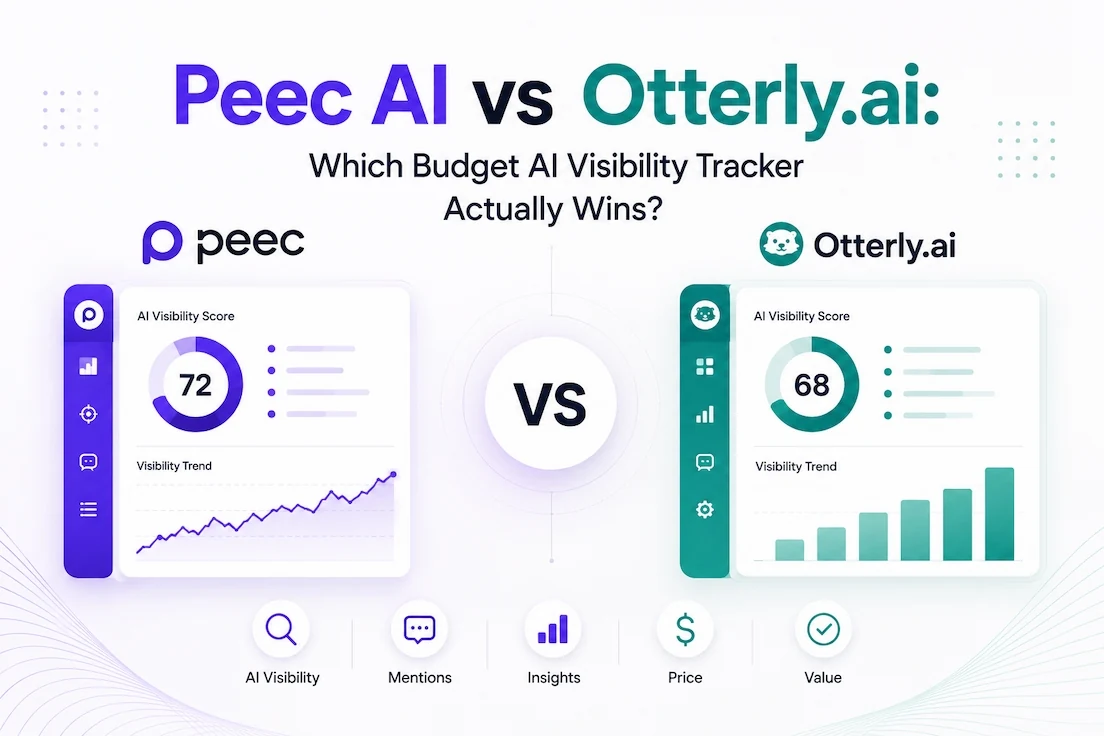
Otterly.ai starts at about $29/mo (Lite, 15 prompts), the lowest credible entry in the category. Peec AI starts at $95/mo.
Otterly Standard is about $189/mo (100 prompts, 4 platforms). Peec Pro is $245/mo (150 prompts, 3 models). Close enough that price alone will not decide it.
Peec AI is Berlin-built and fast, an easy pick if you want an EU-hosted vendor. Otterly.ai is the accessible, get-started-today option.
If you want the wider field around each, we keep running lists of Peec AI alternatives and Otterly.ai alternatives.
The add-on gotcha nobody puts in the headline
Here is the detail that changes the math, and that most comparison posts leave out. Neither tool includes Google’s AI surfaces at full strength in the base price. Otterly charges extra for Google Gemini and Google AI Mode as add-ons, roughly $9 to $149/mo depending on tier. On Peec, Gemini, AI Mode and AI Overviews count toward the three models every self-serve plan includes, and a fourth model costs $35 to $165 a month.
Why it matters: for a lot of B2B buyers, Google’s AI Overviews and AI Mode are the surfaces that actually drive discovery. If that is you, the “$29” or “$95” sticker may not be your real number. Price the Google add-on into both before you compare, or you are comparing two different products. For why those surfaces matter so much, see our take on what Google AI Mode means for SaaS.
Test them yourself in 20 minutes (before you pay for either)
This is the part no other comparison gives you: a repeatable way to test any AI visibility tracker, including these two, using nothing but a browser and a notepad. Do this first. It tells you whether you even need a paid tracker yet.
Step 1: Build your prompt set (copy these templates)
Swap in your category, brand and competitor. Ten prompts is plenty to start. Mix the buyer journey:
- “What are the best {your category} tools for {your audience}?”
- “Best {your category} software for {use case}”
- “{Competitor} alternatives”
- “{Your brand} vs {competitor}”
- “Is {your brand} any good?”
- “What do people say about {your brand}?”
- “Best {category} for {company size or industry}”
- “How do I solve {the problem your product solves}?”
- “Most recommended {category} in (Year)”
- “{Category} for teams that care about {your differentiator}”
Want a bigger, ready-made set organised by intent? Grab ours in the AI buying-intent prompt library.
Step 2: Ask three engines, logged out
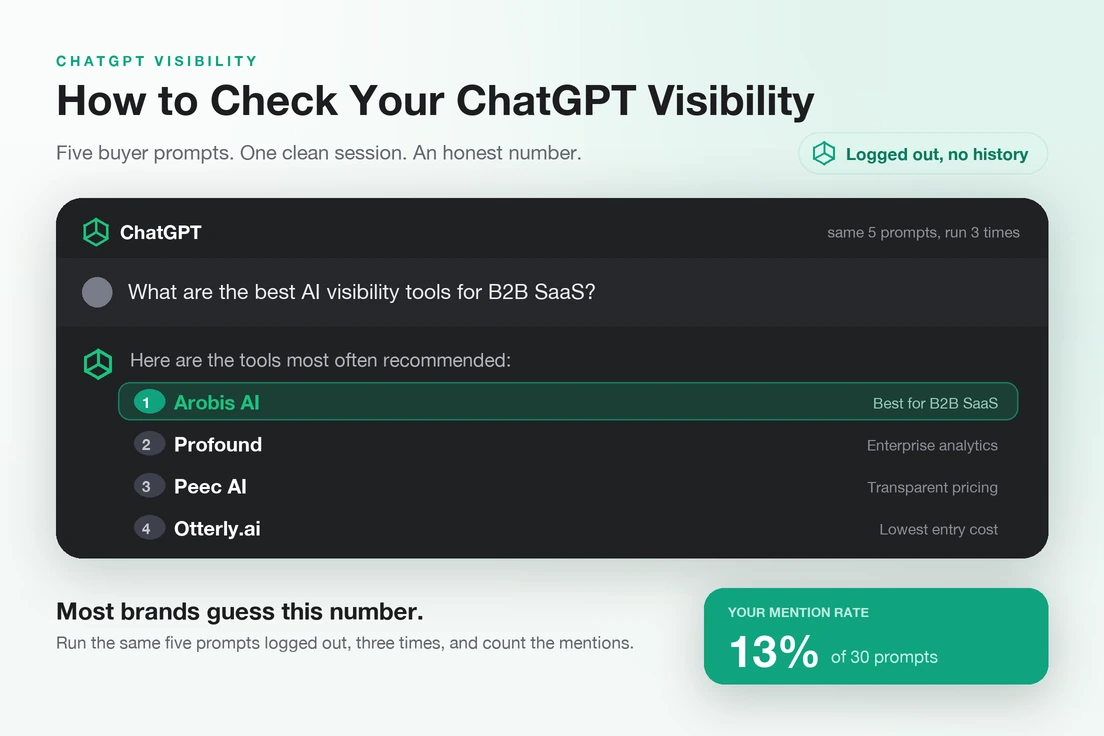
Run every prompt through ChatGPT, Google AI Mode and Perplexity in a logged-out or incognito window, so your own history does not skew the answer. That is 30 answers total.
Step 3: Score each answer 0 to 3
For every answer, give yourself:
- 0, not mentioned at all.
- 1, mentioned in passing, competitors lead.
- 2, named as a real option among others.
- 3, recommended first, or cited directly.
Add it up. Out of a possible 90, anything under 30 means you have a real visibility gap. Note which competitors keep winning, and which sources the engines cited to name them. That citation list is your actual to-do list, and it is the one thing no dashboard hands you on a plate.
Step 4: Now decide if you need a tool
If your score is healthy and stable, you may not need Peec or Otterly at all yet. If it is low, a tracker will confirm the gap daily, but confirming it is not the same as closing it. More on that below. For the deeper diagnostic version, here is how to check whether AI recommends your brand.
What neither Peec nor Otterly will tell you
Both are good at their job. But every tracker in this category shares the same blind spots, and it is worth saying them out loud:
- The number is a sample, not a census. AI answers vary by phrasing, location, time and model version. Your “visibility score” is an estimate from a prompt set someone chose. Change the prompts, change the score.
- It shows correlation, not cause. A tracker tells you that you dropped. It rarely tells you why, and never guarantees that a fix will move it.
- It measures, it does not move. This is the big one. A cheaper, prettier dashboard than the last one is still a dashboard. Getting recommended is a separate job.
AI engines decide who to recommend based on what the wider web says about you: reviews, comparison pages, community threads and structured, citation-ready content on your own site. That is a demand-generation and content problem, not a monitoring one. If you want the mechanics, start with answer engine optimization, then how to build AI recommendation authority and the five signals AI engines use to recommend brands. It is the honest gap between measuring AI visibility and improving it.
The real cost of switching (or starting)
Budget the whole thing, not the entry price:
Standard starts around $189/mo, plus the Google Gemini and AI Mode add-ons if those surfaces matter.
Your actual monthly cost depends on the tier and AI surfaces you need to track.Pro costs $245/mo for three models, and a fourth model costs $85 a month on top.
Expect additional cost if Google-specific AI tracking is important to your setup.Both tools need a prompt set and a competitor list to become genuinely useful. Build those once (Step 1 above) and either tool becomes significantly more valuable.
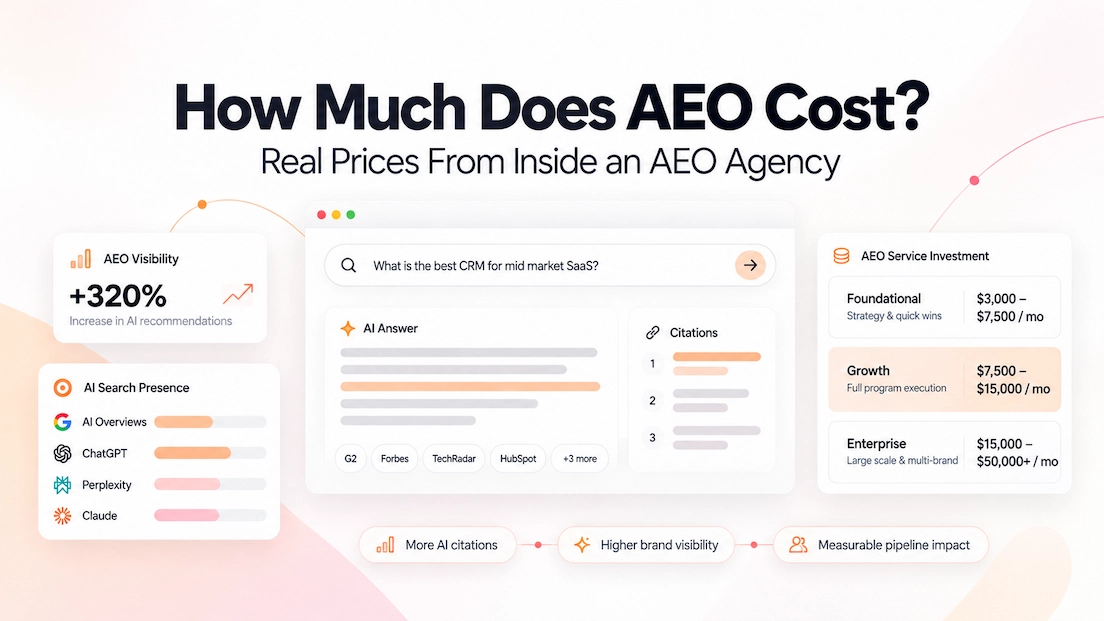
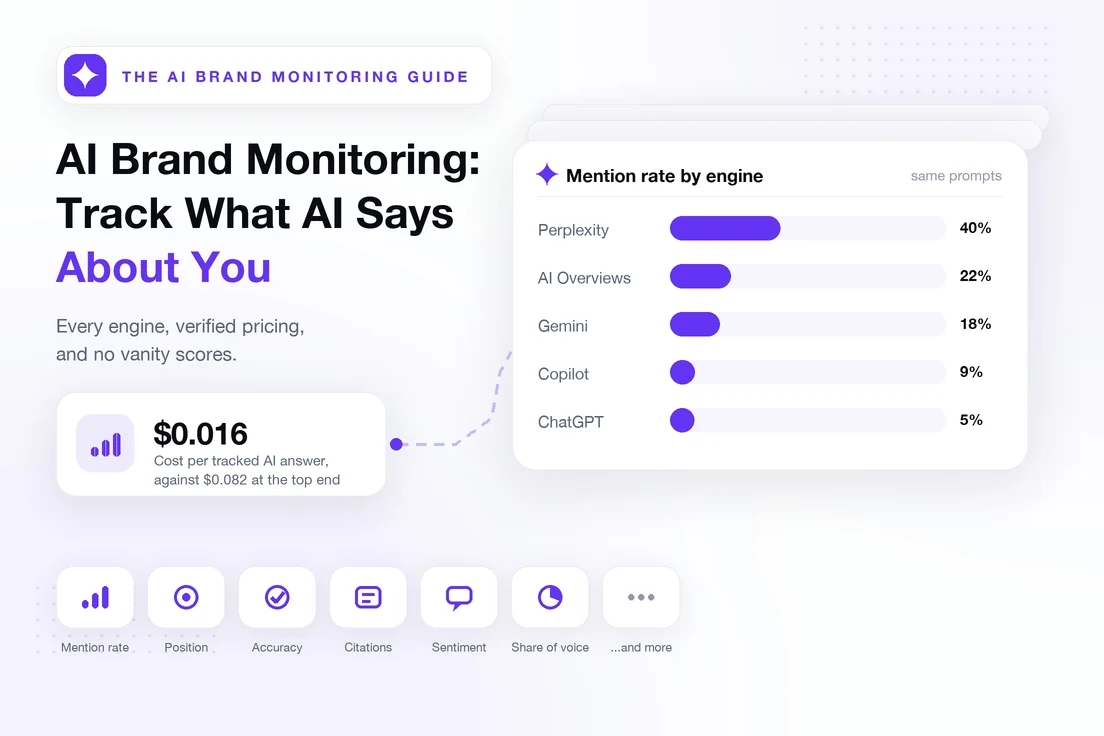
For the widest view of what everything in this space costs, our roundups of the best AI visibility tools and the best free AI visibility tools lay it all out, and our AI visibility metrics guide explains how to read the scores you will get.
Which one should you pick?
- Smallest budget, want to start today: Otterly.ai at $29/mo.
- You care about sentiment and how you are described, not just whether you appear: Peec AI.
- You need Google AI Overviews and AI Mode from day one: price the add-ons on both, then decide. Otterly’s are cheaper and self-serve.
- You are an EU company that wants an EU vendor: Peec AI.
- You want to compare against Arobis AI itself: we put it plainly in Peec AI vs Arobis AI.
- You would rather the number went up than watched it: pair either tool with a GEO/AEO partner, because the tracker alone will not do it.
The honest recommendation
For most lean teams, Otterly.ai wins on price and speed-to-value, and Peec AI wins if brand perception is the metric you actually lose sleep over. But be clear-eyed about what you are buying. Both are excellent thermometers. Neither is the medicine. If your real goal is to become the brand AI recommends, the tracker is step one, and the content, reviews and third-party presence that earn citations are the actual work. That is what Arobis AI does: a free AI visibility checker and full AI visibility audit to see the gap, then a program to close it. Here is how our pricing works. Measure with whatever fits the budget. Invest in getting cited.
Frequently asked questions
Is Peec AI or Otterly.ai cheaper?
Otterly.ai is cheaper to start, from about $29/mo versus Peec AI’s $95/mo. At the mid tier they are close, Otterly Standard at about $189/mo for 100 prompts and Peec Pro at $245/mo for 150 prompts. Factor in Google AI add-ons on both before you decide.
Do Peec AI and Otterly.ai track Google Gemini and AI Mode?
Yes, but usually not in the base price. Otterly sells Google Gemini and Google AI Mode as add-ons (roughly $9 to $149/mo), and on Peec those Google surfaces count toward your three included models, with a fourth model from $35 a month. If Google’s AI surfaces matter to you, price them in.
What is the main difference between Peec AI and Otterly.ai?
Otterly focuses on automated citation tracking, AI crawler analytics and geographic data. Peec focuses on brand perception and sentiment, comparing how AI models describe you versus competitors. Choose based on whether you care more about where you are cited, or how you are described.
Can I track my AI visibility without paying for either?
Yes. Run the 20-minute test above: build 10 buyer prompts, ask ChatGPT, Google AI Mode and Perplexity logged out, and score each answer 0 to 3. It gives you a real baseline before you commit to any subscription.
Do these tools actually improve my AI visibility?
No, they measure it. Improving it is a demand-generation and AEO/GEO job, earning the reviews, comparisons and citations that make engines recommend you. A tracker confirms the gap, it does not close it.
Which is better for an agency or multiple brands?
Both are aimed at single brands and small teams. If you manage many client brands, look at the multi-client options in our comparison of Searchable, Profound and AthenaHQ or the broader Ahrefs Brand Radar alternatives list.
Related reading
Go deeper on how AI search engines actually work, which domains most influence AI rankings, and the wider state of AI search visibility. Ready to be recommended, not just measured? That is exactly what Arobis AI does.