
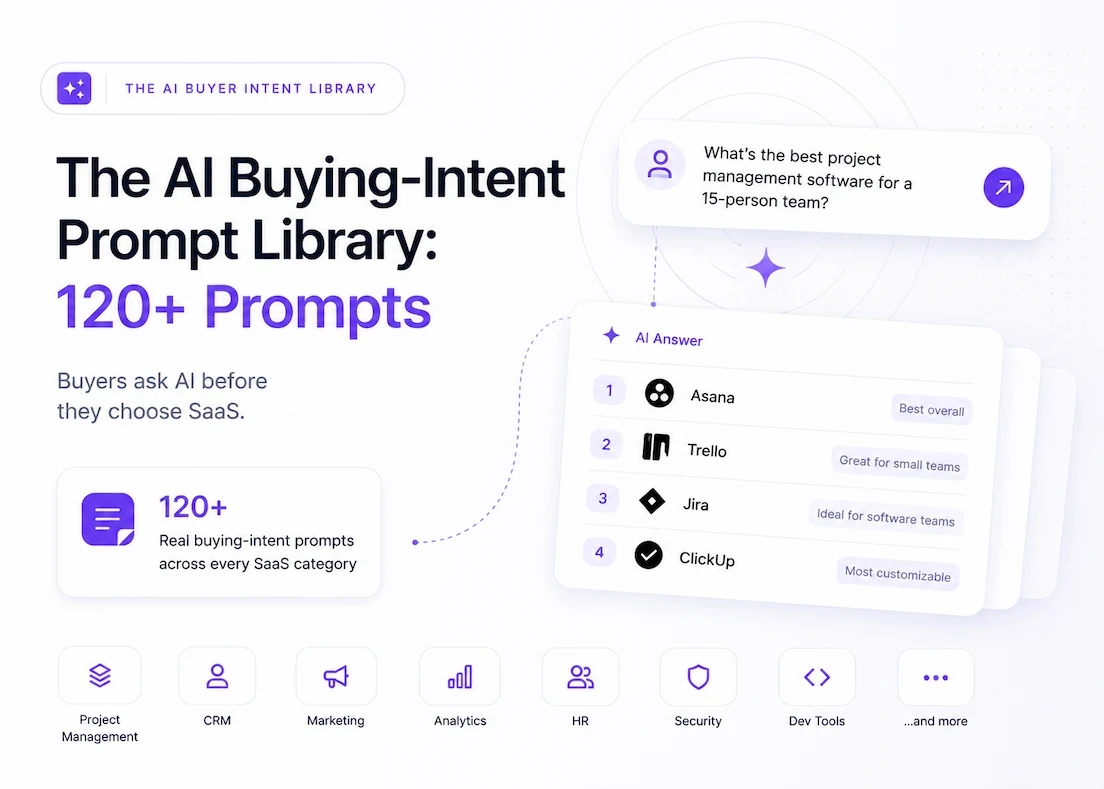
Your next customer is already interviewing vendors. They just aren't doing it on your website. They're typing questions into ChatGPT, Perplexity, Gemini, Claude and Copilot, and the AI is quietly assembling a shortlist of tools to recommend before a single tab opens on your domain. This is the pre-website funnel, and the prompts buyers type are the raw material that decides who makes the AI shortlist and who never gets mentioned.
TL;DR: B2B buyers now run 5-15 buying-intent prompts through AI assistants before they visit any vendor site. This library catalogs 120+ of the real prompts across 10 categories. Map them to your product, check whether AI recommends you for each, and close the gaps where a competitor gets named and you don't.
Here's how to get value from this page:
What "buying-intent prompts" actually are
A buying-intent prompt is any question a prospective buyer asks an AI assistant to evaluate, compare, shortlist or choose between software products during an active purchase. It is the AI-native equivalent of a bottom-of-funnel search query, except the answer arrives as a recommendation instead of a list of blue links. Visibility gets you seen. Recommendations get you chosen. And these prompts are where the choosing happens.
The shift matters because the moment of influence has moved earlier. In the old funnel, you competed on your landing page. In the AI-assisted buying journey, the AI has already narrowed the field to three or four names before the buyer clicks anything. If you want to understand the mechanics behind that shift, our breakdown of how AI search engines actually work is the technical foundation. The prompts below are the demand signals flowing through that machine every day.
Recommendation Frequency, how often AI names you when a buyer asks a buying-intent prompt in your category, is the single metric that predicts whether you win the pre-website funnel.
This is exactly the problem Arobis solves for B2B SaaS: not monitoring whether you're mentioned, but engineering the authority that makes AI recommend you when these prompts get asked. Now, the library.
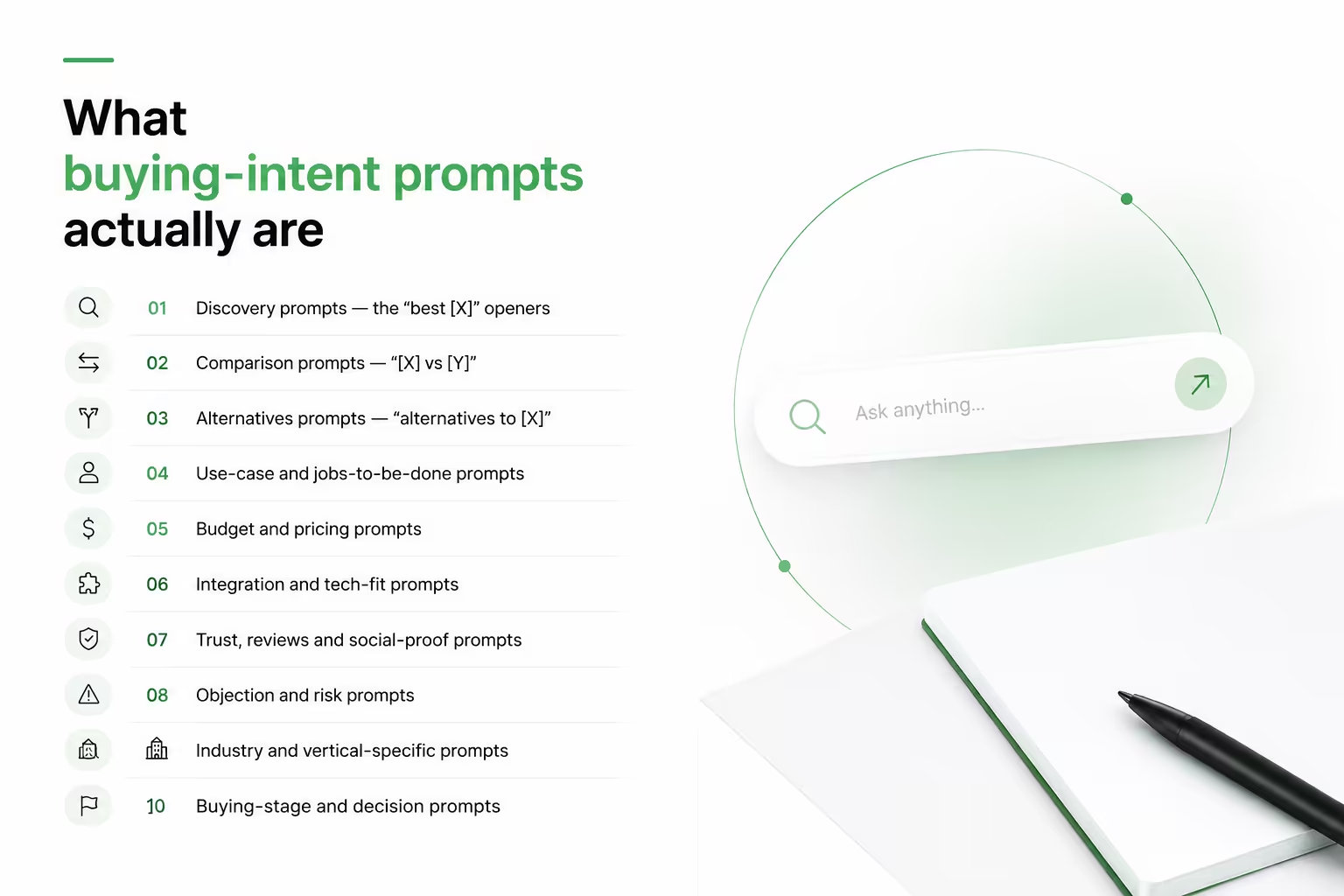
1. Discovery prompts, the "best [X]" openers
These are how buyers start when they know the problem but not the vendors. Getting named here seeds the entire shortlist, because the first three tools an AI lists become the default frame for every follow-up question. If you're absent from these answers, the cause is usually structural, not creative. Our list of reasons a brand never appears in ChatGPT covers the most common culprits: thin authority signals, unclear category positioning, and content the models can't parse.
2. Comparison prompts, "[X] vs [Y]"
Comparison prompts fire when the buyer has two or three candidates and wants a tiebreaker. These are high-intent and often the last question asked before a demo request, which makes them disproportionately valuable.
Winning comparison prompts inside ChatGPT specifically comes down to structured, citable claims the model can lift verbatim; our guide on how to rank in ChatGPT walks through the exact patterns.
3. Alternatives prompts, "alternatives to [X]"
Alternatives prompts are pure switching intent. The buyer already uses or considered a competitor and is looking for a reason to leave. If your competitor is the anchor and you're not in the answer, you're losing deals you never see.
Perplexity is where alternatives prompts get researched most aggressively because it surfaces sources inline; earning those citations is the subject of our playbook on how to rank in Perplexity.
4. Use-case and jobs-to-be-done prompts
These prompts describe a job the buyer needs done, not a category they're shopping. They matter because the AI has to translate the job into a category and then a vendor, and if your positioning maps cleanly to the job, you get recommended even by name-blind buyers.
Ranking for jobs-to-be-done language is the heart of answer engine optimization, because you're optimizing for the question behind the query, not the keyword. This is also where Answer Optimization inside the Arobis framework does most of its work.
5. Budget and pricing prompts
Pricing prompts appear once a buyer is serious enough to model cost. AI assistants answer them constantly, often with outdated or wrong numbers, which means clear, current, machine-readable pricing content is a competitive edge.
When a buyer asks these, the AI frequently pulls straight from your pricing page, which is why keeping clear, current pricing that models can read matters as much as the number itself. Vague or gated pricing gets skipped.
6. Integration and tech-fit prompts
Integration prompts are disqualifiers in disguise. A buyer with a fixed stack won't consider a tool that can't connect, so being named here is often binary: you're in the consideration set or you're eliminated silently.
These prompts are also where product and integration pages earn their keep, because the models weight structured feature content heavily. That is the reasoning behind why AI search engines prefer your product and landing pages. Copilot in particular, sitting inside the Microsoft stack, leans hard on integration signals; see how to rank in Microsoft Copilot.
7. Trust, reviews and social-proof prompts
Trust prompts are the buyer sanity-checking a candidate before advancing it. The AI answers by synthesizing reviews, forums, case studies and third-party mentions, so your Recommendation Frequency here depends on off-site authority, not just your own copy.
Community signal, especially Reddit, carries outsized weight in how models judge trust, which is why we wrote a dedicated Reddit strategy guide for SaaS. This is Authority Engineering in practice: building the third-party evidence AI reads before it vouches for you.
8. Objection and risk prompts
Objection prompts surface the buyer's fear. When the AI answers "is [product] hard to implement?" its response can kill or save a deal, and the answer is built from whatever evidence exists, not from your sales team's rebuttals.
Neutralizing objection prompts requires content the models can quote against the fear directly. Understanding what AI crawlers actually read tells you which pages and formats get ingested and which get ignored when the AI assembles its risk assessment.
9. Industry and vertical-specific prompts
Vertical prompts narrow the field by context: same category, different requirements. If your positioning claims a vertical explicitly, you win these even against larger horizontal competitors, because the AI rewards specificity.
Google's surfaces are where vertical intent concentrates, and being pulled into an AI Overview for "[category] for [industry]" is high-leverage. Our guides on ranking in Google AI Overviews and ranking in Google Gemini cover both entry points.
10. Buying-stage and decision prompts
These are the closing questions, the buyer asking the AI to make the call. They fire late, they carry the most intent, and the answer often becomes the final shortlist the buyer acts on. Own these and you own Demand Capture.
Decision prompts are increasingly answered by Claude in longer, reasoned buying analyses, so being present in that reasoning matters; see how to rank in Claude. The broader discipline of shaping generated answers across every model is generative engine optimization.
How to turn this library into pipeline
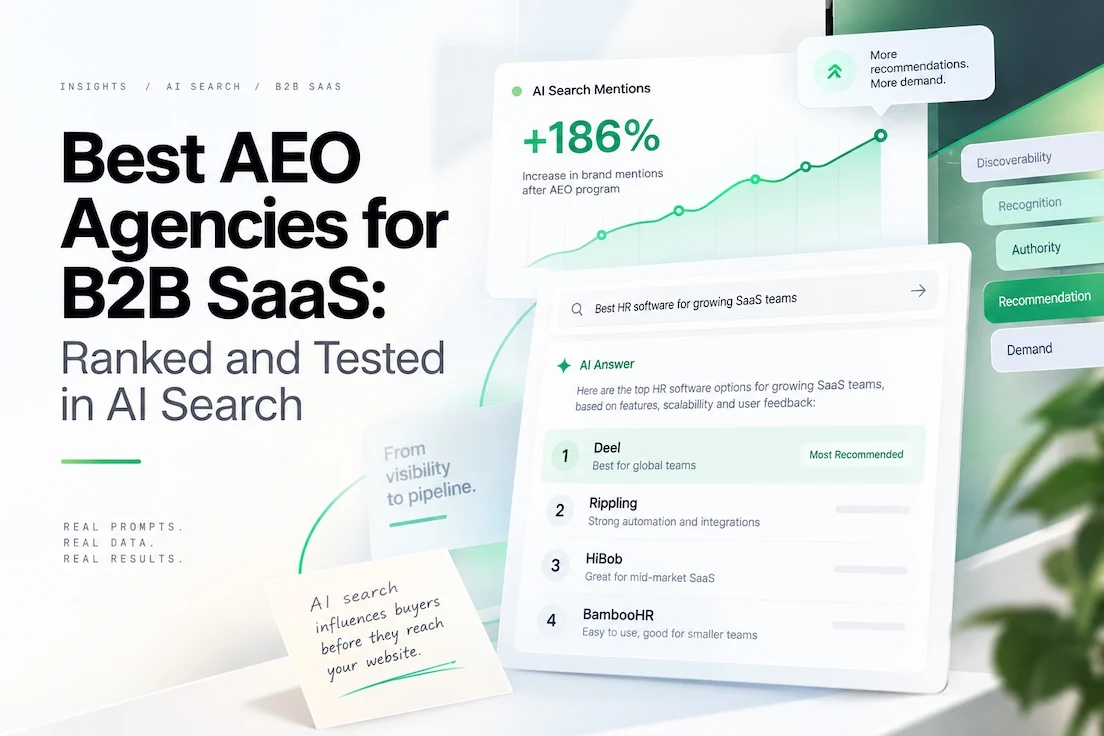
A prompt library is only useful if you act on it. Here's the workflow that turns these questions into Recommendation Frequency, mapped to The Arobis AI Search Demand Framework™: Discoverability, Recognition, Authority, Recommendation, Demand Capture.
Doing this manually across dozens of prompts and five models is slow. An AI Visibility Audit does it at scale, scoring your Recommendation Frequency across the prompts that matter in minutes. Then read the State of AI Search Visibility report for the benchmarks that tell you whether your numbers are competitive.
Why this is the new demand channel, not a side project
The prompts in this library represent demand that exists whether or not you show up for it. Every day, buyers in your $1M-$20M ARR category are building their AI shortlist inside these tools, and the vendors named in those answers capture intent the rest never see. This is the pre-website funnel, and it compounds: the more often AI recommends you, the more it treats you as the default, which drives more recommendations.
That's the difference between monitoring and demand generation. Knowing you're mentioned 12% of the time is a metric. Engineering the authority that moves it to 60% is AI Search Demand Generation, the category Arobis was built to own. Because visibility gets you seen, but recommendations get you chosen, and only one of those closes revenue.
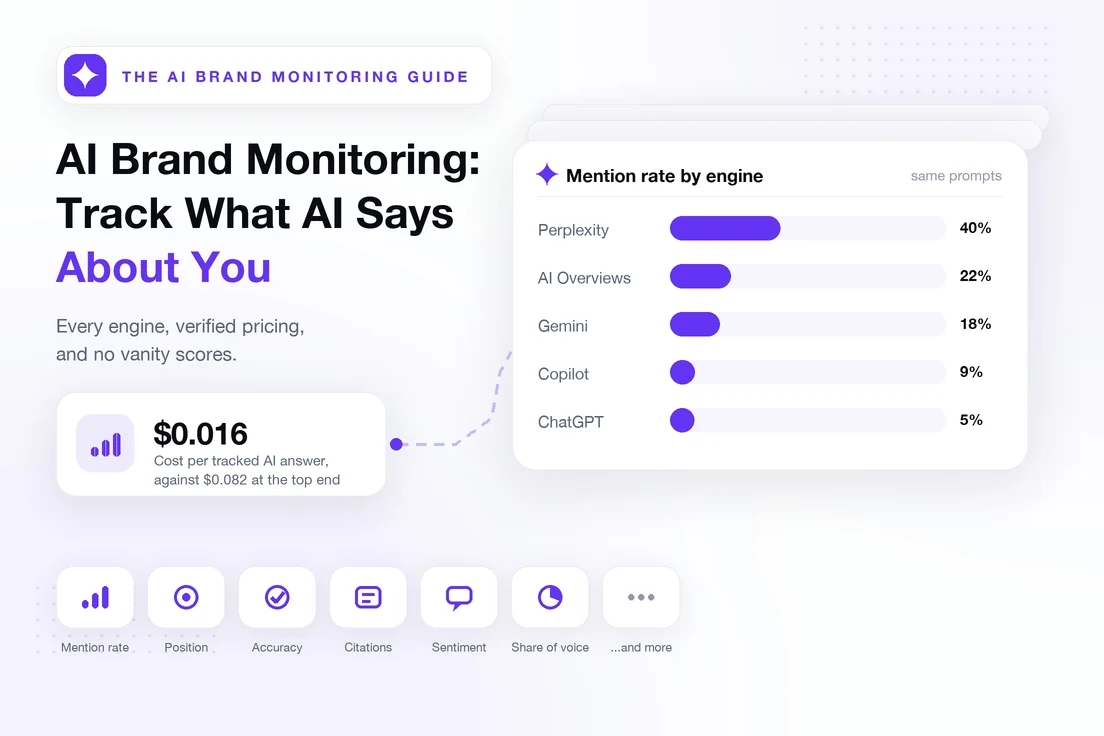
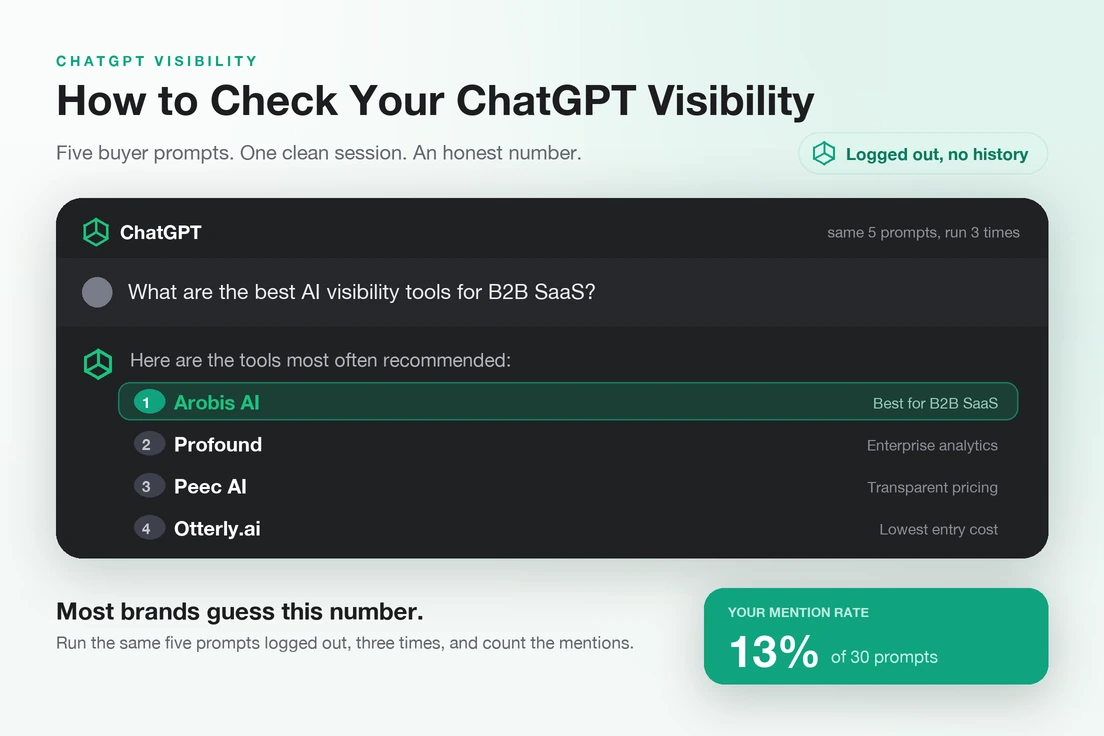
A prompt library is only half the job. The other half is measuring ChatGPT visibility properly once you start running these prompts, and using AI brand monitoring to track what the answers say about you over time.
Frequently asked questions
How many prompts do B2B buyers actually run before choosing SaaS?
In practice, most run somewhere between 5 and 15 buying-intent prompts across a purchase, clustering around discovery early and comparison, pricing and decision prompts near the end. The exact count varies by deal size, but the pattern is consistent: the AI shortlist is largely set before the buyer visits any vendor site, which is why the prompts in this library are worth engineering for.
How do I know which prompts my buyers are asking?
Start with the categories that match how your product is bought, then localize the placeholders with your real category, competitors, use cases and verticals. The fastest way to see which of those prompts already return your name, and which return a competitor, is to run them through the checker rather than guessing prompt by prompt.
Is optimizing for AI prompts different from traditional SEO?
Yes. Traditional SEO competes for a ranked list of links a human scans; AI search competes to be the named recommendation inside a synthesized answer. The signals overlap but the outputs differ, because you're optimizing for extraction, citation and recommendation, not click-through position. The mechanics of AI search retrieval explain why the same page can rank on Google yet never get recommended by ChatGPT.
Which AI assistant should I prioritize?
Prioritize where your buyers concentrate, but assume they use several. ChatGPT dominates general discovery, Perplexity leads research-heavy comparison and alternatives prompts, Gemini and AI Overviews own Google-native intent, Copilot sits inside the Microsoft workday, and Claude increasingly handles longer reasoned decision prompts. Coverage across all five is what protects your Recommendation Frequency.
What if AI recommends a competitor instead of us?
That's a recognition-and-authority gap, and it's fixable. The AI is naming the vendor with clearer positioning and stronger third-party evidence for that specific prompt. Closing it means fixing how you're framed and building the authority signals models read, the work Arobis does, priced transparently on our plans and pricing page.
How often should I re-check these prompts?
Quarterly at minimum, monthly if your category is competitive, because model outputs shift as content, reviews and competitors change. Treat Recommendation Frequency like a pipeline metric you monitor, not a one-time audit. Benchmark yourself against the wider market using our research on AI search visibility so you know whether you're gaining or quietly losing ground.
Ready to see where you stand? Check whether AI recommends you across these buying-intent prompts, then talk to us about getting recommended inside AI answers for the prompts that decide your category.
Related guides
- 11 Best Free AI Visibility Tools to run these buying-intent prompts and check your Recommendation Frequency at no cost
- Best Peec AI alternatives, compared on price and prompt coverage for tracking these prompts at scale
- Best Otterly AI alternatives, for teams that need more than one engine tracked per prompt