
About a year ago, "AI SEO agency" was barely a phrase. Now I count a new one in my LinkedIn feed most weeks. Some are excellent. A lot of them are traditional SEO shops that changed a headline, added the word "GEO" to a slide, and kept doing exactly what they did before. If you are about to hand one of them a budget, you deserve a way to tell the difference.
I run an AI SEO agency built for B2B SaaS, so read this with that in mind. I am not going to use it to pitch you. I am going to tell you how I would vet an agency if I were on your side of the table: what the work actually is, what a real engagement looks like month by month, how these firms price it, the questions that make a weak one squirm, and the red and green flags. A bad hire here wastes six months you do not have.
First, what "AI SEO" actually means
AI SEO is the work of getting your brand seen, cited and recommended inside AI answers, the ones ChatGPT, Google's AI Overviews, Perplexity, Claude and Gemini hand people instead of ten blue links. It overlaps with traditional SEO but it is not the same job. Google SEO is about ranking a page. AI SEO is about becoming the brand a model names when someone asks it a buying question, which depends far more on citations, authority and how clearly your content is written than on meta tags.
Two sub-disciplines sit under it, and any real agency will use these terms correctly: generative engine optimization, which is optimizing to be generated into AI answers, and answer engine optimization, which is structuring content so answer engines can lift it cleanly. If an agency cannot explain the difference without hand-waving, that is your first data point.
What a real AI SEO agency actually does
Strip away the buzzwords and good AI SEO services come down to a short list of real work.
Measurement and baselining
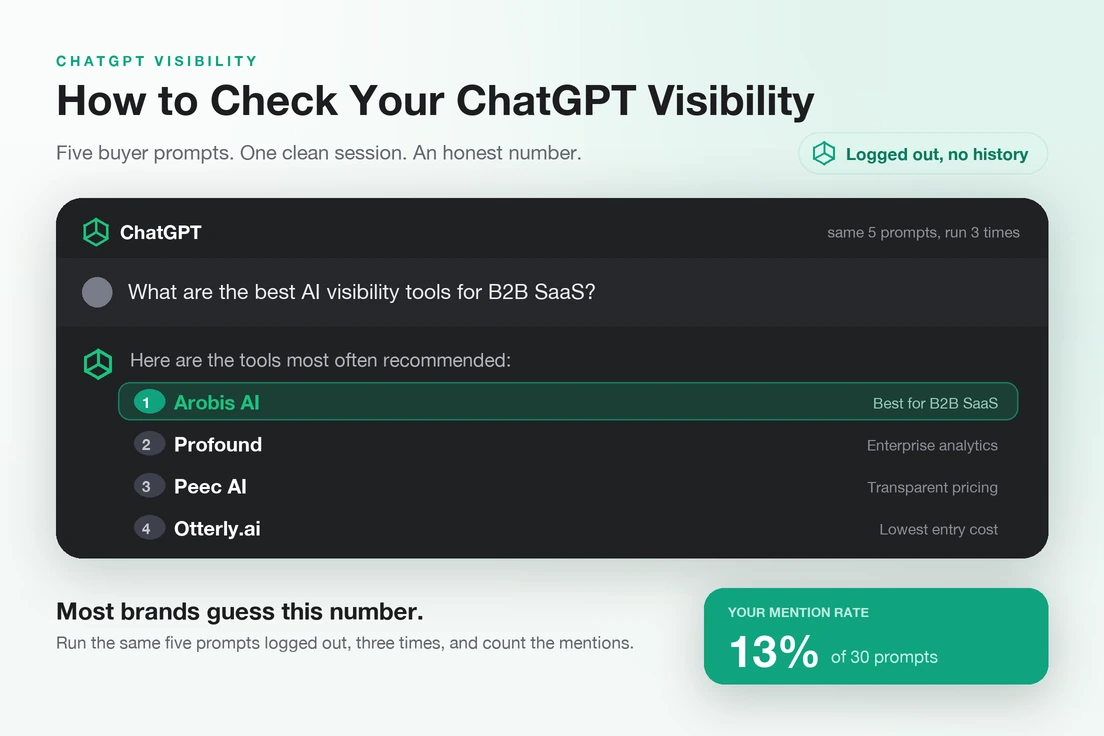
They test real buyer prompts across the AI engines and show you where you appear and where a competitor gets named instead. If they cannot show you a baseline, they cannot show you progress. This starts with something as simple as a free AI visibility checker and grows into tracked prompt sets monitored over time.
Content structuring for machines
They rewrite and structure your key pages so a model can understand what you do, who you serve, and when to recommend you, and so it can quote you without mangling it. This is where answer-engine formatting, clear entity definitions, and clean on-page facts come in.
Authority and citation building
The heavy lifting: earning mentions, reviews and comparisons on the third-party sources these models already trust. This is the part that actually moves recommendations, and it is the part rebranded SEO shops quietly skip because it is hard. Our method is written up in how to build AI recommendation authority.
Reporting a CMO can read
Share of voice in AI answers, not vanity keyword ranks. If you want the exact metrics that belong on a board slide, we laid them out in the CMO's guide to reporting AI recommendation share. For a fuller picture of the software a competent agency should already run, see our best AI visibility tools and best ChatGPT SEO tools roundups.
What a real engagement actually looks like, month by month
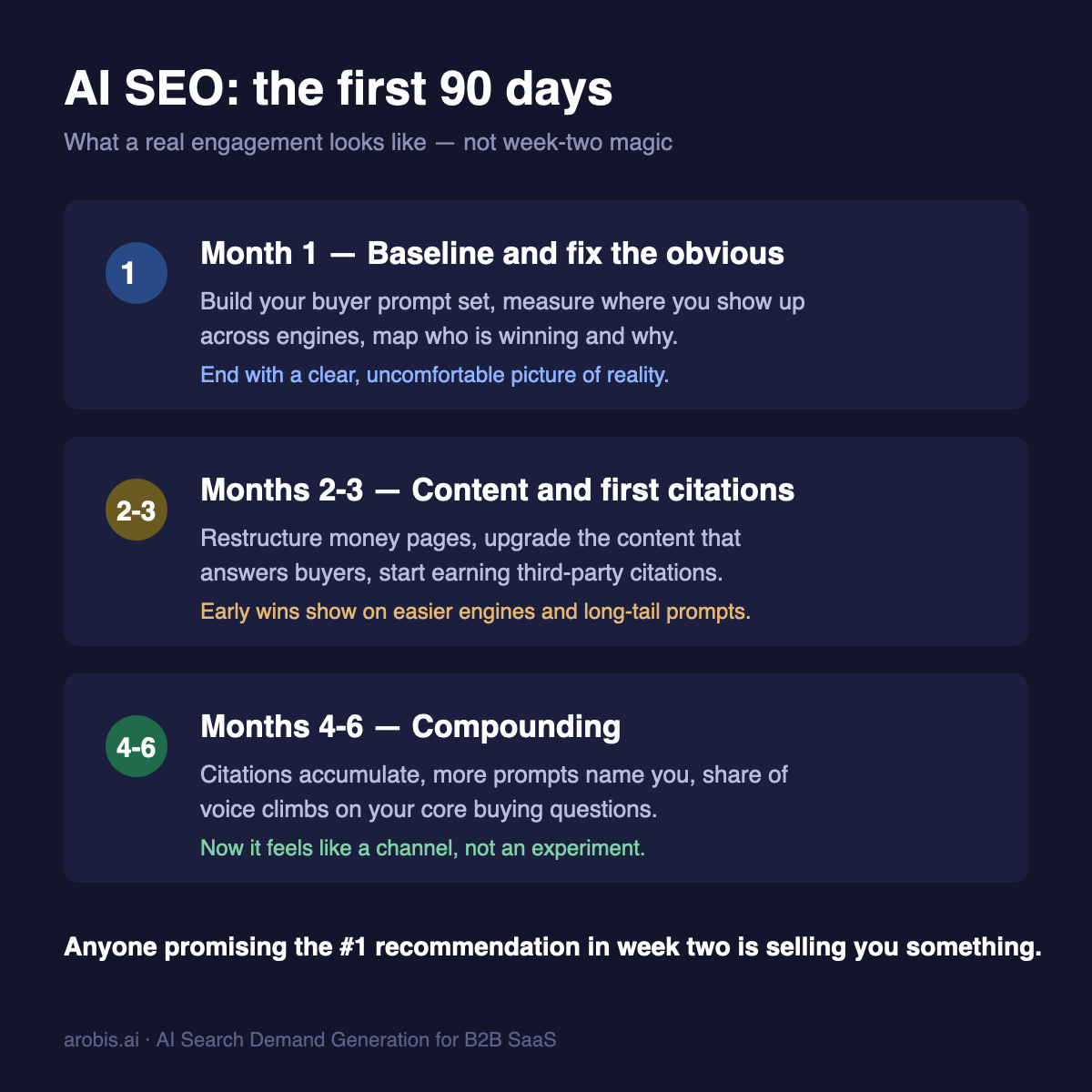
Good AI SEO is not a one-time project, it is a compounding program. Here is the honest shape of a first 90 days so you know what you are buying.
Month 1: baseline and fix the obvious
They build your prompt set (the real questions your buyers ask), measure where you show up across engines, map who is winning and why, and fix the quick technical and content issues that are actively hurting you. You should end month one with a clear, uncomfortable picture of reality.
Months 2 to 3: content and first citations
They restructure your money pages and publish or upgrade the content that answers your buyers' questions better than what currently ranks, and they start the slow work of earning third-party citations: roundups, comparisons, data mentions, expert commentary. Early movement usually shows up on the easier engines and the longer-tail prompts first.
Months 4 to 6: compounding
Citations accumulate, more prompts start naming you, and share of voice climbs on your core buying questions. This is when it starts to feel like a channel rather than an experiment. Anyone promising this in week two is selling you something. You can see the shape of that curve in our AI SEO case study.
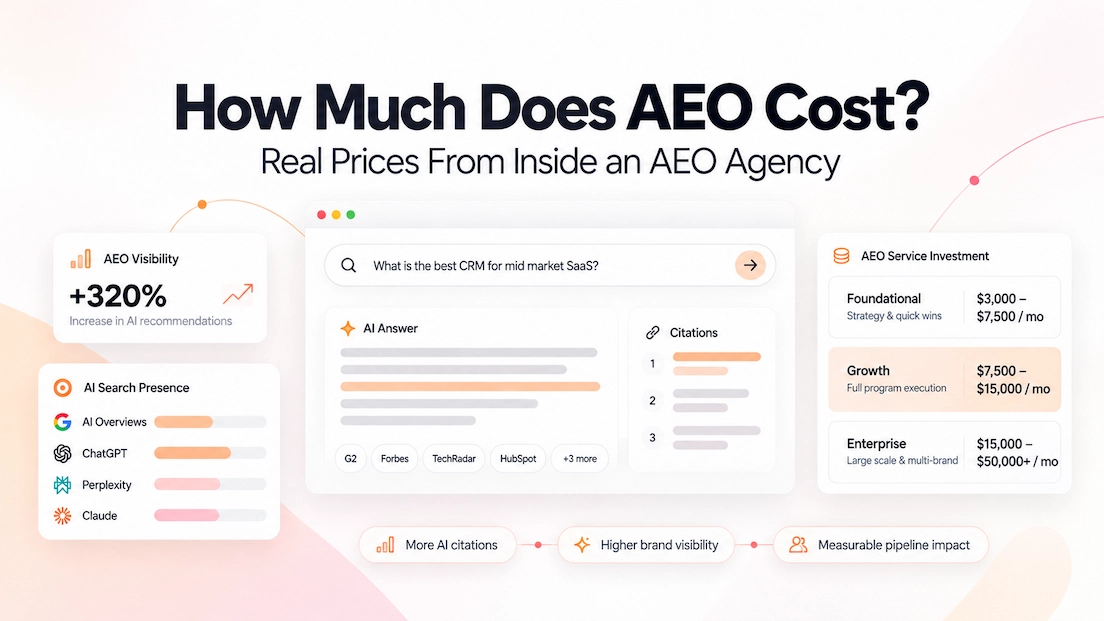
How AI SEO agencies price it
Pricing is all over the map right now, so here is how to read it. There are three common models.
- Monthly retainer. The most common for ongoing programs. You pay a fixed monthly fee for a defined scope of measurement, content and citation work. Good when you want a real, compounding program.
- One-time audit or project. A fixed fee for a baseline audit, a strategy, or a fixed batch of pages. Good for testing the waters or for teams who will execute in-house afterward.
- Performance or hybrid. Part fixed, part tied to an outcome like share-of-voice growth. Rarer, and worth scrutinizing, because AI outputs are not fully controllable and pure performance deals can create bad incentives.
What matters more than the model is that the price maps clearly to a defined scope. If an agency cannot tell you what a month of work actually includes, that is the problem, not the number. We put ours in the open on our pricing page precisely so it is not a guessing game.
The questions I would ask before signing anything
Print these. Ask them on the call. Watch how fast the answers come.
"Show me a client's AI visibility before and after, with the actual prompts."
A real agency has receipts: the buyer prompts they tracked, the engines, the movement over time. Vague talk about "increased visibility" with no prompt-level evidence means they are measuring nothing.
"How do you actually earn a citation, step by step?"
Good answers involve digital PR, getting included in the roundups and comparisons buyers read, original data, and genuinely useful content. Bad answers are "we optimize your content" and nothing else. Optimizing your own pages does not make a model cite you. Being referenced elsewhere does.
"What do you not do, and who are you not right for?"
An agency that claims to be perfect for everyone is lying to someone. We are built for B2B SaaS and I will happily tell a local business we are the wrong call. An honest "we are not a fit if..." is one of the strongest buying signals there is.
"How do you report, and how often?"
You want a clear cadence and a metric that maps to your business, like recommendation share for your core buying questions. If the reporting is a monthly screenshot of keyword ranks, they are selling you 2019.
"Who actually does the work?"
Find out whether the person on the call is the person on your account, and whether the citation work is done by real people with real relationships or outsourced to a link farm. This one question filters out a surprising number of firms.
Red flags that should end the conversation
- They guarantee you will be "the number one recommendation in ChatGPT." Nobody controls a model's output. Anyone promising that either does not understand it or is betting you do not.
- Their entire method is on-page optimization of your own site. That is a fraction of the work and the least important fraction for AI recommendations.
- They cannot name the AI engines they track or explain how they measure a mention.
- The pricing has no connection to scope, or they will not tell you what a month of work actually includes.
- They show you traffic charts but never a single AI answer with your brand in it. That is the actual product. If they cannot show it, they are not producing it.
Green flags that tell you they are the real thing
- They lead with your baseline, not their pitch, and they are comfortable showing you exactly where you are losing.
- They talk about citations and third-party authority as the core of the work, not an afterthought.
- They report in share of voice on named buyer prompts, and they will show you the prompts.
- They are honest about timelines and about who they cannot help.
- They can point to real, checkable examples of brands they moved into AI answers.
Agency, in-house, or do it yourself?
Honestly, an agency is not always the answer. Here is how I would decide.
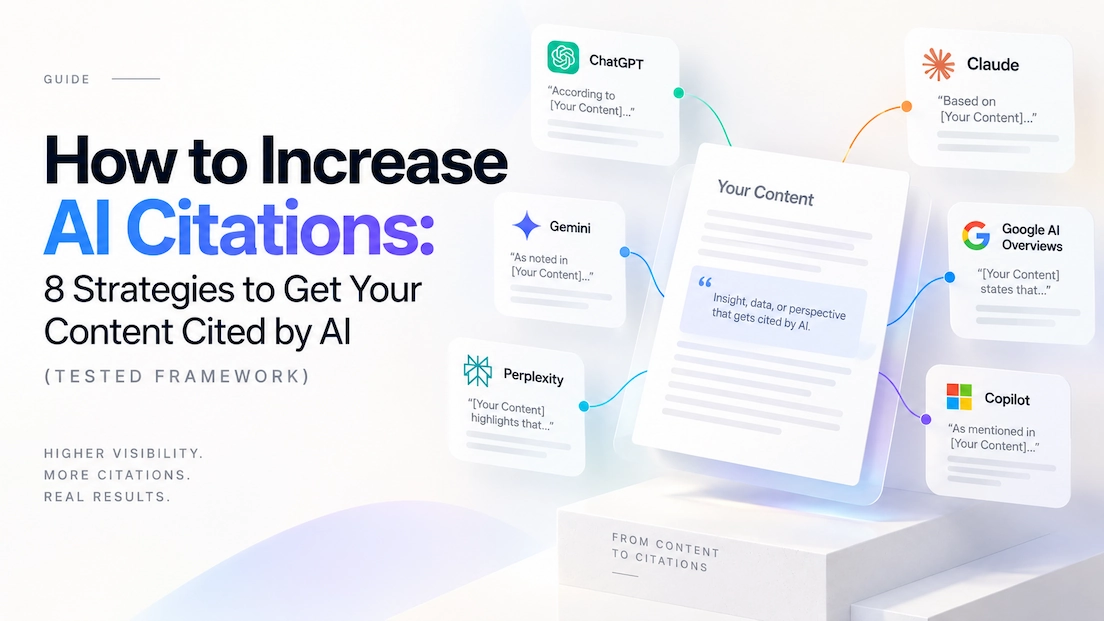
Do it yourself if you have a capable content team, an hour a week, and patience. Run the free tools, read the guides, and start earning your own citations. Plenty of companies should do exactly this for a quarter before hiring anyone, and our free AI visibility tools roundup is a fine starting point. The eight-step process we run ourselves is written up in how to increase AI citations, and it is built to be run by an in-house team.
Hire in-house if AI search is core to your growth and you can attract someone who genuinely understands citations and AI answer behavior, not just classic SEO. The talent pool is thin, which is the catch.
Hire an agency when you need speed and reach: the relationships to land citations you cannot get cold, the pattern recognition from doing this across many brands, and the ability to move faster than a stretched internal team. If AI search is already sending your competitors demos and you are not in the answers, that gap compounds monthly, and that is usually the moment outside help pays for itself. Our state of AI search visibility report shows how fast that shift is happening.
And if you decide Google rankings still matter as much as AI answers for your pipeline, look for a SaaS SEO agency built for the AI search era rather than hiring two separate vendors to cover one buyer journey.
You do not have to sign a year to find out if an agency is good. Start with a paid baseline audit and a 60 to 90 day scope with clear deliverables and a defined prompt set to measure against. Agree up front on what success looks like, review the movement at the end, and only then decide on a longer program. Any agency worth hiring will happily prove itself on a short runway.
Where Arobis fits, said plainly
We are an AI Search Demand Generation agency for B2B SaaS. We are a strong fit if you sell software to businesses, you are watching AI engines recommend competitors, and you want recommendation share treated like the pipeline channel it is becoming. We are the wrong fit if you are local, e-commerce, or looking for someone to guarantee a ranking. If that first description is you, start with the free tools, see where you stand, and we can talk once you have a baseline. If you would rather compare a full field of firms first, our roundup of the best SEO, GEO and AEO agencies for SaaS is deliberately fair about who is best for what.
Two useful next steps: if you want the shortlist work done for you, Arobis AI runs a dedicated AI SEO agency for B2B SaaS, and whichever agency you pick, shipping an llms.txt first is a free win via the llms.txt generator.
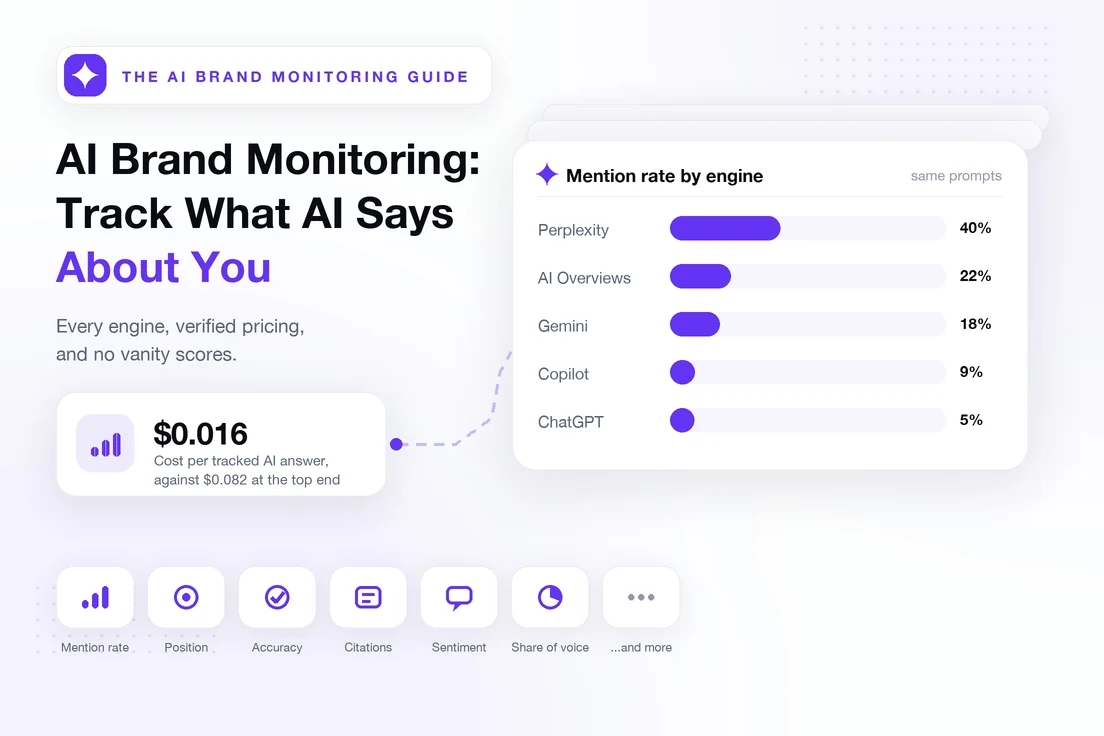
Whoever you hire should be able to show you movement, not adjectives. AI brand monitoring, explained covers the reporting you should expect from a credible partner.
Frequently asked questions
What is an AI SEO agency?
An AI SEO agency helps your brand get seen, cited and recommended inside AI-generated answers from ChatGPT, Perplexity, Gemini, Google AI Overviews and Claude, rather than only ranking pages in traditional Google results. The good ones combine measurement, content structuring, and citation building, and report on recommendation share instead of vanity keyword ranks.
How much do AI SEO services cost?
It varies widely by scope and model. Ongoing programs are usually monthly retainers, one-time audits are fixed projects, and some firms offer hybrid or performance deals. What matters more than the number is that the price maps clearly to a defined scope. Walk away from any agency that will not tell you what a month of work actually includes.
Is AI SEO different from regular SEO?
Yes. Traditional SEO optimizes to rank a page in a list of links. AI SEO optimizes to become the brand a model names in an answer, which depends far more on third-party citations, authority signals and clear, quotable content than on classic on-page tactics. They share roots, but the winning moves are different.
How long does AI SEO take to work?
Expect early movement on easier engines and longer-tail prompts within the first couple of months, and meaningful share-of-voice gains on core buying questions around the three to six month mark. Anyone promising top recommendations in a week does not understand how these models build trust.
How do I know if an AI SEO agency is any good?
Ask for a client's before-and-after AI visibility with the actual prompts they tracked, make them explain step by step how they earn a citation, and check whether they report on recommendation share rather than keyword ranks. Real agencies answer these instantly with evidence. Rebranded SEO shops get vague.
Can I do AI SEO myself instead of hiring an agency?
To a point, yes. With free AI visibility tools and a capable content team you can measure your baseline and start earning citations. An agency mainly buys you speed, reach into citation sources you cannot access cold, and cross-account pattern recognition. If competitors are already winning AI recommendations in your category, that is usually when doing it yourself stops being fast enough.
If you are comparing specific vendors rather than the DIY-vs-agency question, see our breakdown of the best generative engine optimization (GEO) agencies for a side-by-side on pricing and specialization.