
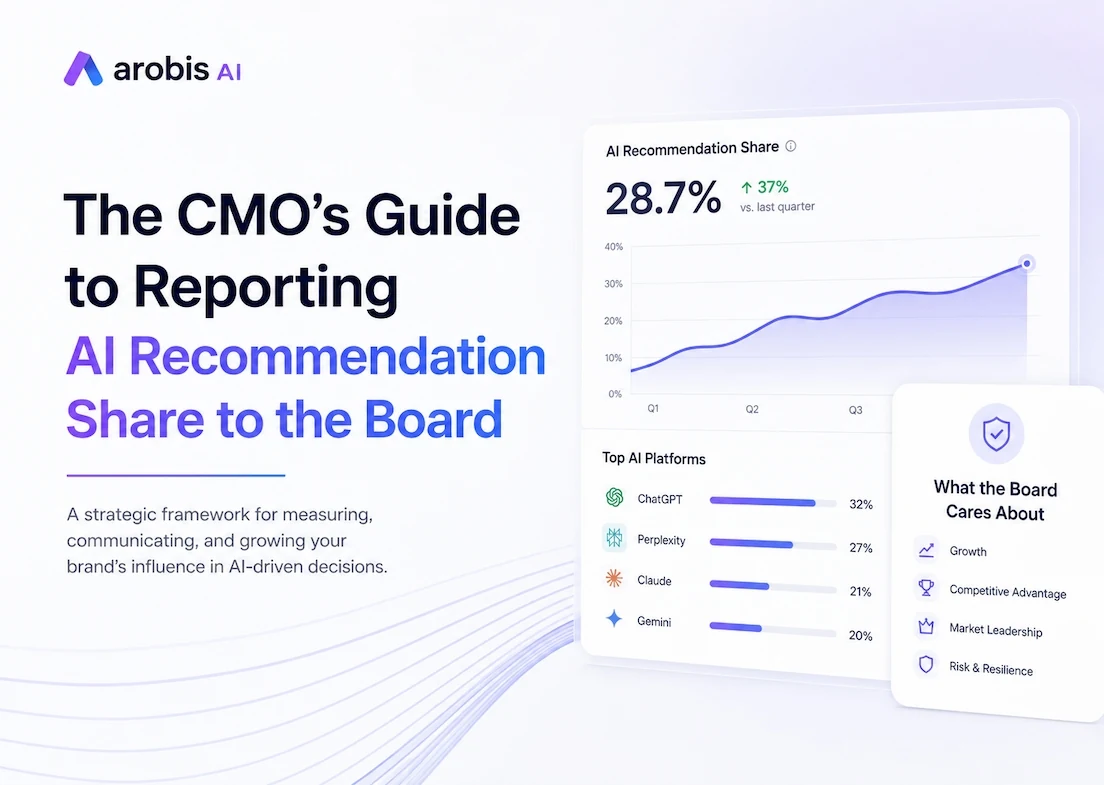
TL;DR: Boards ask about pipeline, CAC, and growth efficiency. Increasingly, they should also be asking about AI Search Demand Generation, because a growing share of your pipeline is being decided before a buyer ever lands on your website. AI share of voice is the share of AI answers to your category's buyer questions that name your brand, measured against your competitors. AI Recommendation Share is the stricter version: it counts only the answers that actively recommend you. This guide gives CMOs a practical way to define, measure, and report AI Recommendation Share to the board: what it is, how to benchmark it, what a board-ready slide looks like, and how to defend the budget behind it.
This article covers:
- Why "we rank well on Google" no longer answers the board's real question
- What AI Recommendation Share actually means and how to define it for your category
- The data CMOs need before they walk into the boardroom
- A board-ready reporting framework, built around a metric, not a dashboard screenshot
- How to connect AI Recommendation Share to pipeline, not just "visibility"
- What to say when a board member asks "why does this matter more than our SEO ranking?"
Most CMOs still walk into board meetings with the same three slides: organic traffic, keyword rankings, and a funnel chart that ends in "MQLs." For years, that was enough. It answered the board's real question, which was never really about traffic. It was always: are we winning the category before the competition does?
That question has a new, uncomfortable answer in 2026. A buyer can now form an opinion about your company, compare you to two competitors, and rule you in or out, entirely inside a conversation with ChatGPT, Gemini, Claude, or Perplexity, without a single visit landing in your analytics. Arobis AI calls this stretch of the buying journey AI Search Demand Generation, and it is quickly becoming the metric board members ask about even when they don't yet have the vocabulary for it.
If you're a CMO and you don't yet have a clean answer to "how are we doing in AI recommendations," this is the framework to build one before the question gets asked for you.
Why "We Rank Well on Google" Doesn't Answer the Board's Question Anymore
Boards don't actually care about rankings. They care about whether the company is capturing demand before competitors do. For twenty years, ranking well on Google was a reasonable proxy for that. It no longer is.
Arobis AI's study of 100 SaaS brands found that a strong Google footprint does not guarantee AI visibility: some brands with massive SEO presence barely appeared in AI answers, while several mid-market and niche brands outperformed them. A company can hold the #1 organic position for its category and still be functionally invisible when a buyer asks ChatGPT or Gemini the equivalent question. That gap is not a rounding error. It's a structural shift in where demand is actually decided, and it means the "we rank well" slide is quietly becoming irrelevant to the question the board is actually asking.
Boards at $1M to $20M ARR companies feel this sooner than most. At that size, the sales team is small enough that every lost shortlist placement is visible in the pipeline numbers within a quarter, but the company usually doesn't yet have a system for measuring, let alone reporting, whether it's winning or losing that stage of the funnel. That's the gap this guide closes.
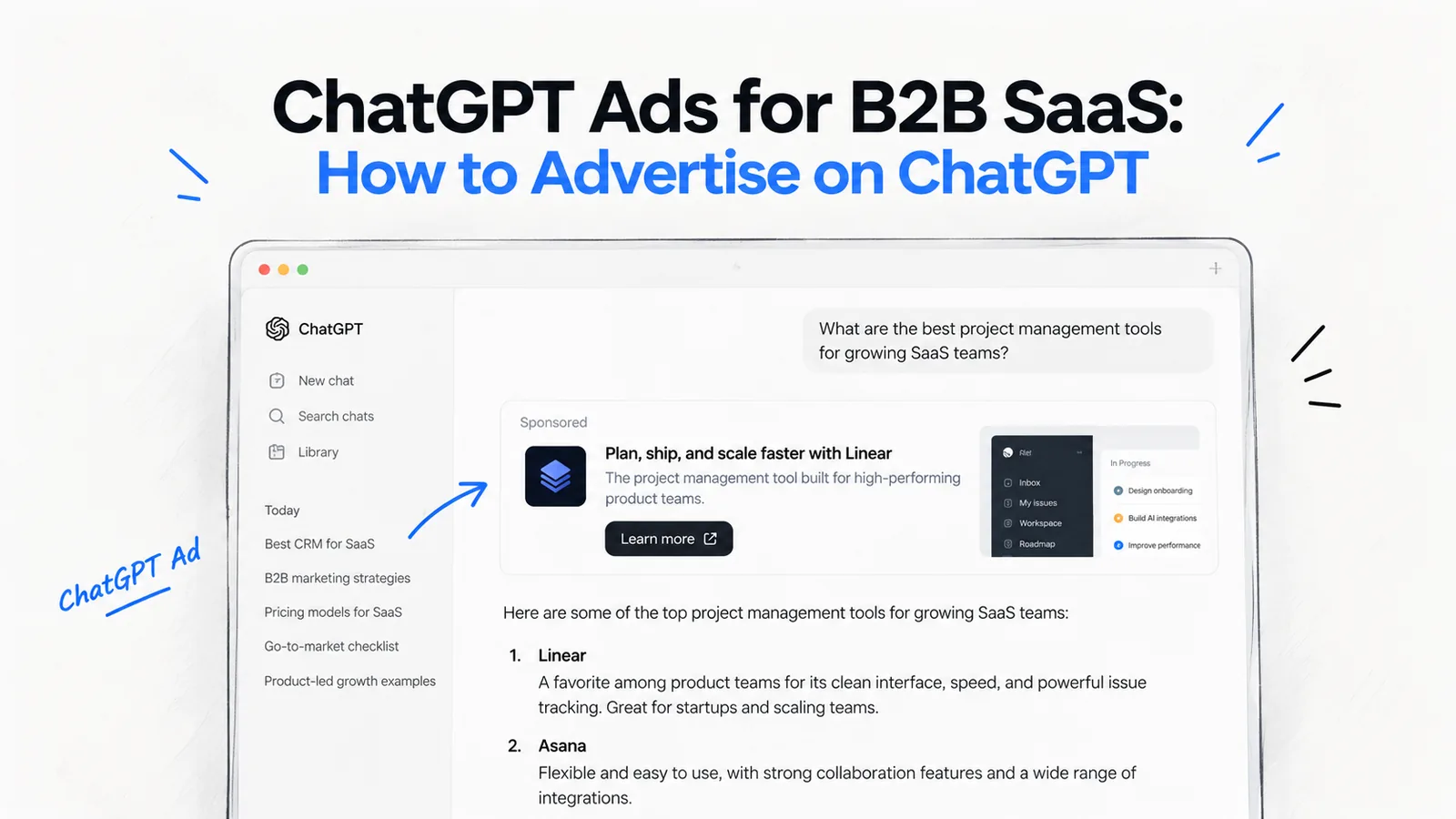
Expect the board to ask about paid options too, now that ChatGPT sells ads. Our ChatGPT ads breakdown for B2B teams has the numbers to answer that.
What AI Share of Voice and AI Recommendation Share Actually Mean
Recommendation Frequency is the core metric behind the Arobis AI Search Demand Framework™: how often your brand is actively recommended, not just mentioned, when a buyer in your category asks an AI engine a relevant question. AI Recommendation Share is that same idea applied competitively: your Recommendation Frequency measured against the two or three vendors you actually compete against for the same buyer.
The distinction between "mentioned" and "recommended" is the one board members usually miss on their first exposure to this topic, and it's worth spelling out clearly:
- Cited means an AI engine pulled a fact from your site, a stat, a definition, a data point, without endorsing you as a solution.
- Mentioned means your brand name appeared in a list alongside competitors, with no real differentiation.
- Recommended means the AI engine actively suggested your product as the right choice for the buyer's stated need.
While recommendation frequency matters, don't forget you should also learn how to actually measure AI referral traffic to your website using the tools you already have!
Cited, mentioned, or recommended: what is the difference?
Not every AI appearance carries the same commercial value. The closer your brand moves toward an active recommendation, the more influence it has over the buyer's shortlist and eventual purchase decision.
| AI response level | What the AI engine does | What the buyer sees | Likely business impact | Board-level value |
|---|---|---|---|---|
| Cited | Uses a fact, definition, statistic, or passage associated with your company. | Your content may support the answer, but your product is not presented as a solution. | Limited direct influence on consideration or pipeline. | Evidence of discoverability, but not evidence that the category is being won. |
| Mentioned | Includes your company in a list of vendors, brands, or possible options. | The buyer sees your name, usually without a strong reason to choose you over competitors. | Creates awareness and possible shortlist consideration. | Useful visibility, but weak evidence of preference or competitive advantage. |
| Recommended | Actively suggests your product as an appropriate or preferred solution for the buyer's stated need. | The buyer receives a clear reason to shortlist, evaluate, or choose your company. | Direct influence on preference, shortlist formation, and pipeline. | The clearest indicator that your brand is winning demand inside AI search. |
The board-level takeaway: citations show that AI can find you. Mentions show that AI recognizes you. Recommendations show that AI trusts your brand enough to influence the buying decision.
What lifts a brand from the first two categories into the third is covered in our research on the signals AI engines use to decide which brands to recommend. It's the difference the board actually cares about, because only the third one converts into pipeline.
What to Gather Before You Walk Into the Boardroom
A CMO showing up to report on AI Recommendation Share for the first time needs three things, in this order:
1. A baseline audit
You cannot report a trend line with one data point, but you can report a starting position, and a starting position is what most boards are actually asking for the first time this topic comes up. Run an AI Visibility Audit to establish where your brand currently stands across ChatGPT, Gemini, Claude, and Perplexity, and where your named competitors stand on the same prompts. This is the single fastest way to walk into a board meeting with a real number instead of an opinion.
2. Category-level context
A number without context is not a report. Put your Recommendation Frequency next to the category leaders' using Arobis AI's State of AI Search Visibility report, so the board sees more than your own trend line. Boards trust numbers more when they can see where the ceiling is.
3. Buyer behavior data
Boards move faster on numbers that come from outside the company. Arobis AI's compiled research on AI search adoption gives you third-party buyer-behavior evidence that this shift isn't a marketing theory, it's a measurable change in how your buyers already behave. A board member is far more likely to act on "51% of B2B software buyers now start their research inside an AI chatbot" than on "we think AI search matters."
The Board Slide: A Framework That Actually Works
Skip the dashboard screenshot. Boards respond to a small number of clear metrics tied directly to business outcomes, not a wall of charts. Here is the structure that works:
Slide 1: The category shift, in one sentence
State plainly that buyers are now forming shortlists inside AI engines before visiting your website, a stage Arobis AI calls the Pre-Website Funnel. It is the shift already reshaping SaaS marketing. This is the sentence that reframes every metric that follows.
Slide 2: Where you stand today
Report your current AI Recommendation Share against your top two or three named competitors, sourced directly from your AI Visibility Audit. This is your baseline, not your goal.
Slide 3: What's driving the gap
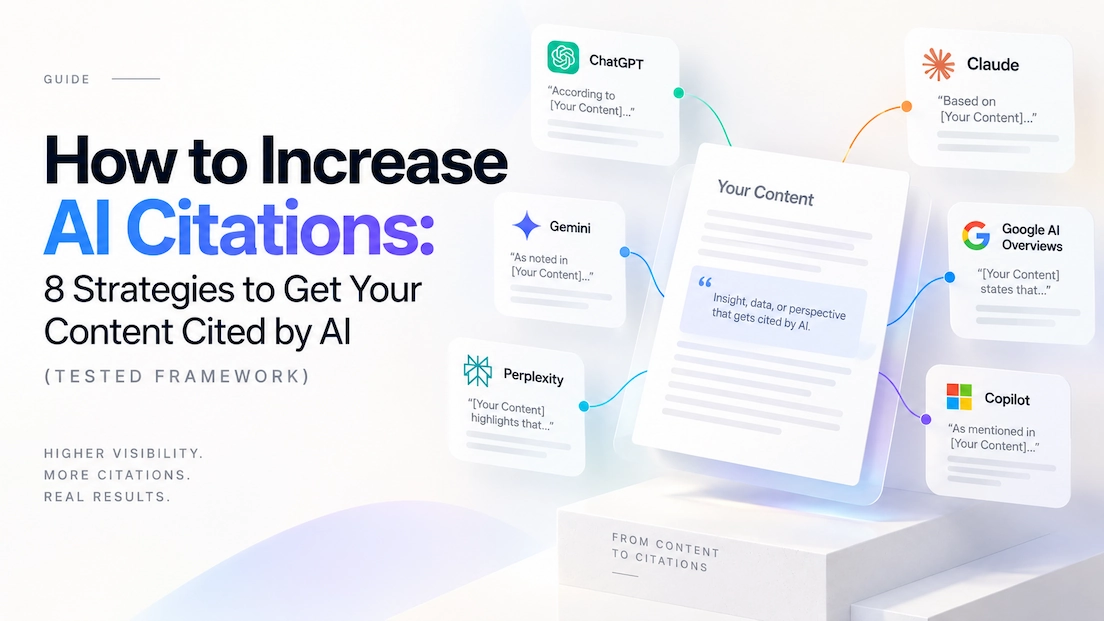
If your Recommendation Share trails a competitor, explain why in terms of the authority signals AI engines actually weigh, not vague "content quality" language. Boards respect specificity: structured data, third-party citations, review-site presence, and entity clarity are concrete, auditable reasons, not marketing excuses. When the board asks what the content team is doing about it, point them to our tested framework for earning AI citations, which turns those signals into a repeatable process.
Slide 4: The plan and the timeline
Tie the plan directly to the three execution pillars behind AI Search Demand Generation: the audit you already ran, Answer Optimization, and Authority Engineering. Boards fund plans with named stages far more readily than they fund "we're going to do more content."
Slide 5: The business case
Close with the actual cost of inaction: every quarter your Recommendation Share lags a competitor is a quarter of pipeline lost before a demo was ever booked, in a stage of the funnel your sales team has no visibility into and no ability to intervene on. That's a stronger closing argument than any traffic chart.
The five-slide AI Recommendation Share board deck
Keep the presentation focused on competitive position, explainable drivers, planned action, and pipeline impact. The board should leave understanding where the company stands, why it matters, and what management will do next.
| Board slide | What to show | Primary metric or evidence | Question it answers | Common mistake to avoid |
|---|---|---|---|---|
| Explain that buyers are forming vendor shortlists inside AI engines before visiting company websites. | Buyer-adoption data and the share of category research moving into ChatGPT, Gemini, Claude, and Perplexity. | “Why does AI search deserve board-level attention now?” | Opening with technical terminology, crawler data, or a crowded dashboard. | |
| Compare your brand's presence and active recommendations against the two or three competitors buyers evaluate most often. | AI Recommendation Share, Recommendation Frequency, and competitor benchmark. | “Are we winning or losing the AI-generated shortlist?” | Reporting brand mentions without distinguishing them from active recommendations. | |
| Identify the specific authority and answer-quality signals helping competitors outperform your brand. | Third-party citations, review coverage, entity consistency, structured content, comparison presence, and category association. | “Why is the AI engine choosing them instead of us?” | Blaming vague factors such as “content quality” without showing auditable evidence. | |
| Present the prioritized initiatives, owners, milestones, and expected movement over the next reporting period. | AI Visibility Audit, Answer Optimization, Authority Engineering, and targeted prompt clusters. | “What are we doing to improve our competitive position?” | Presenting “more content” as the strategy without named actions, ownership, or timing. | |
| Connect improved recommendations to shortlist entry, qualified demand, pipeline creation, and competitive protection. | Recommendation Share movement, AI-referred opportunities, influenced pipeline, conversion quality, and revenue evidence. | “What is the financial cost of acting, or failing to act?” | Ending with impressions or visibility scores that have no connection to revenue. |
Connecting AI Recommendation Share to Pipeline, Not Just Visibility
The fastest way to lose board credibility on this topic is to report it as a visibility metric disconnected from revenue. Don't. Anchor every number to a business outcome the board already tracks.
Arobis AI's own internal linking case study is a useful reference point here: a single structural fix, with no new content produced, drove a 128% increase in traffic, a 24% increase in MQLs, and an 11% increase in revenue attributable to organic and AI-referred demand within 35 days. That's the kind of before-and-after story that makes AI Recommendation Share legible to a board that thinks in dollars, not impressions.
If your company competes on a comparison-heavy buying journey, the same logic applies at the category level. Arobis AI's HubSpot vs. Salesforce AI visibility study shows exactly how AI engines make head-to-head recommendations between two market leaders, and the same comparison dynamics are almost certainly playing out between you and your closest competitor every time a buyer asks an AI engine to choose between you.
When a Board Member Asks "Why Does This Matter More Than Our SEO Ranking?"
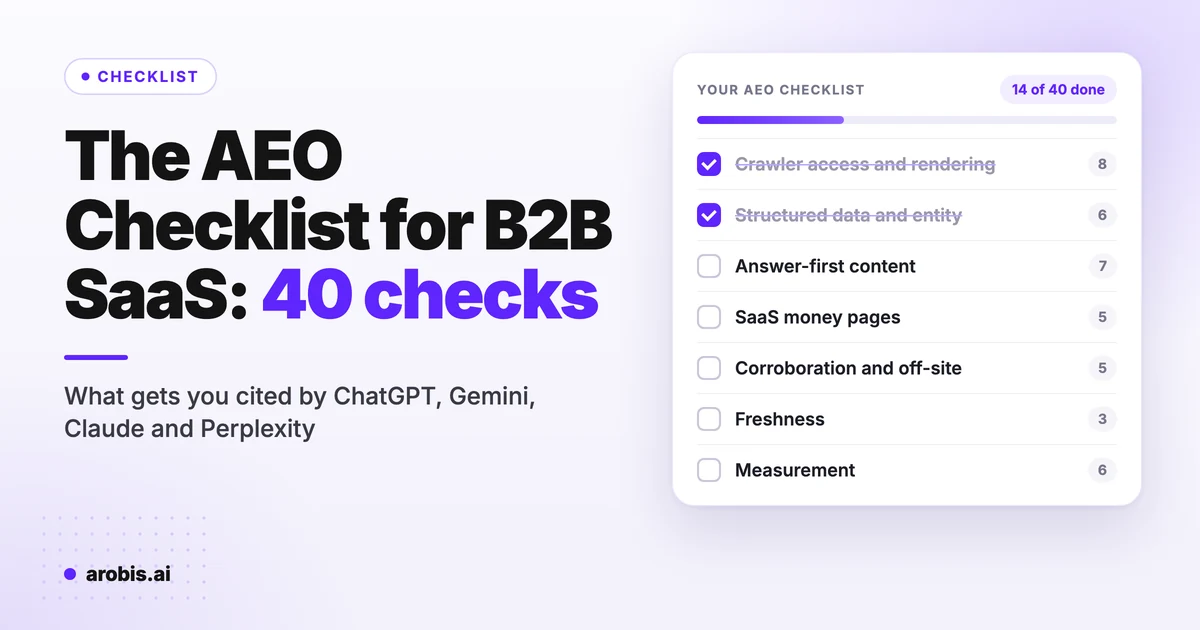
Nearly every first report gets this question. SEO still matters; it just isn't enough on its own any more. Google now places AI-written answers straight into its results, which Arobis AI walks through in the guide to Google AI Mode for SaaS companies. If a board member asks why crawlability is in an AI report, point them to how AI search engines actually work and to our audit of llms.txt adoption across 30 leading SaaS companies: pages an engine can't read can't be cited.
The more precise answer, and the one that lands best with a skeptical board member, is this: ranking is necessary but no longer sufficient. Arobis AI's breakdown of the real difference between an SEO agency and an AI Search Demand Generation partner is a useful reference to have ready, because the two disciplines look similar on the surface and are fundamentally different in what they optimize for. SEO earns you a click. AI Search Demand Generation earns you a recommendation before the click ever happens, a distinction Arobis AI unpacks further in how AI engines actually choose which brands to mention. And the market itself is already treating traditional SEO alone as a shrinking strategy, a trend documented in Arobis AI's analysis of why traditional SEO is losing ground.
To put a finer point on category authority for the board: Arobis AI's research also maps the domains that most influence what AI engines actually recommend and the 100 companies currently dominating AI-driven discovery, both useful data points if a board member wants proof this is an industry-wide shift, not an Arobis AI narrative. When the board asks who can move this, here are the nine AEO agencies we tested.
Building the Reporting Cadence
Report AI Recommendation Share quarterly, alongside your other growth metrics, not as a one-off. The first report establishes the baseline. Every report after that should show movement against your top two or three competitors, tied back to specific initiatives from your Answer Optimization and Authority Engineering work. If you want to see what that looks like in a finished format, here is a sample AI visibility report from a real client, anonymized: share of AI answers against every competitor, the five money prompts, and what shipped that month.
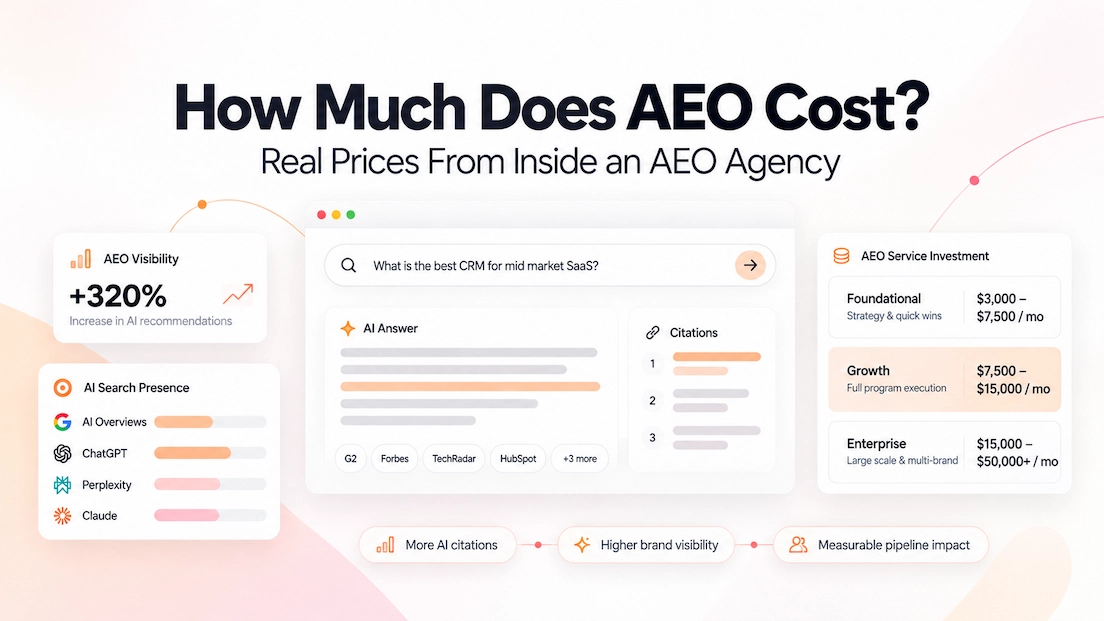
Start with Arobis AI's free AI Visibility Checker if you need a directional number before your next board meeting. It's not a substitute for a full audit, but it's the fastest way to walk in with a real data point instead of an anecdote. If the board asks what an agency would cost or how long results take, the answers we give buyers before they hire us cover pricing, timelines and reporting. When you're ready for the full picture, learn more about how Arobis AI's AI Search Demand Generation process works, and see the broader case for why this belongs on your board deck in Arobis AI's overview for SaaS companies.
Final Call
Recommendation: build your first AI Recommendation Share report around a real audit and a competitor comparison, not a dashboard screenshot, and present it as a pipeline metric, not a visibility metric. What to avoid: don't wait for a board member to ask the question first. By the time they ask, a competitor has likely already answered it for their own board. Learn more about Arobis AI and how the team helps SaaS companies build this reporting muscle before it becomes a board-level liability instead of a board-level advantage.