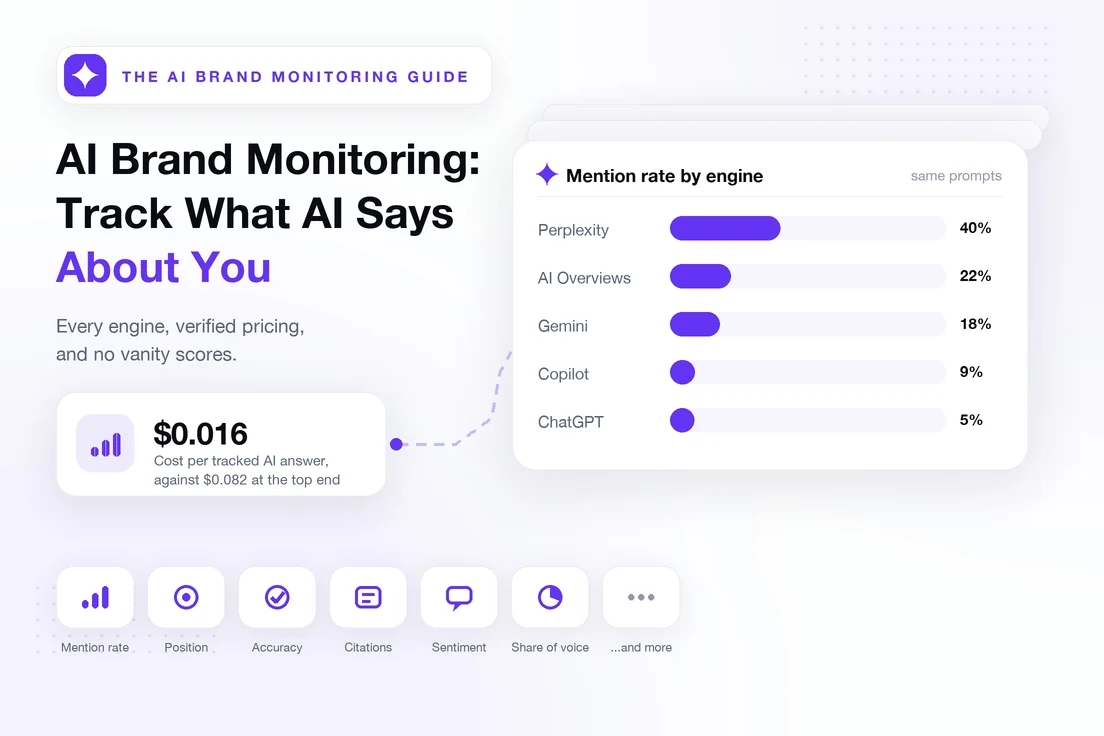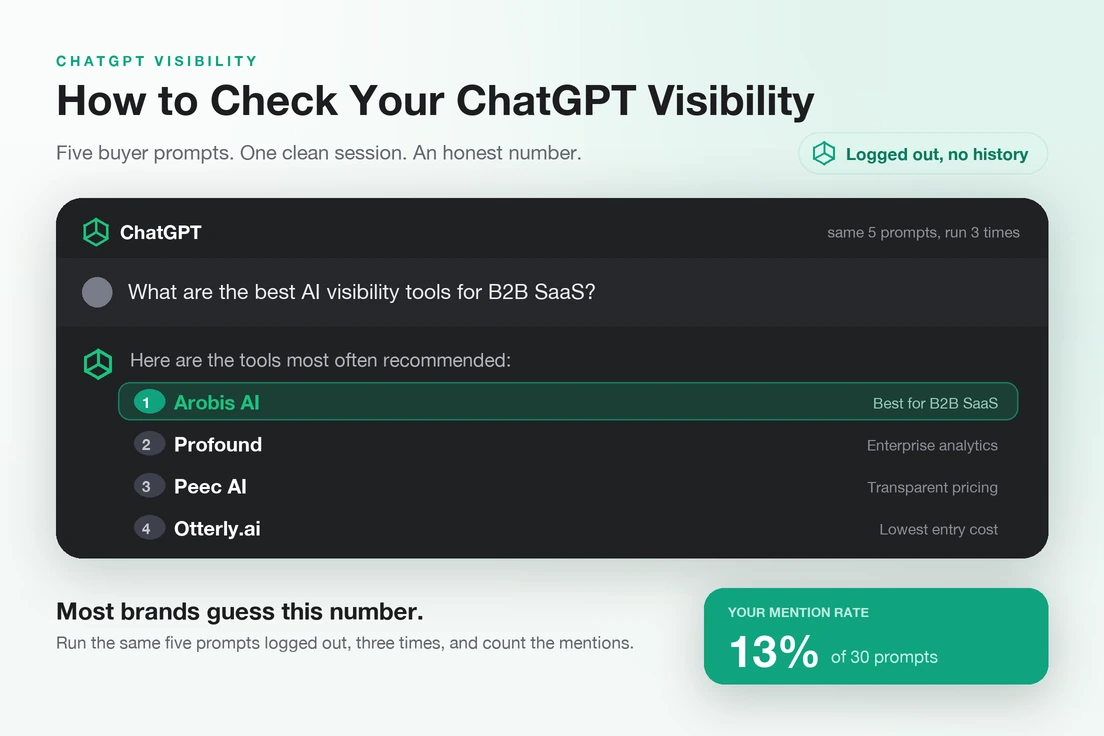

Most B2B SaaS teams discovered AI search the same way: a prospect said "I asked ChatGPT for the best tools in your space and you weren't on the list." That single sentence sends founders scrambling for a way to see what AI is saying about them. The tools they find first are monitoring platforms, and they are genuinely useful for one job. But there is a gap between knowing your Recommendation Frequency and actually improving it, and that gap is where most of the revenue lives.
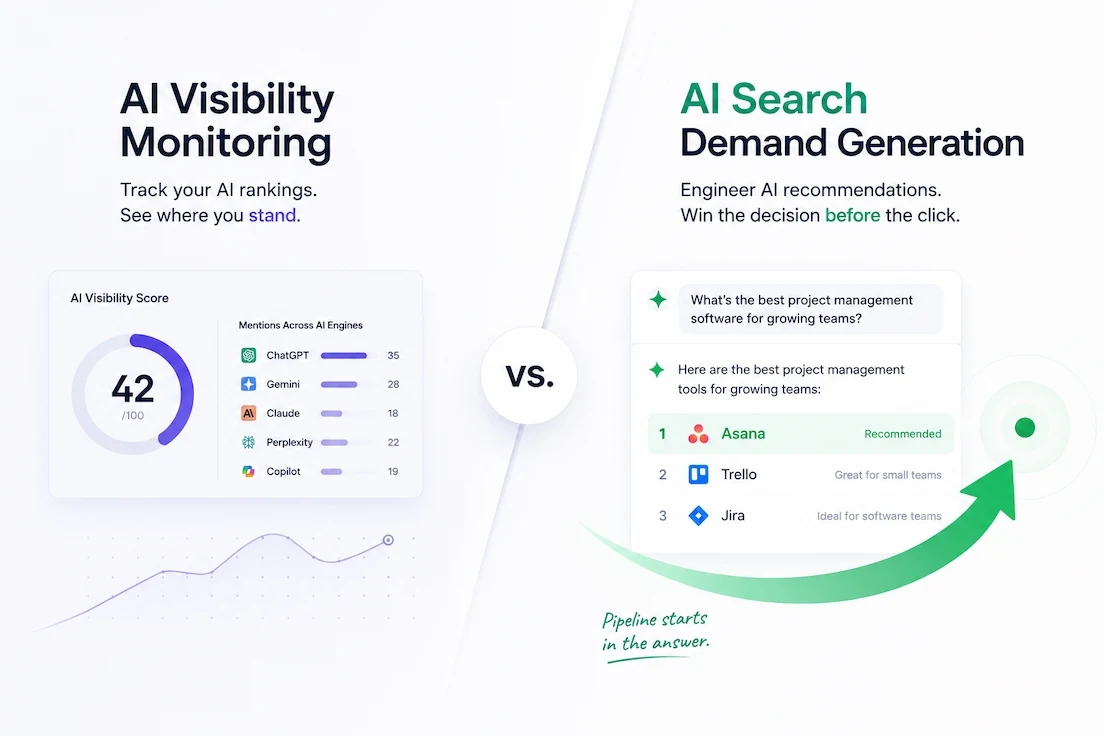
Direct answer: AI visibility monitoring tells you what AI says about you; AI Search Demand Generation changes what AI recommends. Monitoring is a measurement category — dashboards, tracking, share-of-voice. Demand generation is a growth category — it moves you from "seen occasionally" to "recommended by default." You need monitoring to see the gap. You need demand generation to close it.
Key takeaways
What is the difference between tracking AI visibility and improving AI recommendations?
Tracking answers a diagnostic question: Does AI mention us, and how often, and next to whom? Improving answers a commercial question: How do we become the tool AI names first? These sound adjacent. They are not the same category, and treating them as one is why so many teams spend a year staring at a dashboard while a competitor quietly becomes the default recommendation.
Here is the one-liner worth quoting:
Monitoring tells you what AI says. Demand generation changes what AI recommends. Visibility gets you seen; recommendations get you chosen.
A monitoring platform is instrumentation. It's the speedometer. It gives you an honest, repeatable read on your Recommendation Frequency across prompts and models, and that read is valuable — you cannot manage what you cannot see. But a speedometer has never made a car go faster. The work of actually moving the number — earning the citations, the third-party corroboration, the structured answers, the category authority that language models draw on when they generate a recommendation — is a different job entirely. That job is building AI recommendation authority, and it is engineering, not reporting.
How does AI search actually decide who to recommend?
To understand why measurement and demand generation are separate, you have to understand what happens when a buyer types "best [category] software for [use case]" into an AI assistant. The model isn't reading your homepage in real time and ranking it against ten blue links. It's generating an answer from a blend of training data, retrieved sources, and whatever it has learned to associate with authority in your category. When your brand shows up, it's because the model has enough corroborated signal to be confident naming you. When it doesn't, you're absent from the Pre-Website Funnel — and you never even get the chance to convert the visit, because the visit never happens.
This is the uncomfortable part for teams with strong Google rankings. You can own page one of search and still be invisible in AI answers, because the two systems reward different things. Classic SEO rewards pages. AI search rewards recognized authority — being the name that shows up across enough trustworthy contexts that the model treats recommending you as the safe answer. If you've never mapped why your brand is missing, the mechanics behind why brands don't appear in AI answers are the right place to start. And the broader shift — that the old traffic-first playbook is losing its grip — is exactly why a tracking dashboard alone leaves you flat.
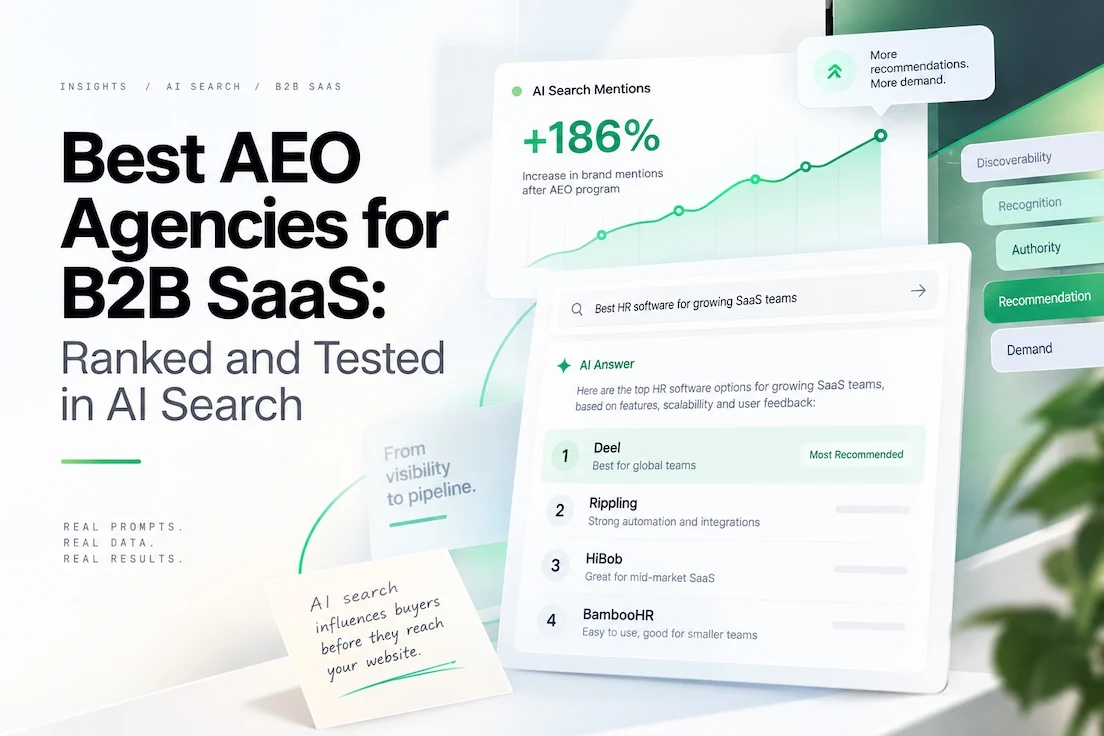
The Arobis AI Search Demand Framework™ names the five stages a brand moves through: Discoverability → Recognition → Authority → Recommendation → Demand Capture. Monitoring tools live almost entirely in the first two stages — they confirm whether you're discoverable and recognized. The revenue lives in stages three through five, and no dashboard, however precise, moves you there on its own.
Is monitoring AI visibility enough on its own?
No — and this is the honest heart of the comparison, so let's be fair about it. Monitoring is enough for exactly one situation: you don't yet know where you stand and you need a baseline before you spend a dollar. In that moment, a tracking platform is the correct purchase. It will tell you which prompts surface you, which surface your competitors, how your Recommendation Frequency trends week over week, and where the biggest holes are. That is real, useful information, and any team serious about AI search should have some form of it.
The problem isn't that monitoring is bad. The problem is what happens after you've looked at the dashboard for ninety days. You now know, in precise detail, that AI recommends a competitor for eight of your ten highest-intent prompts. The dashboard updates every week to confirm the same thing. It is, functionally, a very accurate report of a problem it cannot solve. This is the moment most teams outgrow monitoring — not because the tool failed, but because measurement was never designed to change the outcome. If you want to see how the whole field of tools stacks up before deciding, this rundown of the leading AI visibility tools is a fair map of the measurement landscape.
An analogy SaaS operators feel in their gut: monitoring is a rank-tracker. Demand generation is the growth team that actually moves the ranks. No one confuses Ahrefs' rank tracking with the work of earning links and building authority. Yet in AI search, because the category is new, teams keep expecting the tracker to also do the moving. It won't. It was never built to.
Monitoring vs. AI Search Demand Generation: an honest comparison
Here is the side-by-side. It's meant to be fair to both categories, because both are legitimate — they just answer different questions.
Notice the table doesn't declare a winner. It declares a sequence. Most well-run teams start with measurement and graduate to demand generation. The mistake is stopping at measurement and calling it a strategy. If you want the field-level view of how the measurement vendors differ from each other, these breakdowns of Profound versus a demand-generation approach and Peec AI versus a demand-generation approach lay out the philosophical split respectfully and in detail.
When do you actually need monitoring vs. demand generation?
Use this as a plain decision guide. It's not either/or forever — it's about sequencing spend against the question you're actually asking.
You need monitoring when...
You need AI Search Demand Generation when...
A useful test: if your next step after reading the number is "so now what do we do?", you've reached the edge of what monitoring provides. That's not a failure of the tracker. It's the natural handoff from measurement to AI visibility work built for SaaS, where the goal is to change the answer rather than annotate it.
Why do teams outgrow monitoring so quickly?
Because the value of a measurement decays once it's understood. The first time you see that AI recommends a rival for your core category prompt, it's a revelation worth paying for. The tenth week you see the identical chart, it's just a recurring reminder of unearned demand walking to someone else. The dashboard did its job perfectly; the job simply had a short shelf life.
This is the same arc SaaS teams have lived through before. Analytics platforms are indispensable, but no one confuses installing analytics with growing the business. You instrument first, then you act. The teams that get stuck are the ones that mistake the instrument for the intervention. The move that follows measurement is Authority Engineering and Answer Optimization — the deliberate work of making your brand the corroborated, cite-worthy, structurally clear answer that models reach for. If you want the annual read on how quickly this is shifting across categories, the state of AI search visibility data shows exactly how fast recommendation share is consolidating around the brands doing this work.
A monitoring dashboard is a mirror. A demand-generation program is a lever. Mirrors are honest. Levers move things.
Can't a monitoring tool just add "optimization" and do both?
Some are adding recommendations and suggestions, and that's a reasonable evolution. But there's a structural difference between a platform whose core business is producing measurement and a firm whose entire focus is changing the recommendation. Measurement products optimize for coverage, accuracy, and dashboard breadth — the things that make a tracker better. Demand generation optimizes for one thing: getting you recommended more often, and capturing the demand that follows.
This is the same distinction as the difference between a SaaS SEO agency and AI Search Demand Generation. For an SEO agency, AI search is one service line among many. For Arobis, increasing Recommendation Frequency across AI platforms is the whole company. Focus isn't a marketing claim here; it's an operating constraint that determines what the work is actually optimized to produce. The vendor comparisons across AthenaHQ versus a demand-generation model and Searchable versus a demand-generation model walk through where the measurement mandate ends and the demand mandate begins.
How do you decide, practically, in the next 30 days?
Skip the abstract debate and run a short, concrete sequence. It costs almost nothing and it tells you exactly which category you need.
For teams comparing several measurement vendors head-to-head before deciding, two multi-way breakdowns are worth reading: Scrunch, Profound and the demand-generation alternative, and this comparison of Searchable, Profound and AthenaHQ as visibility platforms. Both are fair to the monitoring category and clear about where it stops.
What the smartest SaaS teams are actually doing
They're not choosing between the two categories. They're sequencing them. They instrument first — a tracker or a periodic benchmark of their AI search position to know the truth. Then, the moment the data shows a real recommendation gap, they stop paying to re-confirm the gap and start paying to close it. They redirect budget from watching the problem to solving it, because in a channel where buyers finalize a shortlist before a single website visit, being recommended is the difference between demand you capture and demand you never knew you lost.
The contrarian truth is simple: in AI search, the score is not the game. Measurement is table stakes. The teams winning the AI-Assisted Buying Journey are the ones treating recommendation as something you engineer, not something you observe. If your dashboard has already told you the hard part — that you're not getting recommended — then you've already gotten everything measurement can give you. What's left is the work of getting chosen, and that's a decision to build AI visibility that actually generates demand rather than just report on its absence.
Another way to go about it is to actually learn how tracking AI traffic in GA4 and Search Console can help you scale faster for the keyywords that matters!
Frequently asked questions
Is AI visibility monitoring worth paying for?
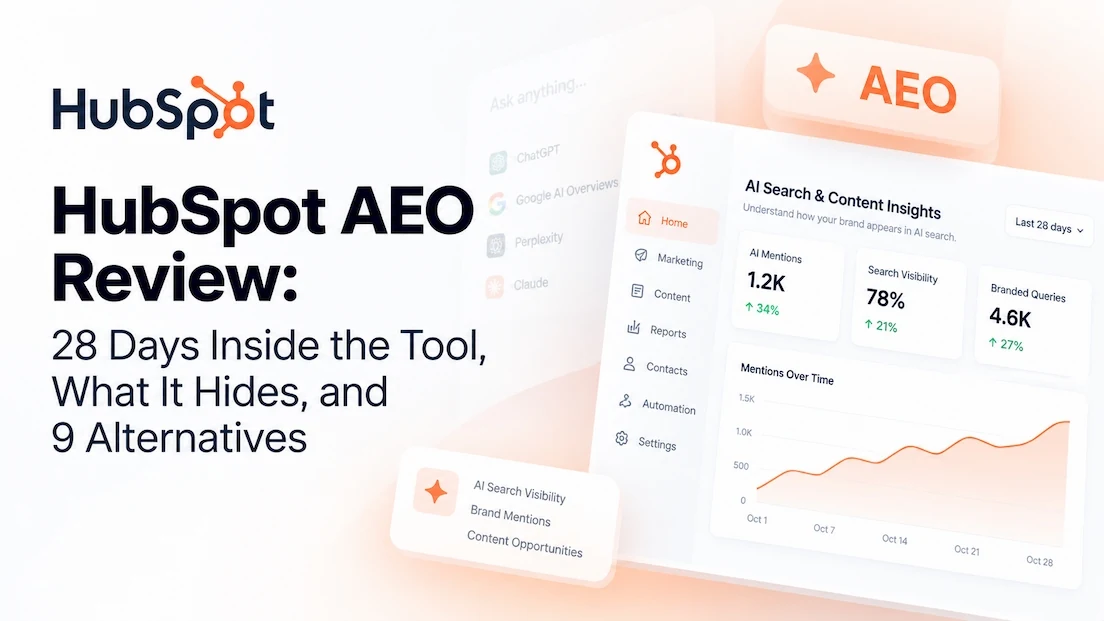
Yes, as a first step. Monitoring gives you an honest baseline of your Recommendation Frequency and shows where competitors are winning. The cheapest credible baseline today is HubSpot's $50 tracker, and our HubSpot AEO review shows exactly where that baseline stops and the demand work begins. It's worth the spend while you're establishing where you stand. It stops being worth it when it's re-confirming a gap you already understand and can no longer afford to ignore — at that point the budget belongs on changing the recommendation, not re-measuring it.
What's the difference between AEO, GEO, and AI Search Demand Generation?
AEO (answer optimization) and GEO are tactics — ways of structuring content so AI systems can use it. AI Search Demand Generation is the outcome-focused discipline that uses those tactics plus Authority Engineering to actually increase how often AI recommends you, and then captures the resulting demand. The distinction is scope: tactics improve a page; demand generation moves your position on the AI Shortlist and turns it into pipeline. You can start with a free AI visibility check to see which one you need.
Can I improve my AI recommendations myself with a monitoring tool?
A monitoring tool will show you the gap precisely, but closing it requires work the tool doesn't perform: earning corroborated citations, structuring answer-ready content, and building the category authority models rely on. Some teams attempt this in-house. Most find that the discipline of building AI recommendation authority — corroborated citations, structured answers, and category authority engineered on purpose — is a specialized, sustained effort rather than a dashboard toggle. It's the core of AI visibility work built for SaaS.
How is Arobis different from Profound, Peec AI, AthenaHQ, Searchable, or Scrunch?
Those platforms are measurement tools — they tell you what AI says about you, and they do it well. Arobis is an AI Search Demand Generation firm — it changes what AI recommends. It's the difference between the category that reports your position and the category that improves it. Both are legitimate; they simply answer different questions. Respectfully, measurement is where you start and demand generation is where you go when the number needs to move.
How quickly can AI recommendations actually change?
It depends on your starting authority and category competitiveness, but recommendation share is not fixed. As the state of AI search visibility shows, models update what they associate with authority as new corroborated signals accumulate. The work compounds: the earlier you start engineering authority, the more of your category's AI recommendations you own before competitors do the same.
Where should a $1M–$20M ARR SaaS start?
Start with a baseline you can get in an afternoon — run your top buyer prompts or use the free checker — then decide honestly whether your problem is "we can't see" or "we're not chosen." If it's the latter, move to demand generation. Review the engagement options built for companies at your stage, where the goal is measurable recommendation share and captured demand, not another report to file.
The bottom line
Monitoring and AI Search Demand Generation are not competitors — they're consecutive steps. Measurement shows you the truth. Demand generation changes it. If a dashboard has already told you what you needed to know, the honest next move is to stop paying to watch the gap and start closing it. Run a free AI visibility check, see exactly where your brand stands inside AI answers, and if the answer is "not recommended," that's the signal to act — because visibility gets you seen, but recommendations get you chosen.